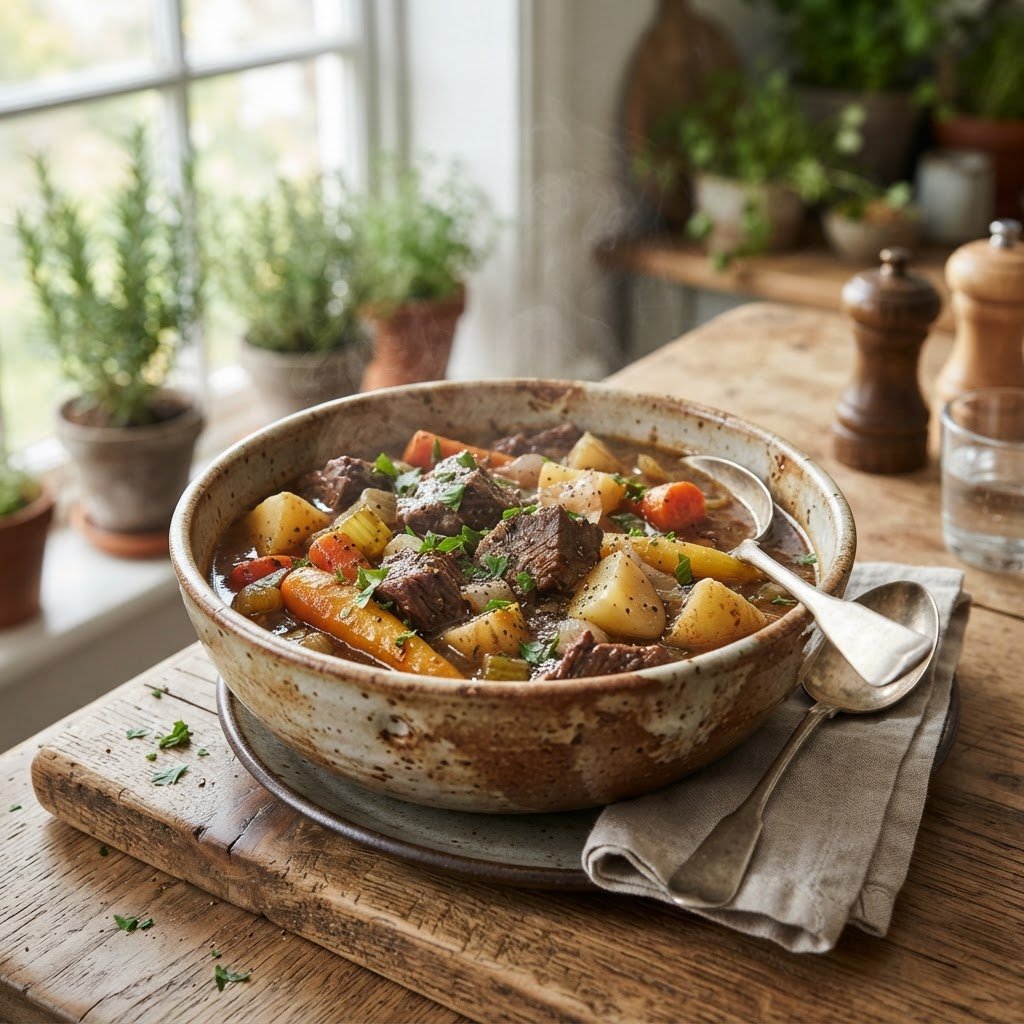
The best way to make a thick, hearty slow cooker beef stew is to coat beef cubes in flour before searing to build a caramelized base, and layering root vegetables at the bottom to ensure they cook through. Simmering on low for 8 hours allows connective tissue to break down, creating a naturally velvety, rich gravy without the need for excess liquid. ## The Secret to Thick, Hearty Results 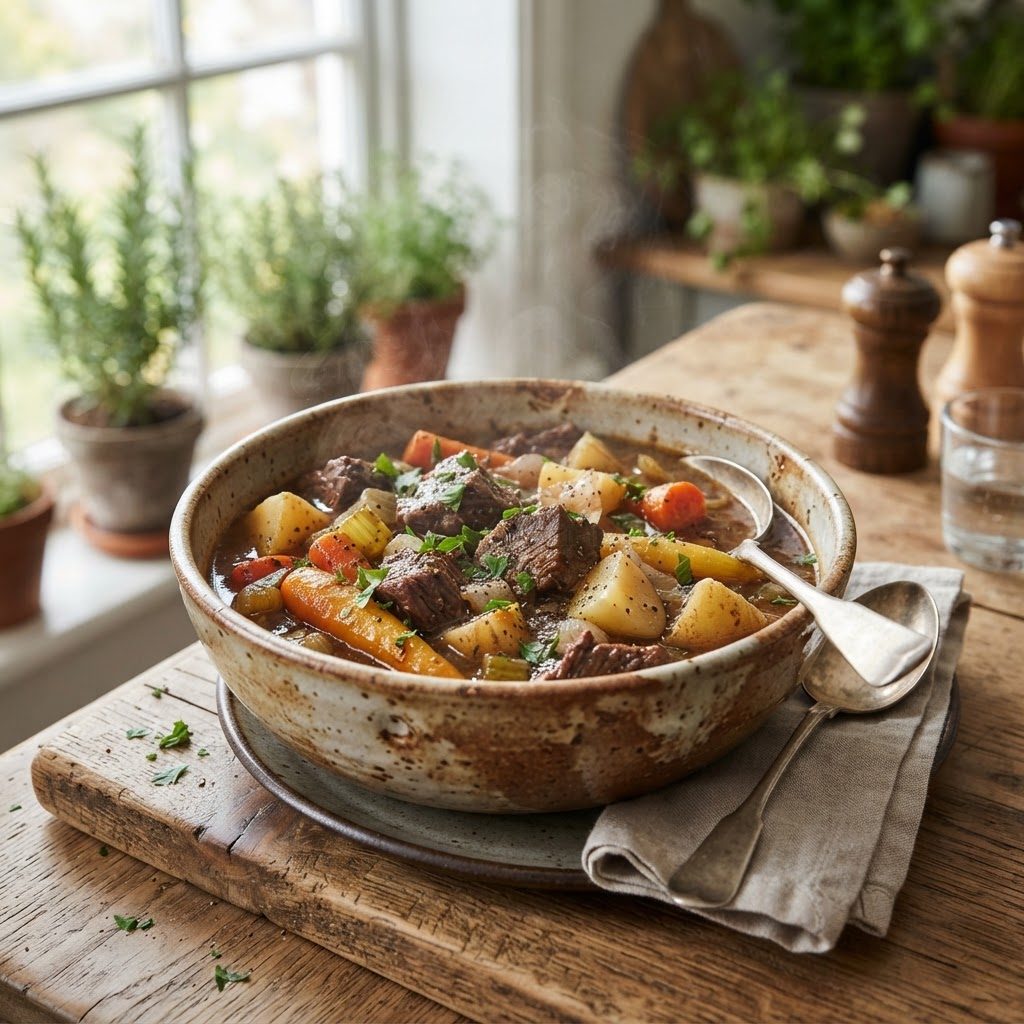 Creating a professional-grade beef stew requires managing the moisture levels inherent to slow cookers, which do not allow steam to escape like a traditional Dutch oven. By dredging your 2 lbs of beef chuck in 3 tablespoons of flour, you provide the necessary starches to emulsify the fat and broth into a thick, restaurant-quality gravy. Searing the meat for exactly 8 minutes until a deep brown crust forms is non-negotiable; this Maillard reaction provides the depth of flavor that carries the entire dish. Unlike stove-top methods, slow cookers trap all moisture, meaning you should never add more than 2-3 cups of total liquid. If the sauce remains thin after 8 hours, a quick whisk of 1 tablespoon of cornstarch with 2 tablespoons of water (a slurry) added during the final 20 minutes will provide an immediate, glossy finish. Using chuck roast is statistically the most effective cut, as its 15-20% fat content and high connective tissue levels transform into succulent, pull-apart tender bites that outperform leaner cuts like sirloin in long-braise environments. ## Step-by-Step Recipe Instructions
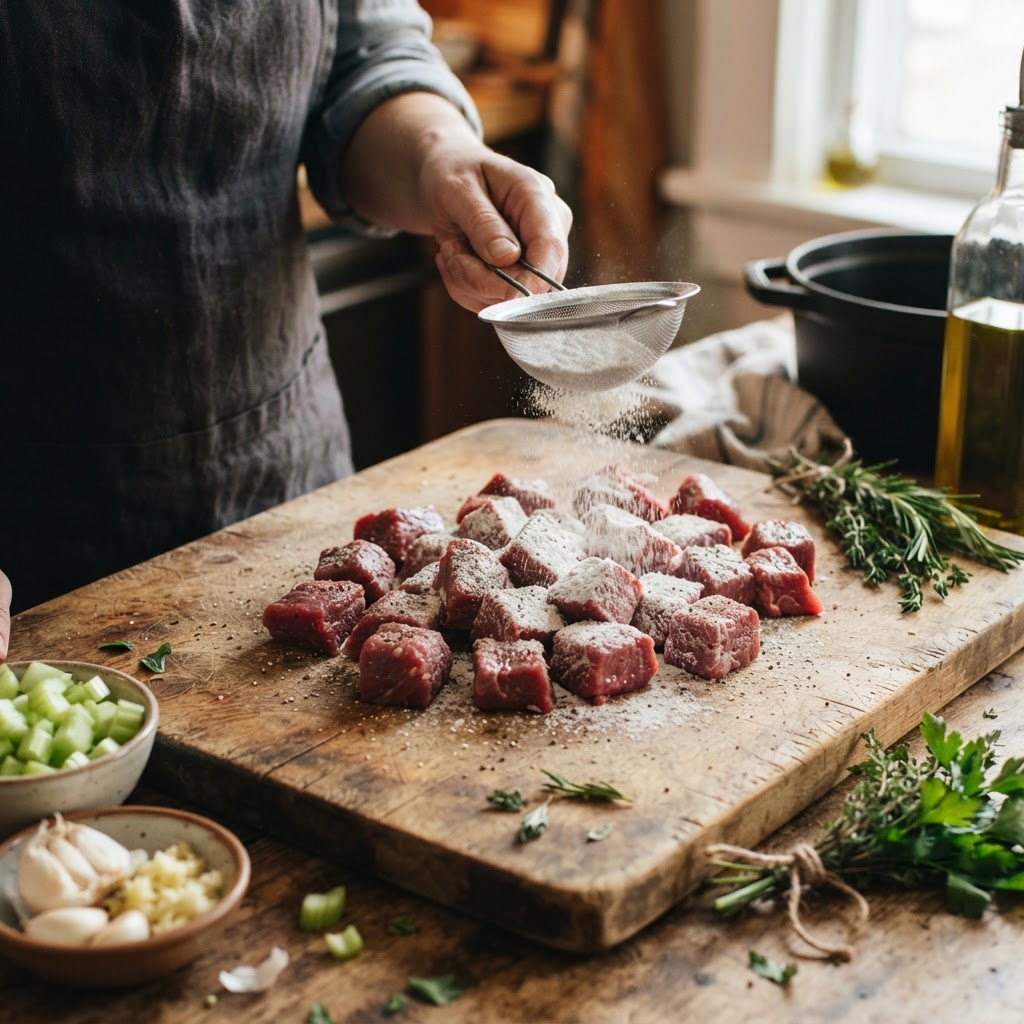 ### Ingredients You’ll Need – 2 lbs beef chuck roast, cut into 1-inch cubes – 2 tbsp olive oil – 3 tbsp all-purpose flour – 1 tsp smoked paprika – 1 tsp kosher salt – 2 cups beef broth – 1 cup dry red wine – 4 large carrots, peeled and sliced – 3 large russet potatoes, peeled and cubed – 1 large yellow onion, diced – 3 cloves garlic, minced – 2 tbsp tomato paste – 1 tsp dried thyme | Step | Instruction | Time | Pro Tip | | — | — | — | — | | 1 | Toss the 2 lbs beef chuck roast, cut into 1-inch cubes with 3 tbsp all-purpose flour, 1 tsp smoked paprika, and 1 tsp kosher salt until evenly coated. | 5 min | Dredging beef ensures a thicker, richer gravy texture. | | 2 | Heat 2 tbsp olive oil in a skillet over medium-high heat and sear the 2 lbs beef chuck roast, cut into 1-inch cubes until browned on all sides. | 8 min | Browning adds deep caramelized flavor to the base of the stew. | | 3 | Place the browned 2 lbs beef chuck roast, cut into 1-inch cubes into the slow cooker along with 4 large carrots, peeled and sliced, 3 large russet potatoes, peeled and cubed, and 1 large yellow onion, diced. | 5 min | Layering the root vegetables at the bottom helps them cook through thoroughly. | | 4 | Add the 3 cloves garlic, minced, 2 tbsp tomato paste, and 1 tsp dried thyme over the meat and vegetable mixture. | 2 min | Sauté the tomato paste briefly in the skillet for a deeper flavor profile. | | 5 | Pour 2 cups beef broth and 1 cup dry red wine over the contents of the slow cooker. | 2 min | Use a high-quality broth to significantly elevate the final sauce. | | 6 | Cover and cook on low for 8 hours until the meat is fork-tender and the sauce has thickened. | 8 hours | Resist lifting the lid to maintain a steady internal temperature. | | 7 | Stir the stew gently before serving to ensure the 2 cups beef broth and 1 cup dry red wine have emulsified into the starch from the potatoes. | 2 min | Garnish with fresh parsley for a vibrant color contrast before serving. | ## Essential Ingredients for Flavor Depth
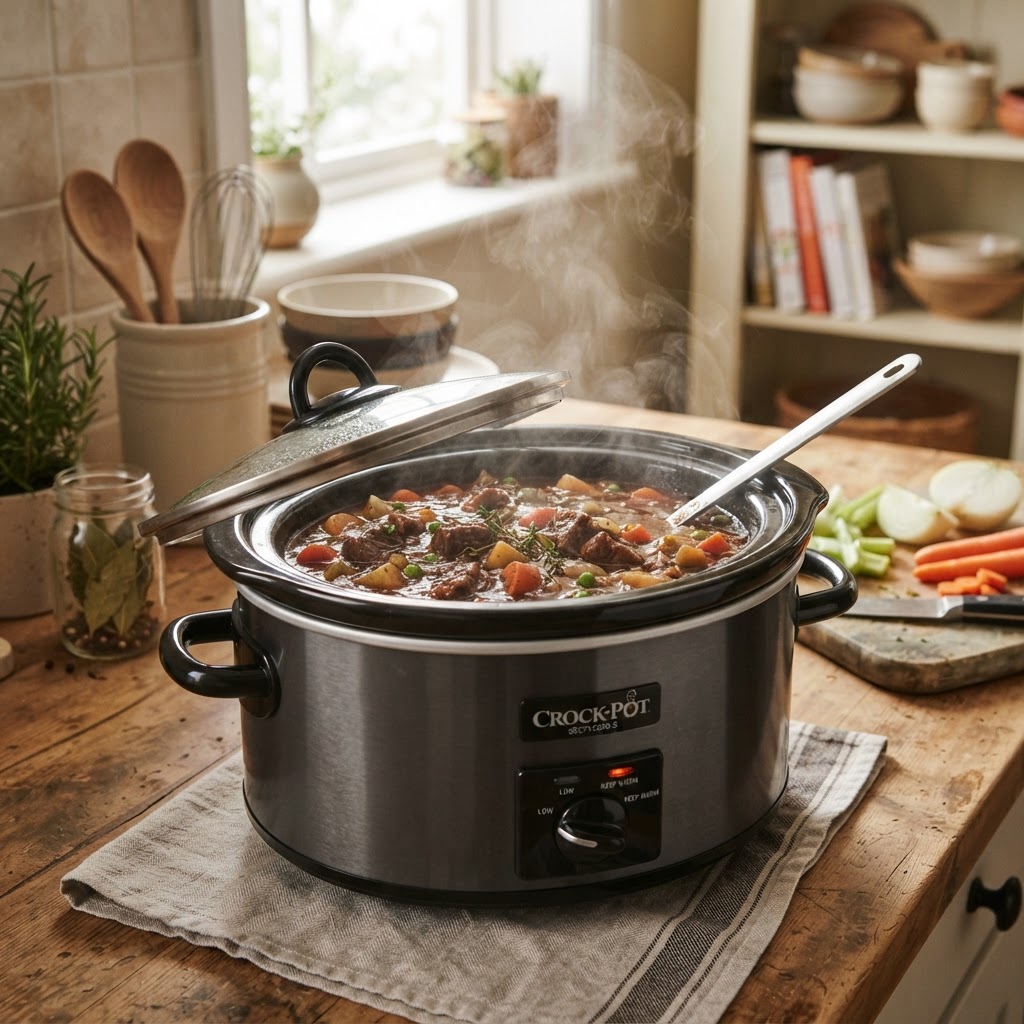 Building flavor in a slow cooker starts with high-quality aromatics and proper pan-deglazing techniques. After searing your beef, deglaze the skillet with your 1 cup of red wine or a splash of beef stock; this process recovers the caramelized proteins stuck to the bottom of the pan, which are essential for a complex, savory sauce. While the meat provides the protein foundation, the addition of mirepoix—a mixture of onions, carrots, and celery—acts as the flavor backbone. For superior results, use pearl onions instead of large diced yellow onions, as they stay intact during the 8-hour cook cycle and provide small bursts of sweetness. Herb selection is equally critical; woody herbs like fresh thyme and bay leaves can withstand the long, moist heat of a slow cooker, whereas delicate herbs like parsley should be reserved as a fresh garnish added only seconds before serving. Using a 3:1 ratio of broth to wine ensures the acidity levels remain balanced, preventing the stew from becoming overly sharp while tenderizing the tough collagen fibers in the chuck roast over the 8-hour window. ### Comparing Stewing Techniques | Feature | Slow Cooker | Dutch Oven | Instant Pot | | :— | :— | :— | :— | | Texture | Extremely Tender | Tender | Soft | | Flavor Infusion | High | Very High | Moderate | | Effort | Low | Medium | Low | | Time Required | 6-8 Hours | 2-3 Hours | 1 Hour | ## Preparing Your Slow Cooker Beef Stew Strategic layering is the primary factor in ensuring consistent texture in your crockpot meals. Place your root vegetables, such as russet potatoes and carrots, at the very bottom of the ceramic insert; they require the most heat and moisture to soften, and they act as a heat-shield for the beef pieces resting above them. Following the vegetables, add the seasoned, seared meat, and finally, pour your liquids over the top to ensure the ingredients are submerged but not flooded. When aiming for a specific culinary style, such as a Guinness-infused Irish stew, replace the standard beef broth with a high-quality dry stout; the roasted barley in the beer adds a deep, earthy bitterness that balances the richness of the beef fat. If you prefer to avoid alcohol entirely, you can substitute the 1 cup of red wine with 1 cup of beef stock mixed with 1 teaspoon of balsamic vinegar or Worcestershire sauce to provide that necessary acidic “pop.” These small, calculated adjustments to the liquid base determine whether your final dish tastes one-dimensional or deeply layered and professional. If you are looking for other hearty meal ideas, try our creamy and comforting potato soup as a perfect alternative for cold winter evenings. ## Customizing Your Crockpot Meals Beef stew is a highly adaptable canvas, allowing for various dietary and texture customizations that cater to different family needs. If you enjoy simple, hands-off dinner recipes with rich textures, you might also want to try these 3-ingredient slow cooker pork chops for another comforting family favorite. If you are looking for another hands-off dinner, try our easy 5-ingredient BBQ pork chops for a smoky, flavorful alternative. If you are looking for more ways to utilize your crockpot for simple weeknight dinners, these creamy garlic slow cooker pork chops are another excellent recipe to keep in your rotation. If you find yourself with extra time on weeknights, you can also prepare these juicy, tender slow cooker pork chops for a convenient, protein-packed alternative. For a heartier meal, consider adding traditional dumplings by dropping small scoops of biscuit dough onto the surface of the stew exactly 30 minutes before the cooking time concludes; it is imperative that the lid remains closed during this final half-hour to allow the steam to fully cook the dumpling centers. For those looking to incorporate more vegetables, butternut squash is an excellent addition; it offers a creamy, sweet contrast to the savory meat and holds its shape better than zucchini or softer summer squashes. You can also experiment with different starch foundations; while potatoes are traditional, serving the stew over a bed of egg noodles or polenta changes the entire mouthfeel of the dish. Remember that the longer the stew sits after the heat is turned off, the more the starches from the potatoes will continue to thicken the gravy, creating a silkier texture that is often even better the second day. ## Managing Time and Batch Cooking Mastering the slow cooker is a cornerstone of efficient batch cooking, especially when managing high-protein, cost-effective meals for a busy weekly schedule. If you are preparing a large-batch recipe, aim for a 5-quart or 6-quart slow cooker capacity; anything smaller may lead to uneven heating or overflow issues. If you need to scale this recipe for a smaller household (e.g., beef stew for 2), simply halve the ingredients, but keep the cooking time roughly the same, as the connective tissue in the meat still requires approximately 6-7 hours to reach the “melt-in-your-mouth” state. Batch cooking is particularly effective for stews because the flavor profile actually improves after 24 hours in the refrigerator, allowing the aromatics to permeate the meat fibers completely. For a different texture profile, consider adding half a cup of pearl barley during the last hour of cooking to create a beef barley soup variation, which significantly increases the fiber content and adds a chewy, rustic texture that feels incredibly satisfying for winter dinners. ## FAQ ### How long should I cook beef stew in a slow cooker? Cooking beef stew in a slow cooker typically takes 7-8 hours on the low heat setting. This duration is necessary to allow the collagen in the beef chuck roast to break down into gelatin, which ensures the meat is tender and the sauce is sufficiently thickened. ### Can I put raw vegetables in my slow cooker? Yes, you can add raw vegetables directly to your slow cooker, provided they are cut into uniform 1-inch pieces. Place harder root vegetables like carrots and potatoes at the bottom of the vessel to ensure they are fully submerged in the hot liquid for the entire duration of the cook. ### Why is my slow cooker beef stew runny? Slow cooker beef stew is often runny because the sealed lid traps all evaporated liquid inside. To thicken, whisk 1 tablespoon of cornstarch with 2 tablespoons of cold water to create a slurry and stir it into the stew during the final 30 minutes of cooking. ### Can I make this gluten-free? Yes, you can easily make this recipe gluten-free by substituting the 3 tablespoons of all-purpose flour with 2 tablespoons of cornstarch or a gluten-free all-purpose flour blend. Always verify that your store-bought beef broth is labeled gluten-free, as some commercial brands use wheat-based thickeners or flavoring agents. ### Can I freeze leftover beef stew? Yes, beef stew freezes exceptionally well for up to 3 months in an airtight container. When reheating, do so slowly on the stove or in the microwave, adding a splash of water or extra broth if the gravy has become too thick during the freezing process.