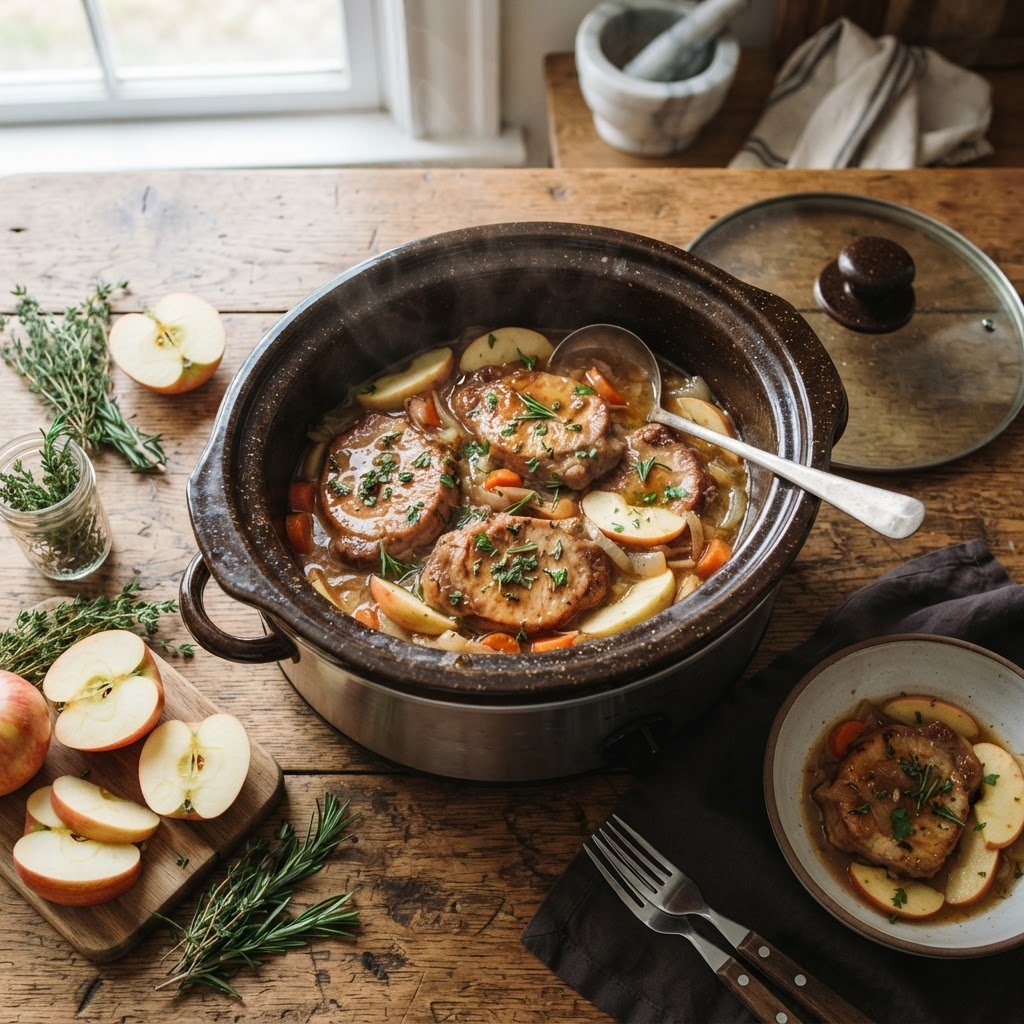
3-Ingredient Slow Cooker Pork Chops Recipe
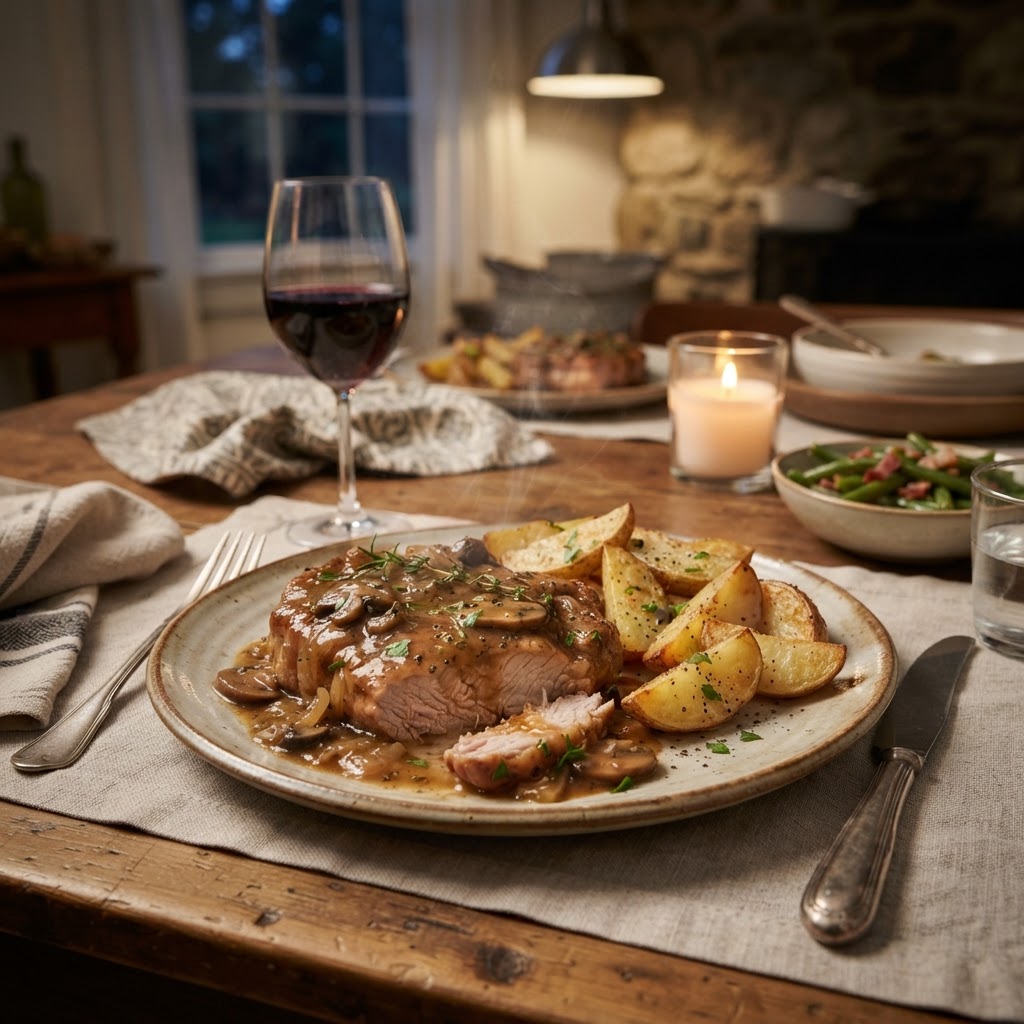
To make perfect 3-ingredient slow cooker pork chops, combine 4 bone-in pork chops with a can of cream of mushroom soup and a packet of dry onion soup mix in your crockpot, cooking on low for 4 to 6 hours. This simple method yields incredibly tender, juicy meat with a rich, savory gravy that requires almost no prep time.
Getting Started with Slow Cooker Pork Chops
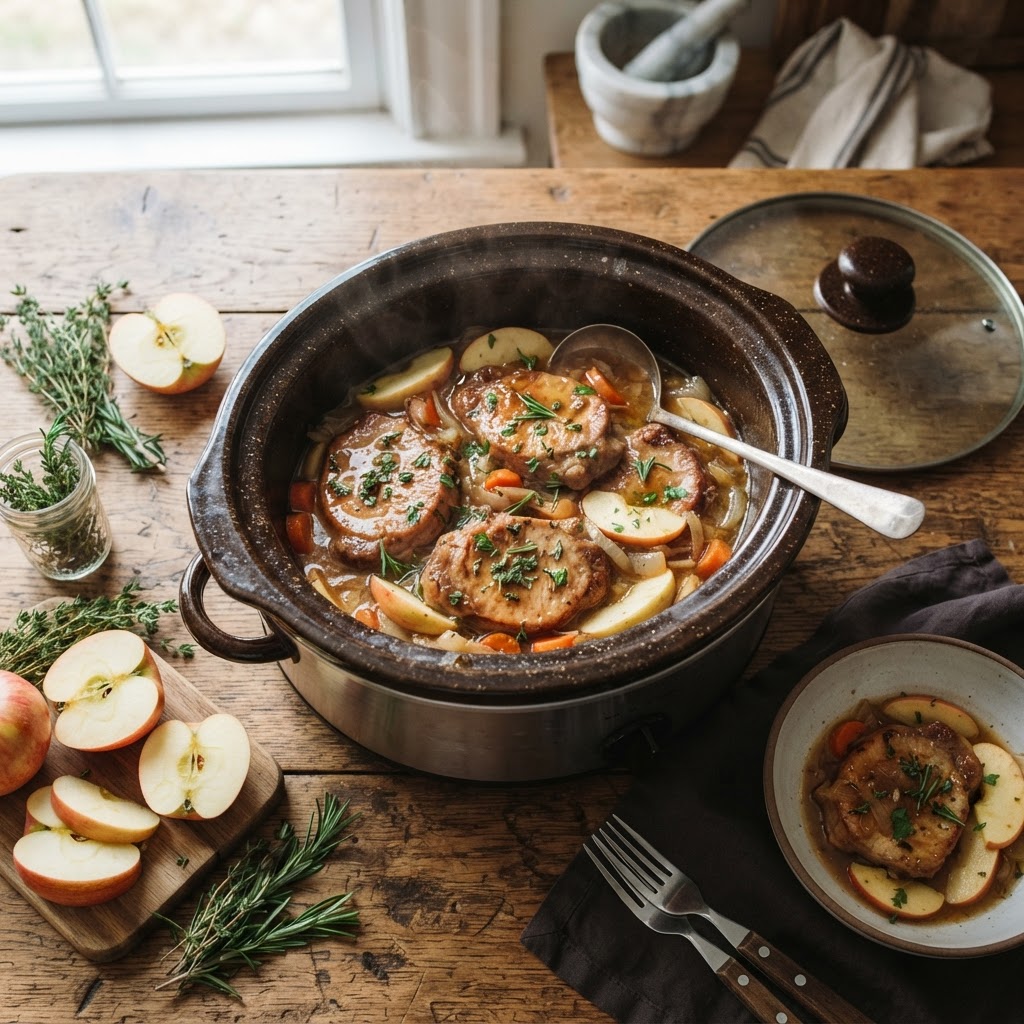
Choosing the right cut of meat is the fundamental secret to achieving professional-grade results when preparing pork in a slow cooker. While boneless chops offer convenience, bone-in pork chops (approximately 1-inch thick) retain more moisture and provide a deeper flavor profile during the long, low-heat cooking process. Experts recommend using a liquid base—such as the combination of cream of mushroom soup and chicken broth—to create a humid environment that prevents the lean muscle fibers from drying out. By maintaining a constant internal temperature, the connective tissues in the pork break down into gelatin, resulting in a “fork-tender” consistency that is impossible to achieve with high-heat methods. Whether you are aiming for a classic honey garlic pork tenderloin slow cooker style or a savory mushroom gravy dish, the goal is to balance the fat content of the meat with the acidity of your chosen sauce. Monitoring your sodium intake by choosing low-sodium condensed soups can easily adapt these for healthy pork recipes without sacrificing the hearty, comforting texture that families love in their crockpot dinners.
Step-by-Step Recipe Instructions
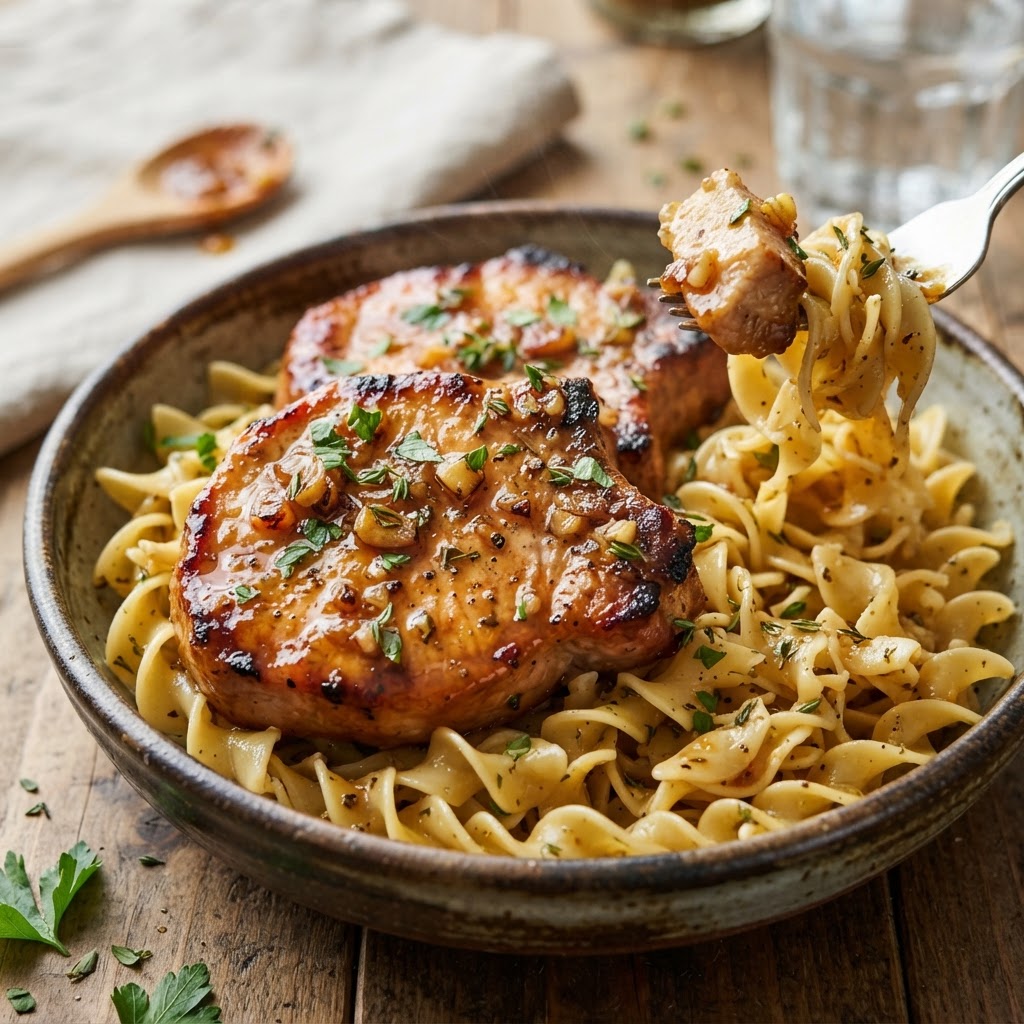
Ingredients You’ll Need
- 4 bone-in pork chops, 1-inch thick
- 1 can (10.5 oz) condensed cream of mushroom soup
- 1 packet (1 oz) dry onion soup mix
- 1/2 cup chicken broth
- 1 tsp dried thyme
- 1/2 tsp cracked black pepper
- 2 tbsp fresh chopped parsley
Follow this clear, step-by-step guide to prepare this dish perfectly every time.
Why Choose Slow Cooking for Pork?
If you are looking for more effortless dinner ideas, our 3-ingredient slow cooker pork chops are the gold standard for transforming tough, inexpensive cuts of pork into succulent, melt-in-your-mouth entrees. When pork is subjected to temperatures between 190°F and 205°F for several hours, the collagen within the muscle fibers gradually hydrolyzes into gelatin, which acts as a natural thickener and moisture-retainer. Unlike traditional baking, which uses dry heat that often evaporates surface moisture and leaves the meat fibrous, the crockpot traps steam to keep the internal temperature steady and the protein hydrated. This slow, low-energy cooking process is highly efficient, typically costing only pennies in electricity for a full cycle. Beyond the technical benefits, this method provides unparalleled convenience for working professionals; once the ingredients are loaded into the ceramic insert, the dish requires zero active monitoring or stirring. It is the ideal solution for busy weeknights, offering a hands-off approach that guarantees a high-quality, “set it and forget it” dining experience that fits perfectly into a modern, fast-paced lifestyle.
The Magic of 3-Ingredient Meals
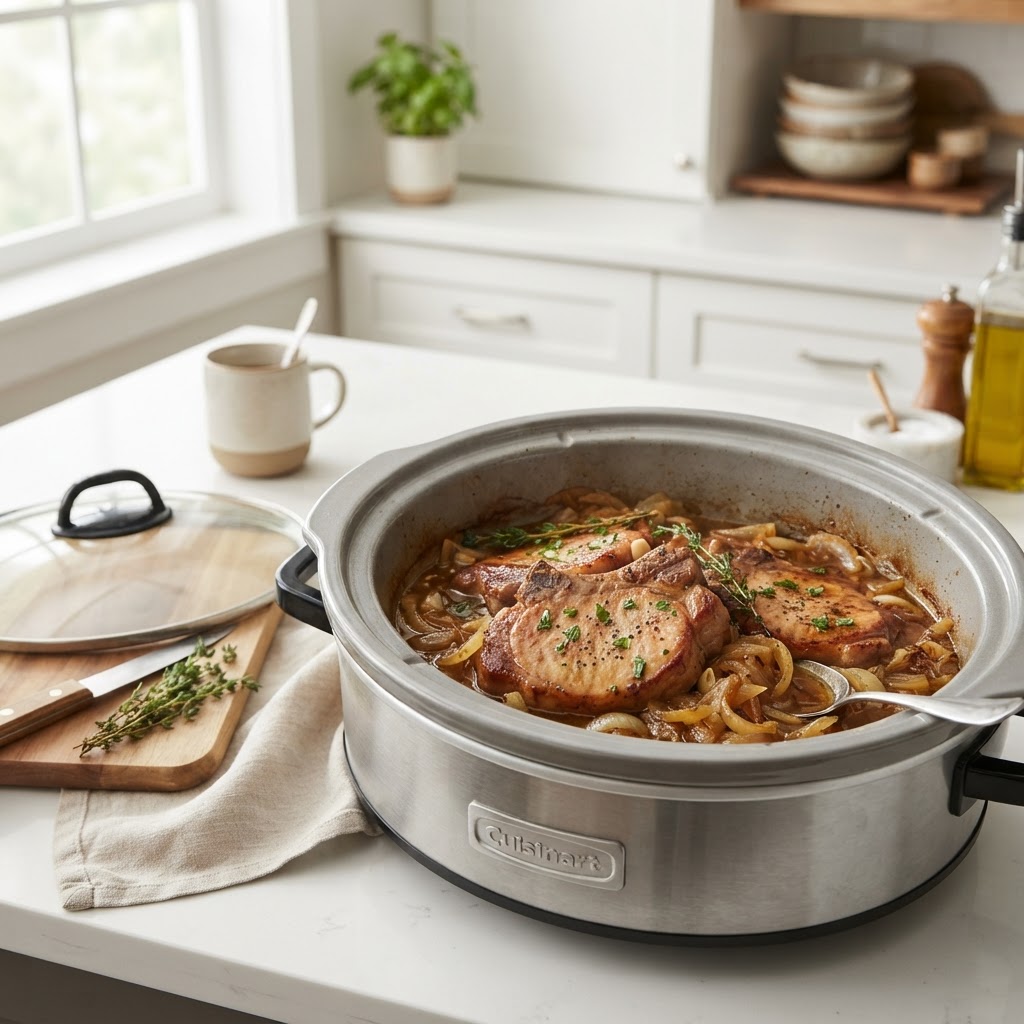
Three-ingredient meals leverage the concept of “flavor synergy,” where a protein, a salt-heavy seasoning base, and a fat-rich liquid interact to create a complex profile without needing an extensive spice cabinet. This minimalist cooking style is favored by time-conscious cooks because it reduces grocery shopping complexity and prep time to under five minutes. By selecting high-quality base ingredients—like a robust dry onion soup mix or a concentrated cream-based soup—you are utilizing pre-balanced flavors that would otherwise take hours to develop through traditional simmering. These “dump-and-go” recipes rely on the slow cooker to circulate these concentrated flavors into the meat, ensuring that every bite is seasoned throughout. Research indicates that using fewer ingredients actually lowers the risk of flavor clashing, allowing the natural sweetness of the pork to shine through while the seasonings serve as a background layer of umami. For families, this strategy is a financial win as well; by focusing on just three core items, you significantly reduce the “wastage factor” where half-used spice jars or specialty sauces sit in the pantry until they expire. It proves that culinary success is determined by proper technique rather than the sheer number of ingredients in a pot.
Comparison of Pork Preparation Methods
Creating Flavorful Variations
Customizing your base pork recipe is simple once you understand the balance between acidity, fat, and aromatics. While the classic onion and mushroom soup version is a crowd-pleaser, you can easily shift the profile toward a sweet and savory “autumn” style by replacing the soup with a mixture of apple cider, cinnamon, and sliced gala apples. If you enjoy the convenience of this mushroom-based version, you should also try our recipe for easy 5-ingredient BBQ slow cooker pork chops for a richer, more indulgent flavor profile. For those who prefer an international flair, substituting the cream of mushroom soup with a combination of hoisin sauce and grated ginger creates a sticky, Asian-inspired glaze that works exceptionally well with bone-in chops. The key to successful variation is to ensure the liquid-to-meat ratio remains constant; if you decide to add solid vegetables like potatoes or carrots, ensure they are chopped into uniform 1-inch cubes so they cook at the same rate as the pork. Using bone-in cuts for these variations is strongly encouraged, as the bone acts as a thermal mass that prevents the meat from overcooking and adds a depth of collagen to the resulting sauce. Experimenting with fresh herbs like rosemary or sage during the final 30 minutes of cooking can also add a bright, aromatic pop that elevates a basic weeknight meal to something that feels sophisticated enough for a small dinner party.
Vegetable Pairings
Integrating sides directly into the slow cooker creates a true “one-pot” meal that optimizes both flavor integration and cleanup efficiency. Root vegetables, such as baby carrots, gold potatoes, and parsnips, are the ideal candidates for this method because they are hardy enough to withstand 4 to 6 hours of slow cooking without turning into mush. To ensure the best texture, place these vegetables at the bottom of the slow cooker; they will absorb the rendered pork fat and the savory mushroom-onion juices as the meat cooks. If you prefer vegetables with a lighter profile, like green beans or broccoli, add them during the final 60 minutes of the cooking cycle to maintain a crisp-tender bite. This technique not only simplifies your dinner routine but also ensures that the starch and protein are seasoned simultaneously, eliminating the need to prepare additional side dishes on the stovetop. For a more balanced nutritional profile, consider adding dark leafy greens like kale or Swiss chard in the final 15 minutes, allowing them to wilt perfectly in the residual heat of the flavorful gravy.
Mastering Techniques for Tender Pork
Mastery of slow-cooked pork requires a keen understanding of internal temperatures and resting periods. The internal temperature of a pork chop should reach 145°F (63°C) for food safety; however, because slow cookers can continue to heat the meat beyond this point, it is crucial to avoid leaving the unit on the “low” setting for longer than 6 hours. If your specific slow cooker runs hot, you may find that the pork begins to shred, which is a great texture for pulled pork but less desirable for traditional chops. To mitigate this, consider a “reverse sear” technique: cook your chops in the crockpot as normal, then remove them and quickly sear them in a scorching hot cast-iron skillet for 60 seconds per side. This process adds a Maillard reaction-driven crust that contrasts beautifully with the tender, sauce-infused interior. Always allow your pork to rest on a warm plate for 5 to 10 minutes before serving. This rest period allows the internal juices to redistribute throughout the meat fibers, ensuring that each bite remains succulent even after the chop is sliced. If you find your sauce is too thin, remove the pork, whisk in a tablespoon of cornstarch slurry, and turn the cooker to “high” for 10 minutes to thicken the gravy into a glossy, restaurant-quality coating.
Exploring Global and Seasonal Flavors
Global culinary traditions offer endless inspiration for elevating basic pork chop recipes beyond the standard soup-and-broth model. In Latin American cuisine, the concept of asado de puerco involves simmering pork in a blend of roasted chilies and garlic, which translates beautifully to the slow cooker by swapping your mushroom soup for a vibrant salsa verde or a mild red enchilada sauce. Similarly, you can embrace Mediterranean influences by using a base of sun-dried tomatoes, kalamata olives, and a splash of white wine, which creates a bright, acidic sauce that cuts through the richness of the pork. Seasonal adjustments are equally effective; in the winter months, incorporating dried fruits like apricots or prunes adds a festive, gourmet touch that complements the savory notes of the onion mix. For health-conscious diners, you can easily pivot to a keto-friendly profile by skipping the starchy soups and using a mixture of heavy cream, parmesan cheese, and garlic cloves to create a decadent, low-carb white sauce. These global and seasonal explorations demonstrate that the slow cooker is not merely a tool for convenience, but a versatile vessel capable of reproducing professional-level flavors across any dietary preference or cultural culinary style.
FAQ
How long should I cook pork chops in a slow cooker?
Boneless pork chops require 3 to 4 hours on low, while bone-in chops need 5 to 6 hours for optimal tenderness. Always aim for an internal temperature of 145°F to ensure the meat is fully cooked and safe while remaining juicy.
Can I put frozen pork chops in a slow cooker?
It is strongly advised to thaw pork chops completely before cooking to ensure even heat distribution. Cooking from frozen keeps the meat in the bacterial “danger zone” (40°F–140°F) for too long, which poses significant food safety risks for home cooks.
Why do my pork chops turn out tough?
Tough pork is almost always caused by overcooking, which squeezes the moisture out of the muscle fibers. If your chops are dry, try reducing your total cooking time by 30-60 minutes or ensure you are using bone-in cuts which provide extra insulation against the heat.
What are the best sides for slow cooker pork chops?
Creamy mashed potatoes, buttered egg noodles, or roasted seasonal root vegetables are the best pairings. These starchy sides are perfect for soaking up the rich, savory gravy produced by the soup-based sauce during the slow cooking process.
Can I make this recipe in a pressure cooker instead?
You can adapt this recipe for a pressure cooker by setting it to high pressure for 12 to 15 minutes followed by a natural release. While this is faster, the texture will be slightly firmer than the traditional 6-hour slow cooker method.