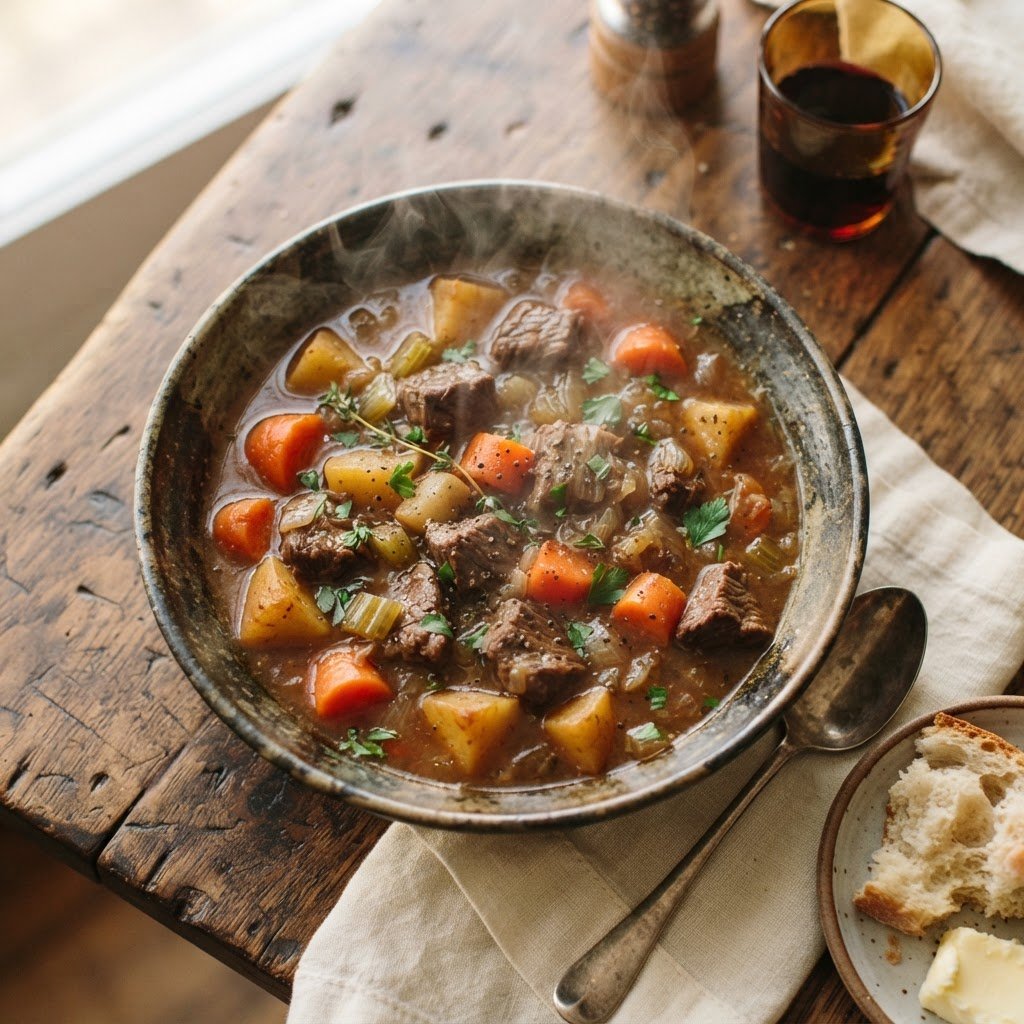
A perfect slow cooker beef stew is achieved by searing 2 lbs of cubed beef chuck roast and cooking it on low for 8 hours with aromatics, red wine, and beef broth. This method breaks down collagen into gelatin for a restaurant-quality, melt-in-your-mouth texture that is both deeply savory and consistently tender.
The Anatomy of the Perfect Stew
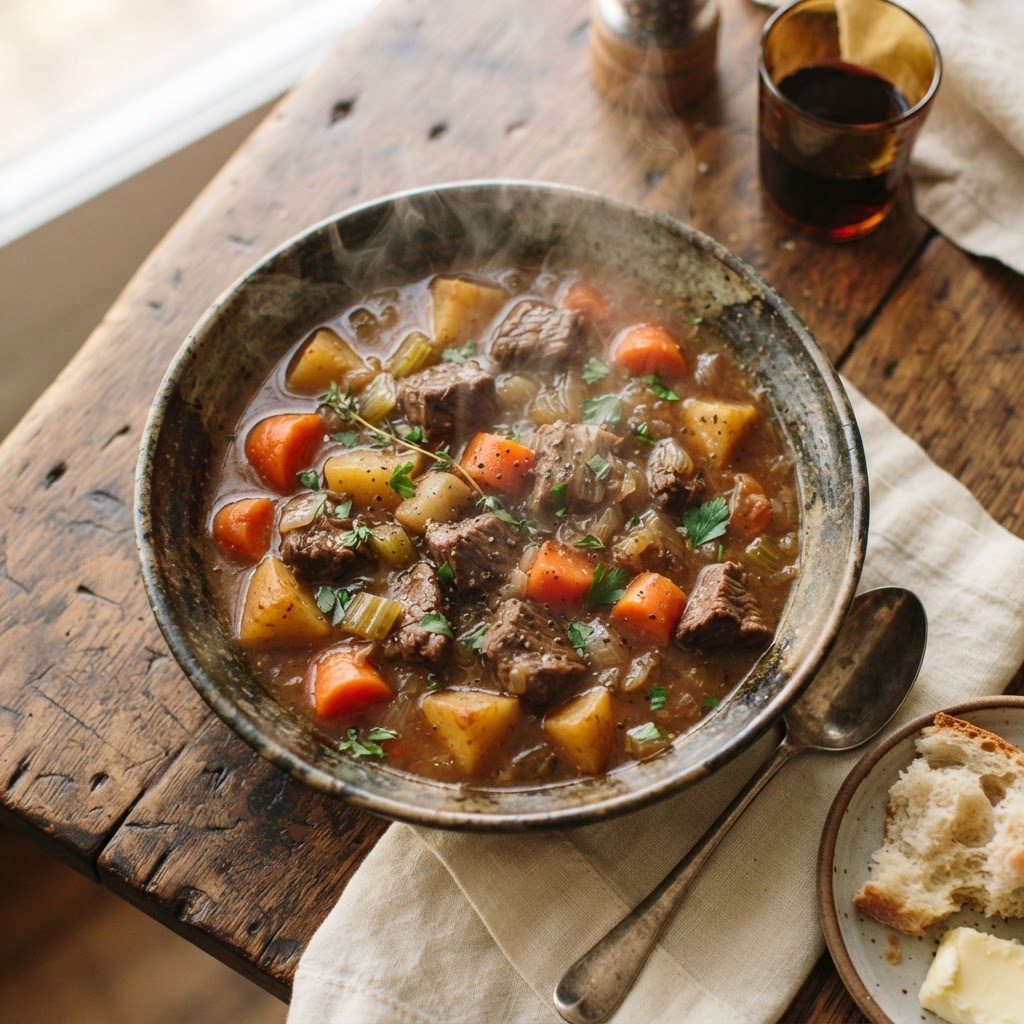
Creating a robust stew relies on selecting high-quality foundation ingredients, specifically beef chuck roast, which offers the ideal marbling for long, slow braising. Unlike lean cuts that dry out, the fat and connective tissue in chuck roast liquefy over an 8-hour period, thickening the gravy and creating a luxurious mouthfeel. A professional-grade stew balances acidity, salt, and umami by layering aromatics like yellow onions and garlic with acidic components like dry red wine and tomato paste. Research indicates that blooming tomato paste for at least two minutes before adding liquid removes the metallic rawness, significantly deepening the stew’s color and flavor profile. Root vegetables must be cut into uniform 1-inch pieces to ensure they finish cooking at the same time as the protein, preventing the dish from becoming a mash. By following these precise ingredient ratios, home cooks can ensure their meal hits the mark between a rustic home-style dish and a sophisticated bistro-quality stew.
Essential Ingredients for Success
To achieve that signature texture found in a thick slow cooker beef stew, you need to be mindful of your beef stew ingredients. Starting with high-quality stewing beef, often sourced from the shoulder or chuck, is non-negotiable because these cuts thrive during long cook times. Add in fresh celery, thick-cut carrots, and starchy potatoes to provide the necessary texture. For those experimenting, you can even incorporate butternut squash or experiment with a beef and mushroom stew slow cooker variation for an earthy twist.
Step-by-Step Recipe Instructions
Ingredients You’ll Need
- 2 lbs beef chuck roast, cut into 1-inch cubes
- 3 tbsp all-purpose flour
- 1 tsp kosher salt
- 0.5 tsp cracked black pepper
- 2 tbsp olive oil
- 2 cups beef broth
- 1 cup dry red wine
- 1 lb Yukon gold potatoes, chopped into 1-inch pieces
- 3 large carrots, peeled and sliced into rounds
- 1 large yellow onion, diced
- 3 cloves garlic, minced
- 2 tbsp tomato paste
- 2 sprigs fresh thyme
Follow this clear, step-by-step guide to prepare this dish perfectly every time.
Step-by-Step Cooking Technique
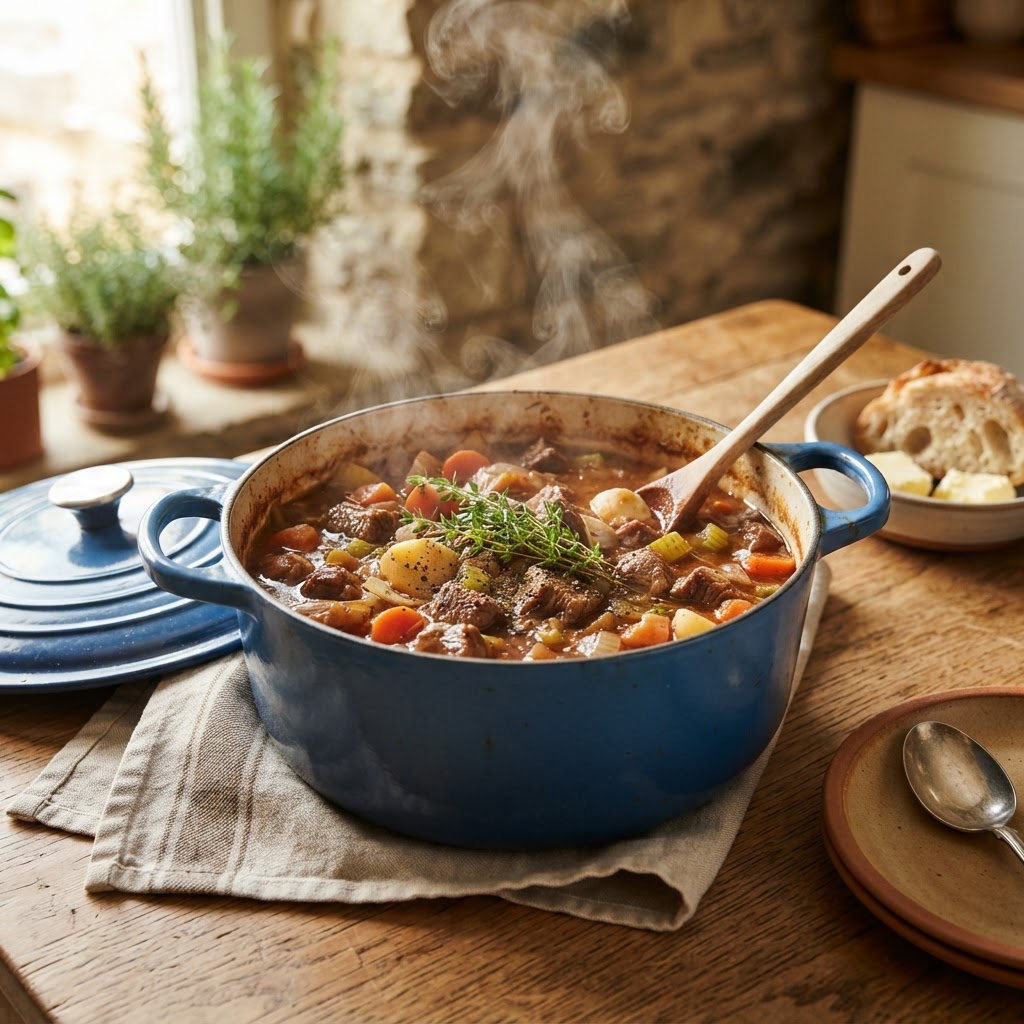
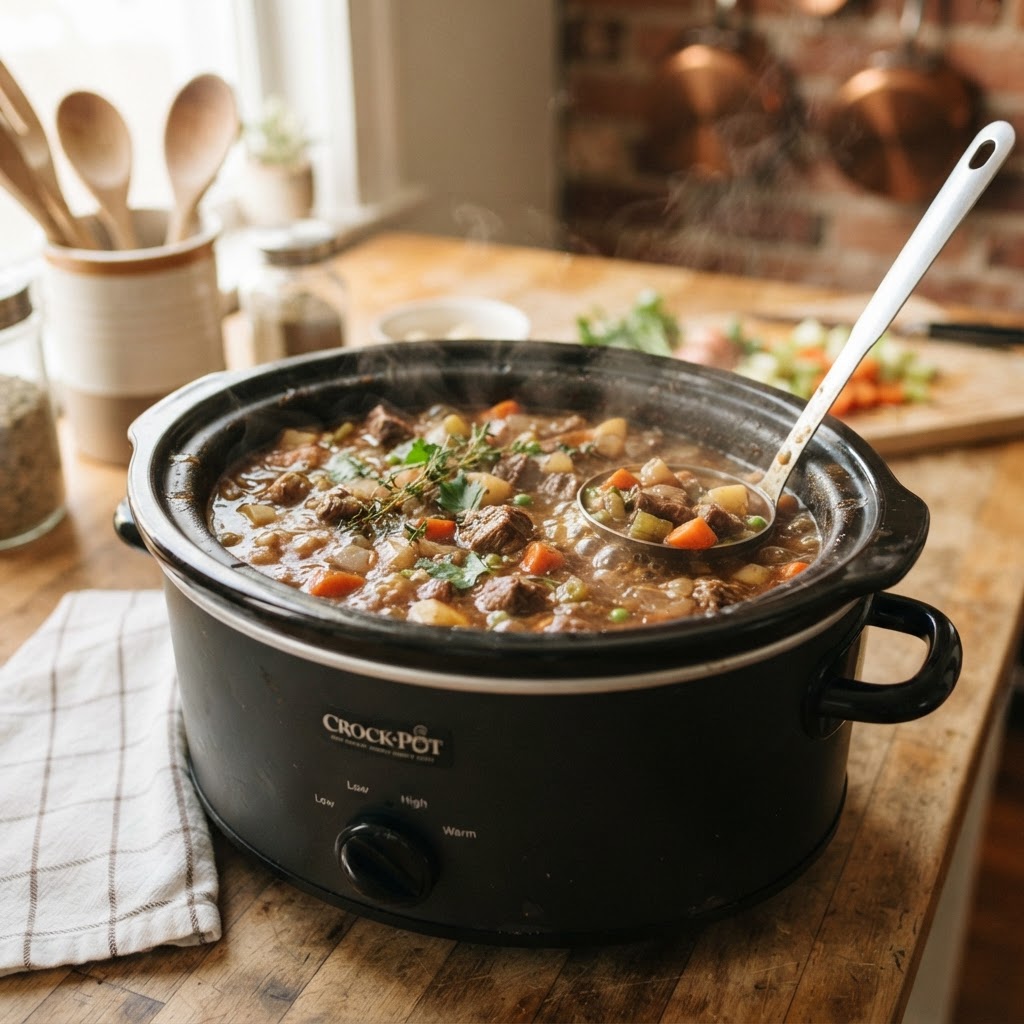
Executing a systematic cooking technique is the single most effective way to elevate home-cooked stew to restaurant standards. Searing the meat in a hot skillet for 8 minutes is mandatory; the Maillard reaction that occurs during this process creates complex flavor compounds that cannot be replicated by simply boiling meat in a slow cooker. After searing, the practice of deglazing the pan with one cup of dry red wine releases the fond, or browned bits, ensuring that zero flavor is left behind. When assembling the slow cooker, order matters: place root vegetables at the bottom near the heating element, followed by the meat and the liquid mixture. This arrangement ensures that tougher vegetables receive the most direct heat. Maintaining a consistent temperature is critical; do not lift the slow cooker lid during the 8-hour window, as doing so releases significant steam and heat, potentially adding 30-45 minutes to the total cooking time and unevenly cooling the meat fibers.
Why Slow Cooking Wins for Beef
Slow cooking is scientifically the superior method for preparing tough cuts of beef like chuck roast because it facilitates the breakdown of collagen into gelatin at a precise temperature. While high-heat methods typically toughen proteins by dehydrating them, the moist-heat environment of a slow cooker kept at approximately 200°F (93°C) allows connective tissue to slowly dissolve over a 6 to 8-hour window. This infusion process ensures the liquid, herbs, and spices permeate every fiber of the meat, resulting in a succulent, velvety texture that remains moist despite the long duration. Unlike stovetop methods which require constant monitoring to prevent burning or excessive liquid reduction, the slow cooker acts as a sealed vessel that retains volatile aromatics. This process is the gold standard for creating “beef and potatoes” dishes that are inherently nourishing and easy to digest. By keeping the cooking temperature below the boiling point, the slow cooker preserves the integrity of the vegetables, preventing them from turning into mush while still allowing them to fully absorb the savory beef broth essence.
Variations and Dietary Adjustments
If you are looking for another hands-off dinner option to add to your rotation, these simple 3-ingredient slow cooker pork chops are just as easy to prepare as this beef stew. Adapting your beef stew meat recipes to meet dietary needs is remarkably simple, making this a truly family-friendly beef stew idea. If you follow a gluten-free diet, replace the standard flour thickener with cornstarch or arrowroot powder for a delicious gluten-free beef soup. For those avoiding nightshades, a beef stew without potatoes can be substituted with extra turnips or parsnips. You can even lean into international profiles by turning your dish into an Irish food crockpot masterpiece using stout or a Hungarian-inspired beef stew with paprika.
Making It Hearty With Dumplings
If you want to turn your meal into a full feast, consider a crockpot beef stew with dumplings added during the final hour of cooking. The soft, pillowy dough absorbs the savory broth, providing a delightful contrast to the hearty chunks of beef. Whether you are using a basic mix or a from-scratch recipe, beef stew and dumplings slow cooker style is a classic way to ensure everyone leaves the table satisfied.
Troubleshooting Common Stew Issues
Even the best recipes can face hurdles, but fixing a thin or bland slow cooker beef stew is straightforward. If the liquid is too thin, simply mix a “slurry” of equal parts cornstarch and cold water and stir it in during the last 30 minutes of heating to create a thick slow cooker beef stew. If it lacks depth, a splash of Worcestershire sauce, balsamic vinegar, or soy sauce can act as a flavor booster, acting like a secret gravy master for your pot.
FAQ
How long should I cook beef stew in a slow cooker?
Cook your beef stew on low for 7 to 9 hours for the most tender results. Cooking for this duration allows the connective tissues in the beef to fully break down into gelatin while ensuring the carrots and potatoes remain tender without disintegrating.
Should I brown the meat before putting it in the crockpot?
Yes, searing your beef in a hot pan for approximately 8 minutes is essential. This process creates a Maillard reaction, developing a caramelized crust on the beef that provides a deeper, more professional flavor profile compared to adding raw meat directly.
Can I put raw potatoes in a slow cooker?
Yes, you can add raw potatoes directly to the slow cooker, provided they are cut into uniform 1-inch chunks. If you cut them too small, they may break apart during the long cook time and unintentionally thicken the stew, changing the intended consistency.
What is the best cut of meat for stew?
Beef chuck roast is the gold standard for stew due to its high ratio of fat and connective tissue. As it cooks, this fat renders, turning into a rich, silky gravy that prevents the meat from drying out, unlike leaner cuts like sirloin.
How do I thicken beef stew in a slow cooker?
To thicken a thin stew, whisk one tablespoon of cornstarch with one tablespoon of cold water to create a slurry, then stir it into the pot during the final 30 to 60 minutes of cooking. This creates a glossy, thick, and professional-grade gravy.