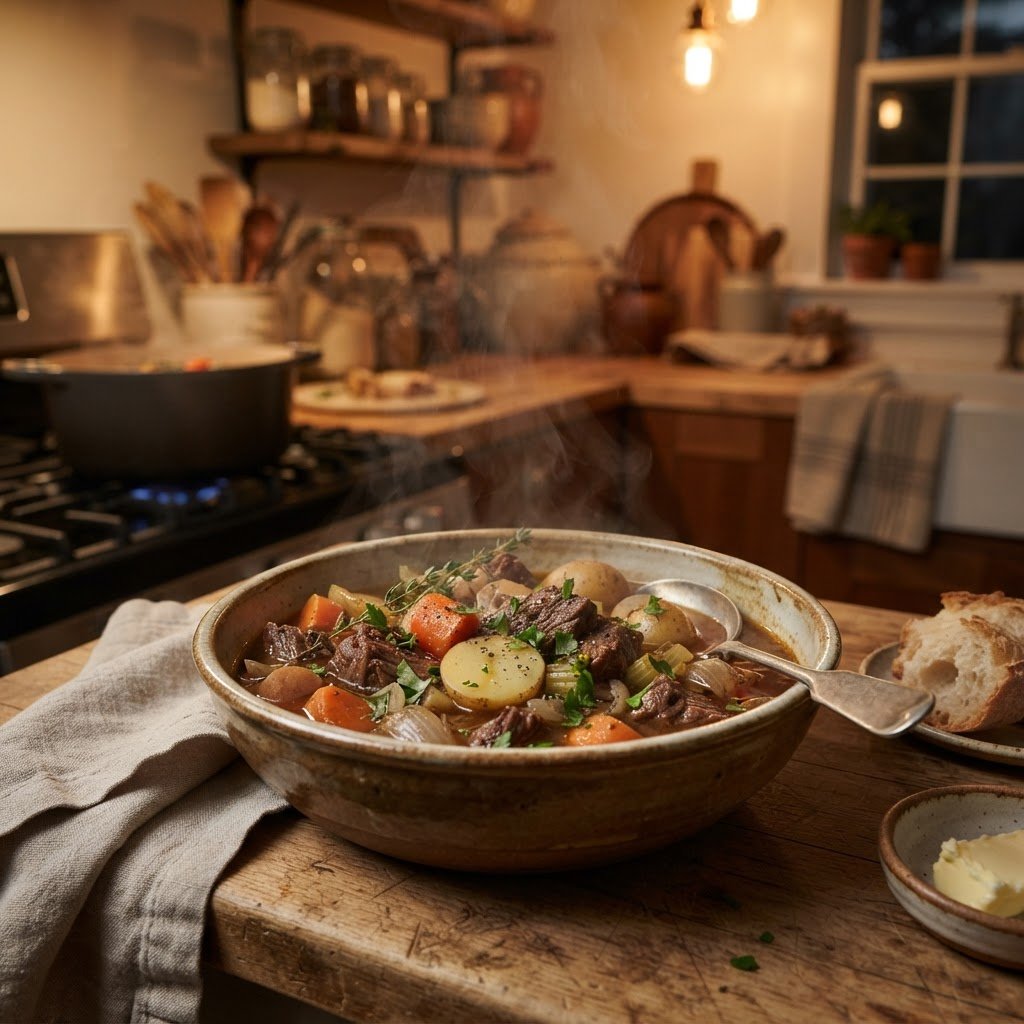
Simple Slow Cooker Beef Stew: A Classic Comfort Recipe
To make the perfect slow cooker beef stew, sear 2 lbs of flour-dusted beef chuck cubes, then combine them with potatoes, carrots, onions, broth, and herbs in a slow cooker for 8 hours on low. This method yields the most tender, melt-in-your-mouth texture by slowly breaking down connective tissues without needing active supervision.
The Magic of Low and Slow Cooking
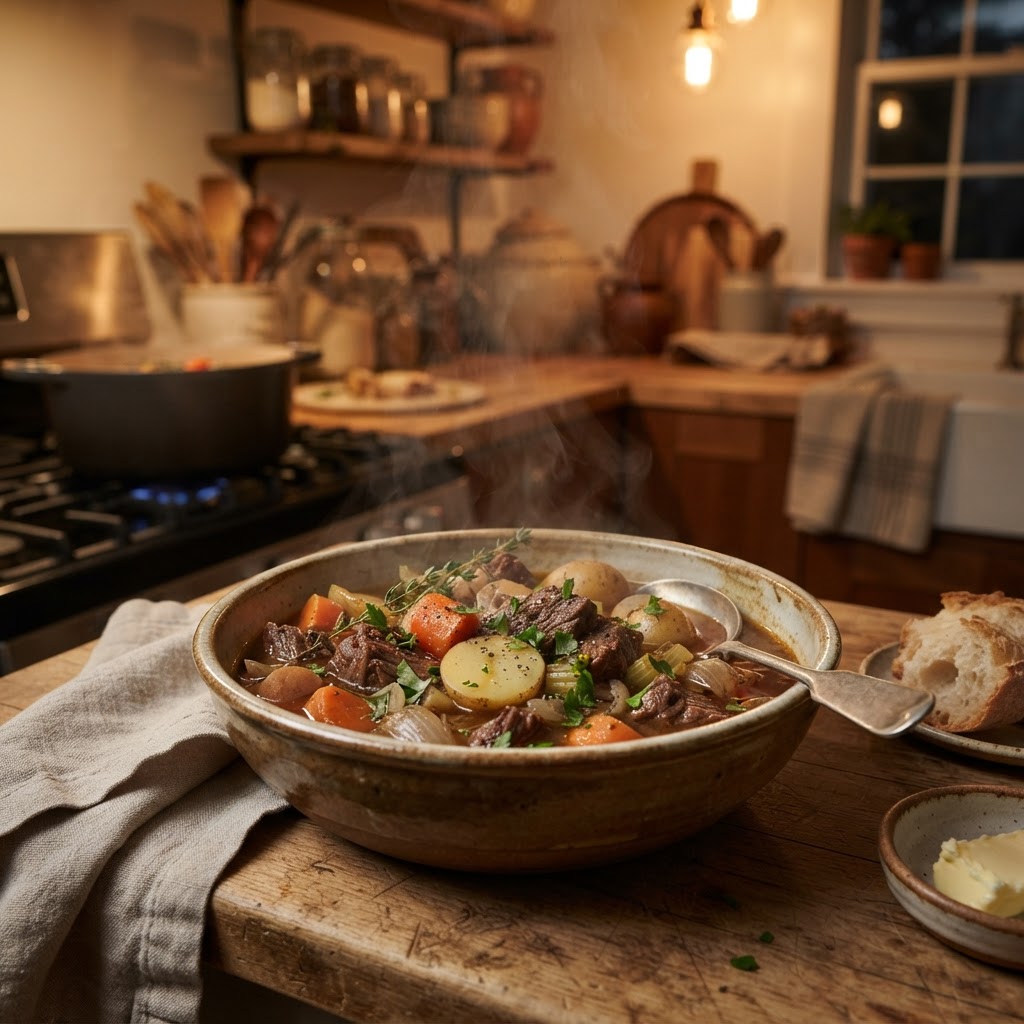
Slow cooking is a scientific process that uses consistent, low heat—typically between 190°F and 210°F—to transform tough cuts of meat like chuck roast into succulent, tender bites. By maintaining this steady temperature over 7 to 8 hours, the collagen in the beef’s connective tissues slowly gelatinizes, which provides the rich mouthfeel that defines high-quality stew. This “low and slow” approach is superior to high-heat methods, as it prevents the muscle fibers from seizing up, ensuring the beef remains juicy rather than dry or stringy. Furthermore, cooking at a gentle simmer allows aromatic vegetables like onions and garlic to release their essential oils, which permeate the beef broth and create a deep, complex flavor profile that standard stovetop boiling cannot replicate. This hands-off technique is ideal for busy households, allowing you to prepare a meal in 15 minutes of active time that develops professional-grade flavor during the workday. Because the slow cooker creates a sealed environment, moisture loss is minimized, resulting in a nutrient-dense meal that retains all the vitamins from your root vegetables.
Step-by-Step Recipe Instructions
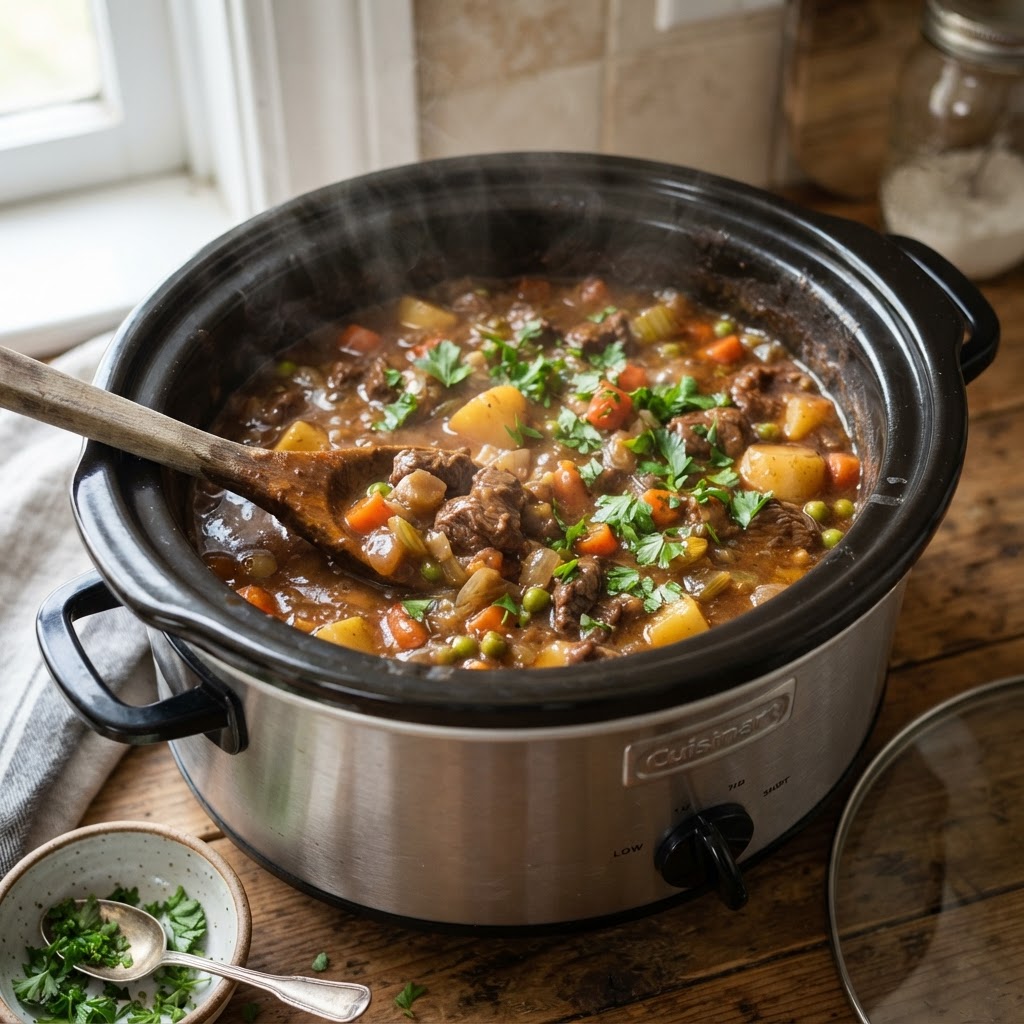
Ingredients You’ll Need
- 2 lbs beef chuck roast, cut into 1-inch cubes
- 3 tablespoons all-purpose flour
- 1 teaspoon salt
- 0.5 teaspoon black pepper
- 2 tablespoons olive oil
- 3 cups beef broth
- 1 pound carrots, peeled and sliced
- 1 pound potatoes, peeled and cubed
- 1 large onion, chopped
- 2 cloves garlic, minced
- 1 tablespoon tomato paste
- 1 teaspoon dried thyme
Essential Ingredients for Your Beef Stew
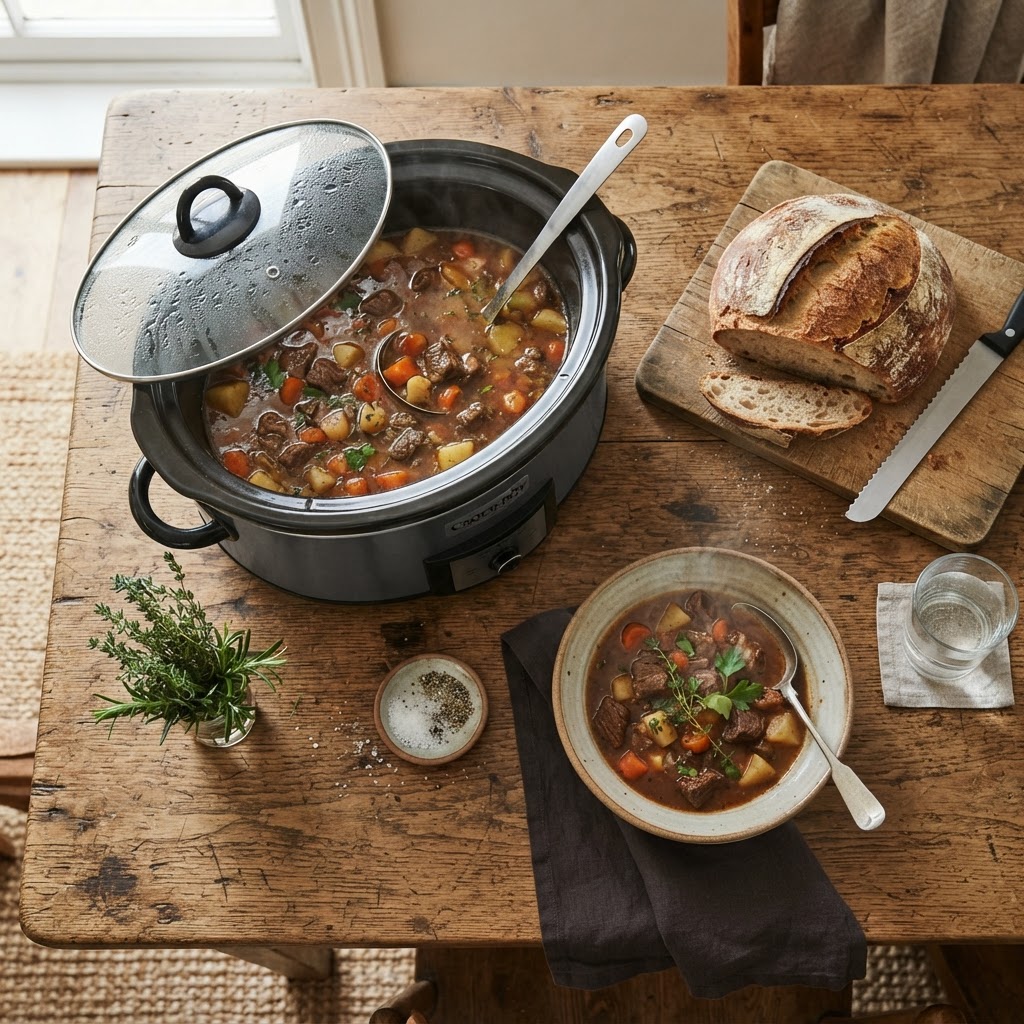
To craft the best beef stew, sourcing high-quality ingredients that harmonize during the long cooking process is essential. The foundation must be a well-marbled chuck roast; unlike lean cuts, the intramuscular fat in chuck is necessary to provide the rich mouthfeel and succulent texture required for a successful stew. For the aromatics, using fresh, unbruised vegetables ensures better structural integrity during the 8-hour cook time. Potatoes are the primary starch, and choosing starchy varieties like Russet or semi-waxy Yukon Gold is vital because they break down slightly, naturally thickening the broth as they release their starches. For the liquid base, stick to beef stock rather than water; stock contains gelatin, which contributes to a glossier, more velvety sauce. When using tomato paste, always incorporate it early to allow the sugars to caramelize, which cuts through the richness of the meat. If you find your final stew is too thin, you can utilize a slurry of 2 tablespoons cornstarch to 3 tablespoons cold water, added 30 minutes before serving. This combination of quality fat, starch, and umami-rich liquids creates the perfect balance of flavors and ensures your stew is a complete, satisfying meal.
Building the Flavor Profile
- Beef chuck roast, cut into 1.5-inch pieces
- Fresh carrots, sliced into thick rounds
- Russet or Yukon Gold potatoes, peeled and quartered
- Yellow onions and minced garlic for depth
- Beef broth or stock, preferably low-sodium
- Tomato paste for a savory, umami base
- Herbs such as thyme, rosemary, and bay leaves
Step-by-Step Instructions for Success
Achieving the perfect stew relies on a disciplined process that maximizes flavor extraction before the slow cooker begins its work. The most critical step is the Maillard reaction achieved during the searing phase; browning the beef in a hot skillet creates a crust of savory flavor that cannot be replicated once the meat is inside the liquid-filled slow cooker. Following the sear, deglazing the pan with a small portion of your beef broth recovers all the caramelized bits (fond) stuck to the bottom of the pan, which are essential for a deep, professional-quality gravy. Once ingredients are added, the ratio of liquid to solids should be just enough to partially submerge the ingredients, rather than swimming in them, to prevent a watery final consistency. Keeping the lid closed is also a critical operational rule: every time the lid is opened, the slow cooker loses approximately 20-30 minutes of cooking time as the unit struggles to recover its internal temperature. If you must use a high setting to speed things up, aim for 4 hours, though note that the meat will be less tender than the 8-hour low setting. Finally, adding fresh herbs and frozen vegetables like peas only in the final 30 minutes ensures they retain their vibrant color and texture, elevating the dish from a simple stew to a restaurant-quality presentation.
Comparison: Stew Preparation Methods
Regional Variations and Global Inspirations
Culinary traditions around the world utilize the “low and slow” method, and borrowing these techniques can help you diversify your dinner rotation. A classic Irish Stew, often made with lamb or beef, frequently includes Guinness or dark stout to provide a malty, bitter edge that balances the sweetness of root vegetables. In contrast, the French Beef Bourguignon utilizes red wine—typically a dry Pinot Noir—and pearl onions to create a more sophisticated, acidic sauce profile that is traditionally paired with crusty sourdough bread. For those preferring Mediterranean or North African notes, a Moroccan-inspired tagine-style beef stew incorporates dried fruits like prunes or apricots, creating a sweet-savory dynamic that is unique to those regions. Hungarian variants rely heavily on a high volume of quality, sweet paprika, which serves as both the main flavoring agent and the primary coloring component, giving the dish a vibrant red hue. By swapping your herbs or changing your primary braising liquid, you can explore these global flavors without needing to purchase new equipment or master entirely new techniques. These variations are an excellent way to maintain the health benefits of a high-protein, veggie-packed meal while keeping your palate interested throughout the cold winter months.
FAQ
Q: Can I make slow cooker beef stew without wine?
Yes, you can easily make a rich beef stew without wine by substituting the liquid with extra beef broth and a splash of Worcestershire sauce for umami. This alternative maintains the necessary depth of flavor while remaining alcohol-free for family-friendly dining.
Q: How long should I cook the beef for maximum tenderness?
For the most tender result, cook your beef on the low setting for 7 to 8 hours to fully break down collagen. Rushing the process on high heat can result in tougher, chewier meat fibers, as they lack the time required to gelatinize properly.
Q: Can I add frozen vegetables to my stew?
Yes, you can add frozen vegetables like peas or corn, but always stir them in during the final 30 minutes of cooking. Adding them too early will cause the vegetables to overcook, resulting in a mushy texture and loss of color.
Q: What is the best way to thicken the gravy?
To achieve a thick gravy, whisk two tablespoons of cornstarch with three tablespoons of cold water to create a slurry, then stir into the pot 30 minutes before serving. Alternatively, mashing a few cooked potato chunks directly into the broth provides a natural, rustic thickening agent.
Q: Does the sear step actually impact flavor?
Yes, searing the beef creates the Maillard reaction, which develops deep, savory flavor compounds on the surface of the meat. Omitting this step results in a boiled, paler meat texture that lacks the robust complexity found in professional-grade beef stews.