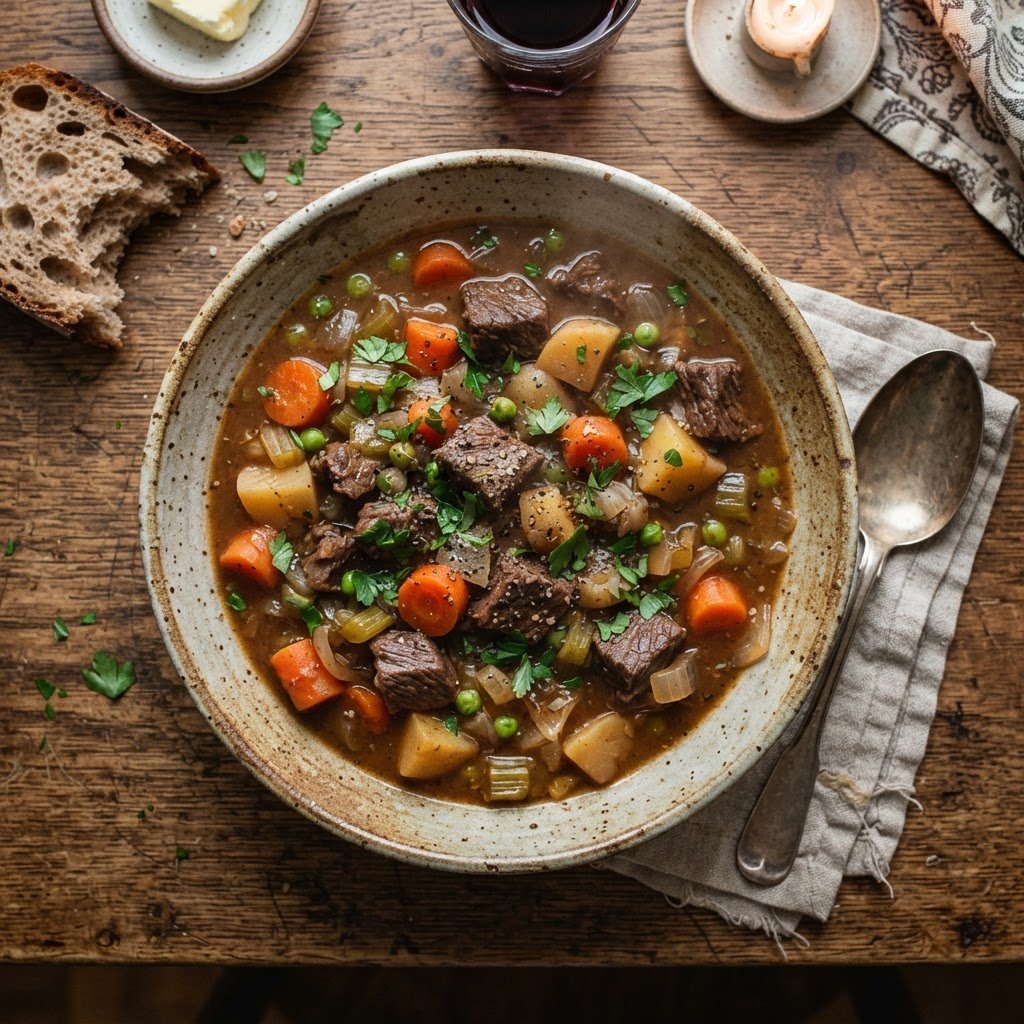
Easy Slow Cooker Beef Stew with Potatoes: A Hearty Meal
To make a perfect slow cooker beef stew, cook 2 lbs of cubed beef chuck and root vegetables on low for 7 to 8 hours in a savory broth thickened with flour. This method breaks down tough connective tissue, resulting in fork-tender meat and a rich, deep flavor profile that develops through long, slow simmering.
Why Choose This Slow Cooker Beef Stew
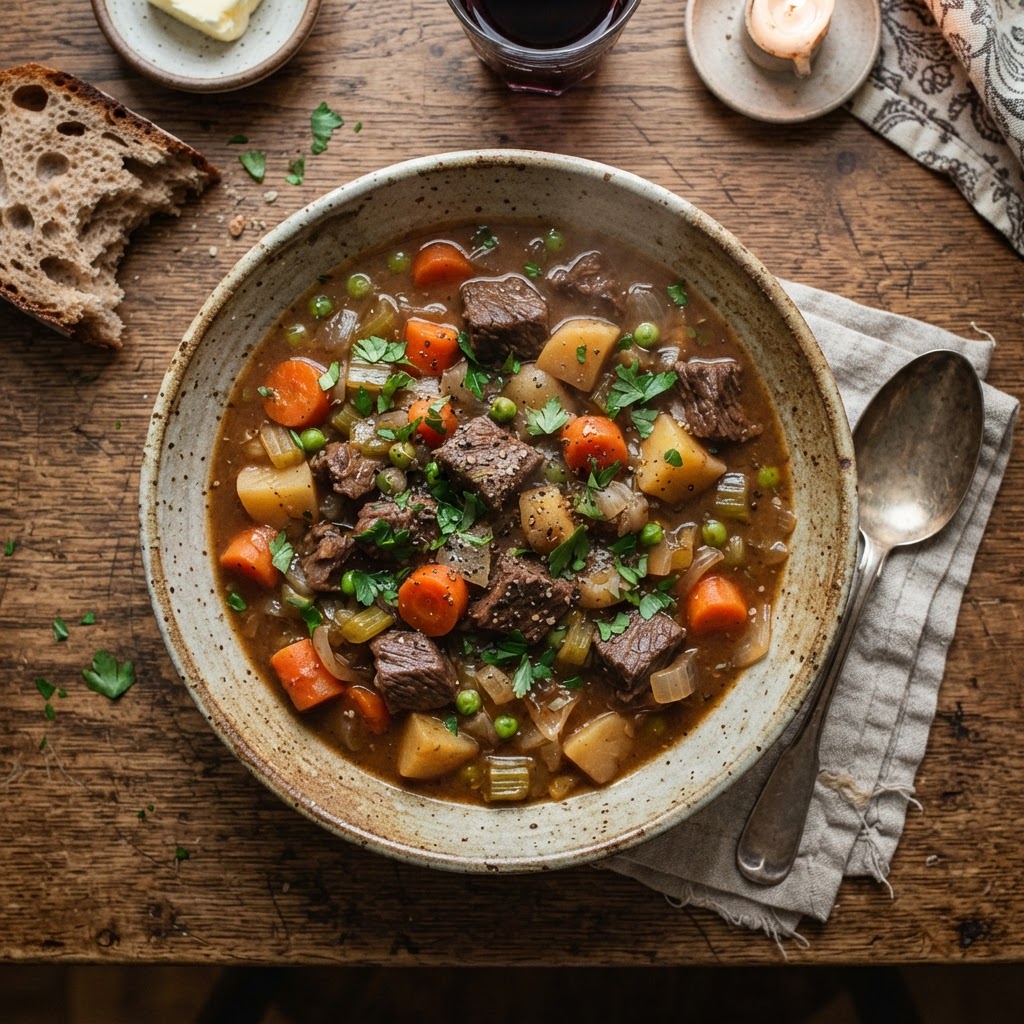
Choosing this slow cooker beef stew offers unmatched convenience for busy households, utilizing the “set it and forget it” method to create restaurant-quality comfort food with minimal active kitchen time. If you are looking for another set-it-and-forget-it meal that requires very little effort, you should also check out our easiest 5-ingredient BBQ pork chops for a delicious dinner alternative. If you enjoy the convenience of set-it-and-forget-it meals as much as this stew, you should also try our creamy garlic slow cooker pork chops for another flavorful dinner option. If you enjoy simple recipes with minimal prep work, you might also want to try our 3-ingredient slow cooker pork chops for a quick and easy weeknight dinner. Because the slow cooker maintains a consistent temperature between 180°F and 200°F, it is the ideal tool for braising beef chuck roast, a cut that requires sustained heat to render intramuscular fat into gelatin. Unlike stovetop cooking, which can quickly dry out meat, the sealed environment of a crockpot retains 100% of the moisture, ensuring every bite remains succulent. Whether you are searching for Crockpot beefstew approaches or simple stew beef recipes, this method is scientifically superior for flavor development. The extended cooking time allows the Maillard reaction products from the seared meat to infuse into the vegetables and broth, creating a cohesive, deeply savory dish that satisfies the entire family on cold evenings.
Step-by-Step Recipe Instructions
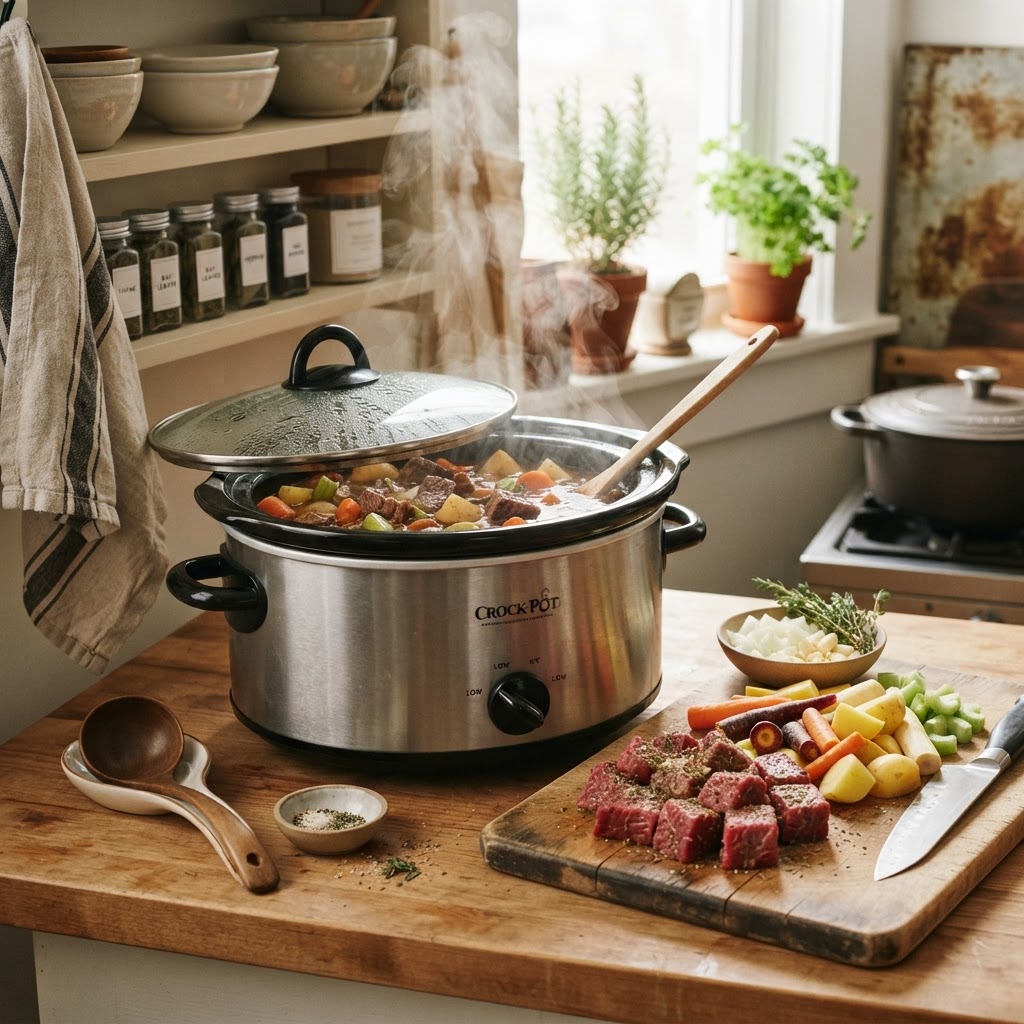
Ingredients You’ll Need
- 2 lbs beef chuck roast, cut into 1-inch cubes
- 3 tbsp all-purpose flour
- 1 tbsp olive oil
- 4 cups Yukon Gold potatoes, peeled and cut into 1-inch chunks
- 3 large carrots, peeled and sliced into rounds
- 1 large yellow onion, diced
- 3 cloves garlic, minced
- 2 cups beef broth
- 1 cup dry red wine
- 2 tbsp tomato paste
- 1 tsp dried thyme
- 1 tsp salt
- 0.5 tsp black pepper
Follow this clear, step-by-step guide to prepare this dish perfectly every time.
Essential Ingredients for Perfect Stew
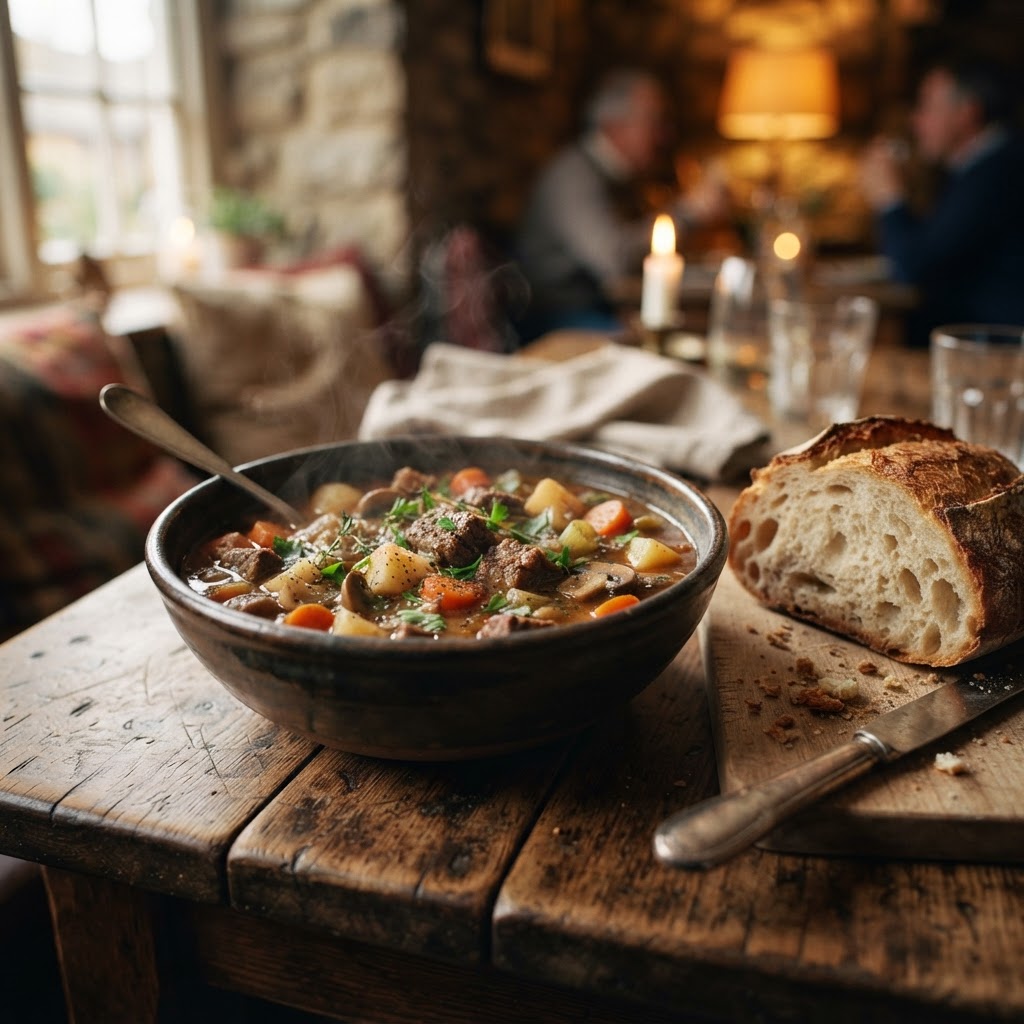
Building a robust beef stew requires a foundation of high-quality proteins and aromatics that can withstand eight hours of thermal processing. The cornerstone of this dish is the beef chuck roast; when shopping, look for “marbling,” which consists of white flecks of intramuscular fat that melt at 160°F, self-basting the meat. To maximize the flavor profile, avoid lean cuts like round steak, which lack the necessary collagen to become tender during a slow cook. Aromatics such as yellow onions contain sulfur compounds that, when cooked down, provide a sweetness that cuts through the acidity of the tomato paste and red wine. For the best consistency, use Yukon Gold potatoes, which have a waxy-starch balance that prevents them from disintegrating into mush during the long cooking cycle. If you are preparing a crockpot beef stew without wine, substitute with 1 cup of high-quality beef stock supplemented with 1 teaspoon of apple cider vinegar to provide a similar acidic brightness. Proper preparation of these ingredients ensures a professional result that avoids the bland, watery outcomes often associated with amateur slow cooker meals. If you are looking for another hearty meal to add to your rotation, our best slow cooker potato soup recipe is perfect for those cozy nights at home.
Achieving the Perfect Texture and Consistency
Achieving the ideal, coat-the-back-of-a-spoon consistency relies on controlled starch gelatinization and liquid reduction management within the slow cooker. To ensure a thick slow cooker beef stew, dredging the beef cubes in flour before searing is essential because the flour proteins and carbohydrates brown alongside the meat, creating a deeper fond that acts as a thickening agent once the broth is introduced. If the final stew remains too thin after 8 hours of cooking, you can implement a cornstarch slurry by mixing 1 tablespoon of cornstarch with 2 tablespoons of cold water; stirring this into the stew during the final 30 minutes prevents the starch from clumping and results in a glossy, thickened gravy. Furthermore, the selection of vegetables impacts consistency; cutting potatoes into uniform 1-inch cubes ensures they release just enough starch to bind the sauce without turning the entire dish into a puree. For those seeking texture variations, adding pearl barley 60 minutes before the end of cooking adds a nutty chew, while mushrooms provide an earthy umami boost that complements the richness of the beef fat.

Unique Variations and Dietary Adjustments
Customizing your beef stew allows for regional and dietary adaptations without sacrificing the core comfort of the dish. For an Irish-inspired profile, replace the standard broth and red wine with 12 ounces of dark stout beer, which adds complex, malty notes and darkens the color of the sauce. If you are catering to gluten-sensitive guests, simply substitute the 3 tablespoons of all-purpose flour used for dredging with an equal amount of cornstarch or arrowroot powder. For those exploring lower-glycemic options, replacing half of the Yukon Gold potatoes with low-starch root vegetables like parsnips or celery root maintains the texture while reducing the carbohydrate load. International variations, such as a Hungarian Goulash, can be achieved by increasing the paprika to 2 tablespoons and adding caraway seeds, creating an entirely new flavor profile while utilizing the same fundamental slow-cooking technique.
Common Pitfalls and How to Avoid Them
Avoiding common cooking mistakes ensures your slow cooker beef stew reaches its potential for complex, savory flavor. The most frequent error is neglecting the sear; skipping the browning stage results in a grey, unappealing piece of meat and misses the opportunity for the Maillard reaction, which is the chemical catalyst for deep savory notes. Another critical oversight is lifting the lid of the slow cooker; doing so releases trapped heat, requiring the device to work for an additional 20-30 minutes to regain temperature, which can lead to unevenly cooked vegetables. Additionally, seasoning should be applied in stages. Adding salt too early can sometimes result in overly salty sauce as the liquid reduces, whereas adding herbs like parsley or chives at the very end ensures their volatile oils remain fresh rather than turning bitter during the long, low-heat cycle. By adhering to these technical boundaries, you ensure that the beef reaches the “fork-tender” threshold of 195°F internally, the point at which connective tissues fully collapse into a succulent, velvety texture.
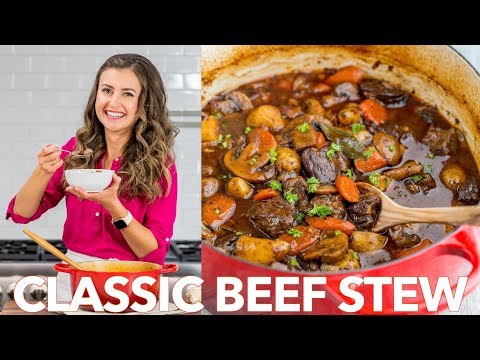
Section: The Role of Stewing Beef and Cuts
Understanding why specific cuts of beef are superior for slow cooking is the key to achieving professional-grade results. You must target muscles that have high activity levels and significant amounts of collagen, such as the chuck roast or the brisket, which are structurally dense. As the slow cooker maintains a consistent, low temperature, the heat slowly denatures the collagen, converting it into gelatin, which provides the mouth-feel commonly associated with “melt-in-your-mouth” beef. Using expensive cuts like sirloin or tenderloin is counterproductive; these lean muscles lack connective tissue and will become dry, stringy, and “chalky” when subjected to 8 hours of heat. When purchasing your beef, look for a uniform red color with well-distributed, thin ribbons of white intramuscular fat. Avoid large, thick clumps of exterior fat, which can make the finished stew overly greasy. By selecting a chuck roast and cutting it into consistent 1-inch cubes, you provide the optimal surface-area-to-mass ratio for maximum collagen breakdown, ensuring the most consistent texture throughout the final meal.
FAQ
How long should I cook beef stew in a slow cooker?
Cook your beef stew on low for 7 to 8 hours to allow the connective tissues in the beef to fully break down into gelatin. Alternatively, you can cook on high for 4 to 5 hours, though the lower, longer setting is preferred for the most tender, melt-in-your-mouth texture.
Can I make this slow cooker beef stew without potatoes?
Yes, you can substitute potatoes with other hearty vegetables like parsnips, rutabaga, or cauliflower florets. These low-carb or alternative root vegetables provide a similar structural integrity and texture to the stew without the high starch content of traditional gold or russet potatoes.
Do I need to brown the beef before putting it in the slow cooker?
While optional, browning the beef in a hot skillet is highly recommended to achieve the best flavor. This process initiates the Maillard reaction, which caramelizes the proteins and creates complex savory notes that cannot be replicated by simply dumping raw ingredients into the slow cooker basin.
How do I thicken the stew if it is too watery?
If your stew remains too thin, create a slurry by whisking 1 tablespoon of cornstarch into 2 tablespoons of cold water. Stir this mixture into the hot stew during the final 30 minutes of the cooking cycle to produce a glossy, thick, and cohesive gravy.
Is it safe to leave a slow cooker on for 8 hours?
Yes, modern slow cookers are designed for unattended operation over long periods. As long as the unit is placed on a heat-resistant surface and away from flammable objects, the temperature-controlled environment of a slow cooker is perfectly safe for an 8-hour cooking cycle.