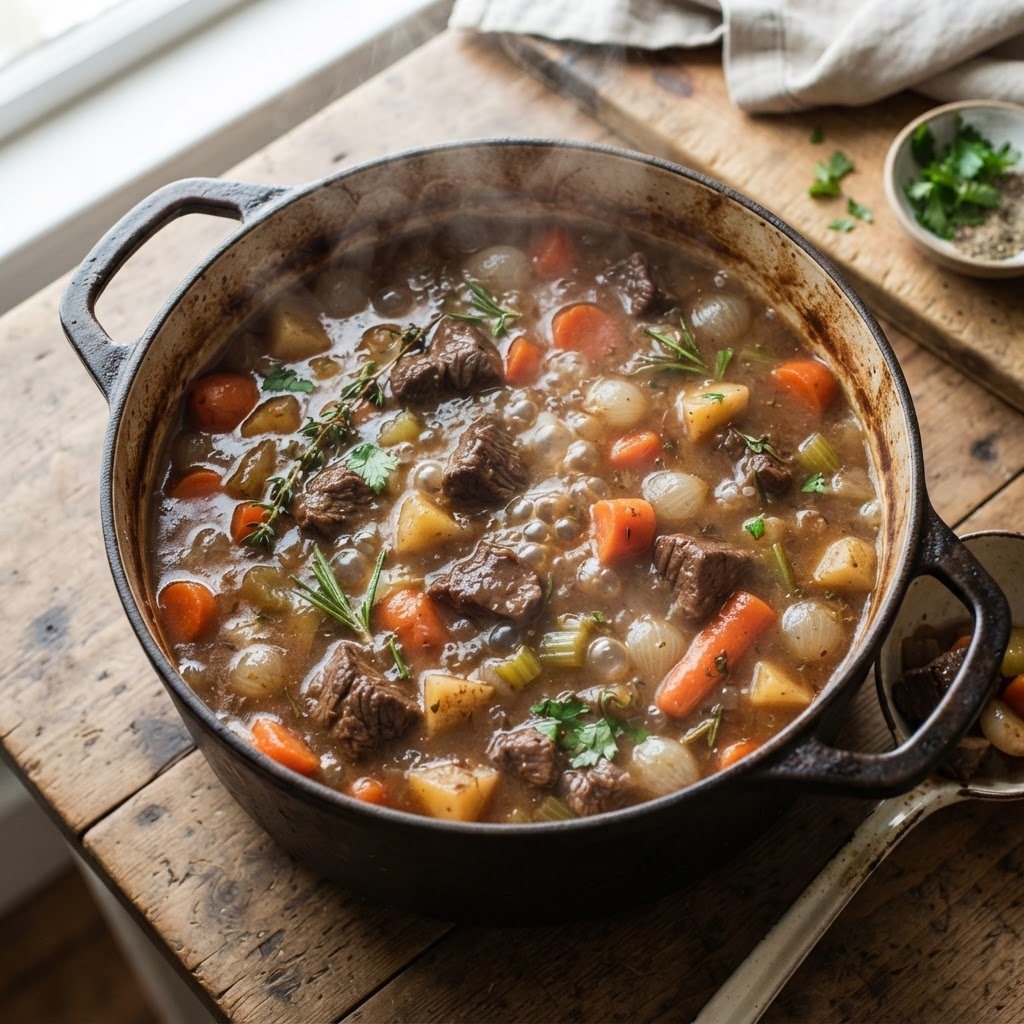
The best slow cooker beef stew is made by searing 2 lbs of beef chuck in flour, then braising it on low heat for 7 to 8 hours with beef broth, aromatics, and hearty root vegetables. This method breaks down connective tissues to create fork-tender meat and a rich, naturally thickened gravy.
Why Choose This Method for Your Beef Dinner
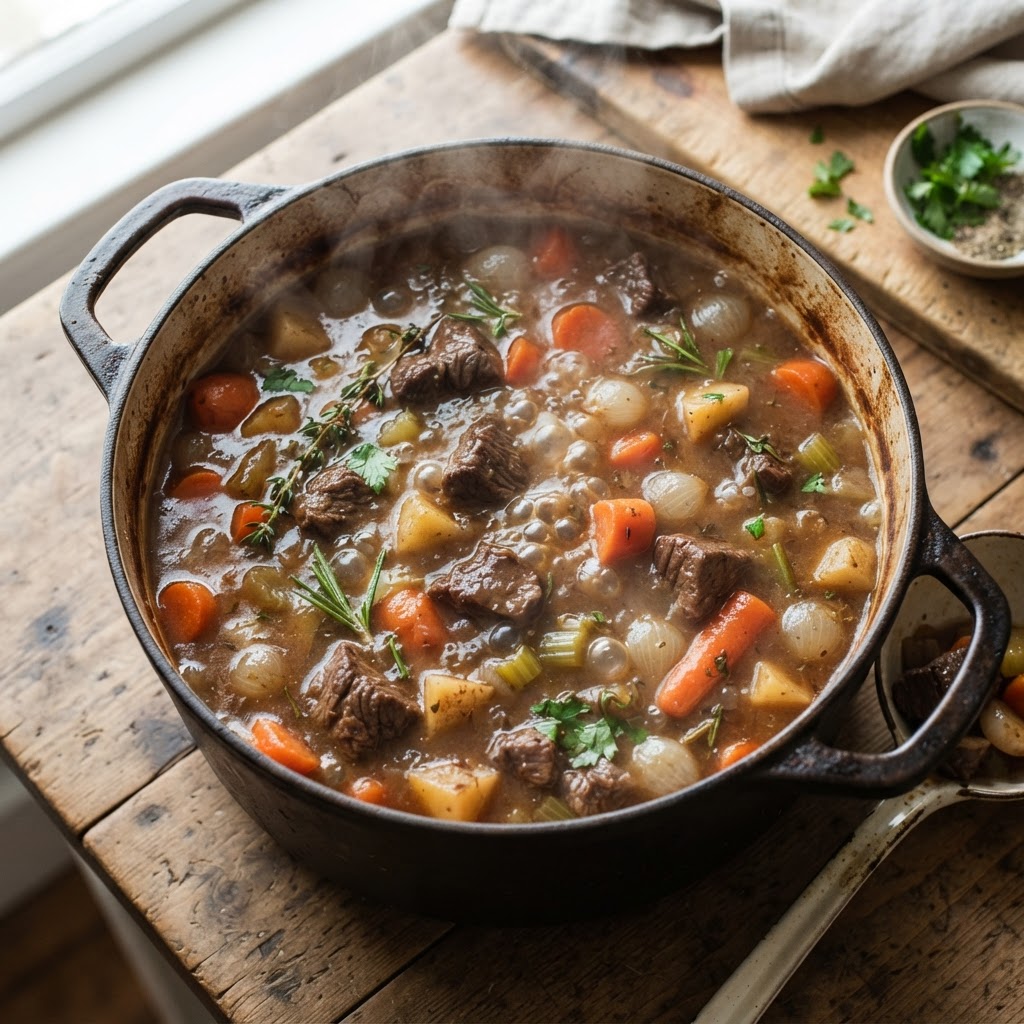
Choosing a slow cooker beef stew saves significant time while maximizing the depth of flavor in your beef dishes. When you cook beef slowly, the connective tissues break down, resulting in the soft beef recipes that define true comfort food. This method is far superior to oven beef recipes because it allows the flavors of the aromatics to meld over several hours, ensuring every bite of your hearty recipes is packed with savory goodness. Slow cooking maintains a constant internal temperature between 190°F and 200°F, which is the precise range needed to gelatinize collagen without drying out the muscle fibers. Compared to stovetop methods that require active monitoring, the slow cooker offers a set-it-and-forget-it advantage that preserves nutrients and moisture. Below is a comparison of cooking methods for beef stew:
Step-by-Step Recipe Instructions
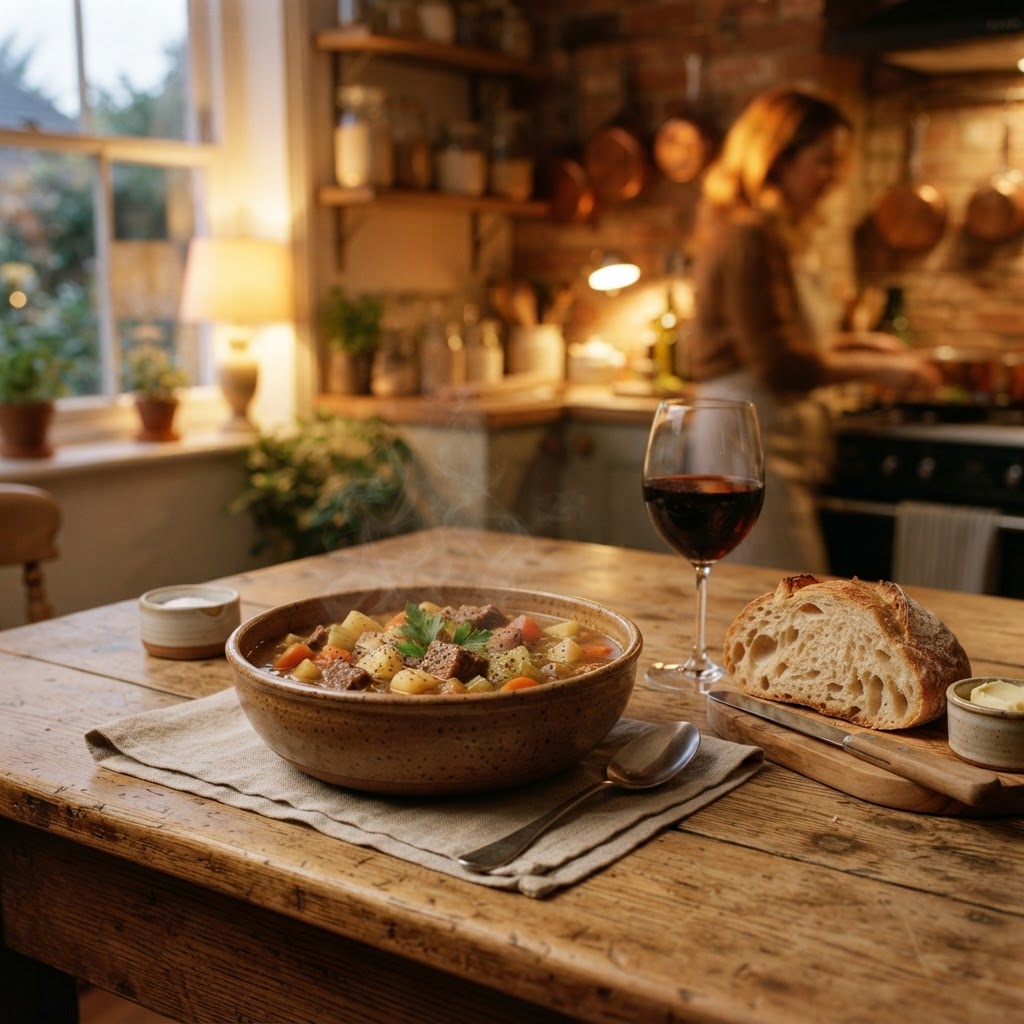
Ingredients You’ll Need
- 2 lbs beef chuck roast, cut into 1-inch cubes
- 3 tbsp all-purpose flour
- 1 tsp salt
- 1/2 tsp black pepper
- 2 tbsp olive oil
- 2 cups beef broth
- 1 lb Yukon gold potatoes, cut into 1-inch pieces
- 3 large carrots, peeled and sliced
- 1 yellow onion, diced
- 2 cloves garlic, minced
- 1 tbsp tomato paste
Follow this clear, step-by-step guide to prepare this dish perfectly every time.
Essential Beef Stew Ingredients
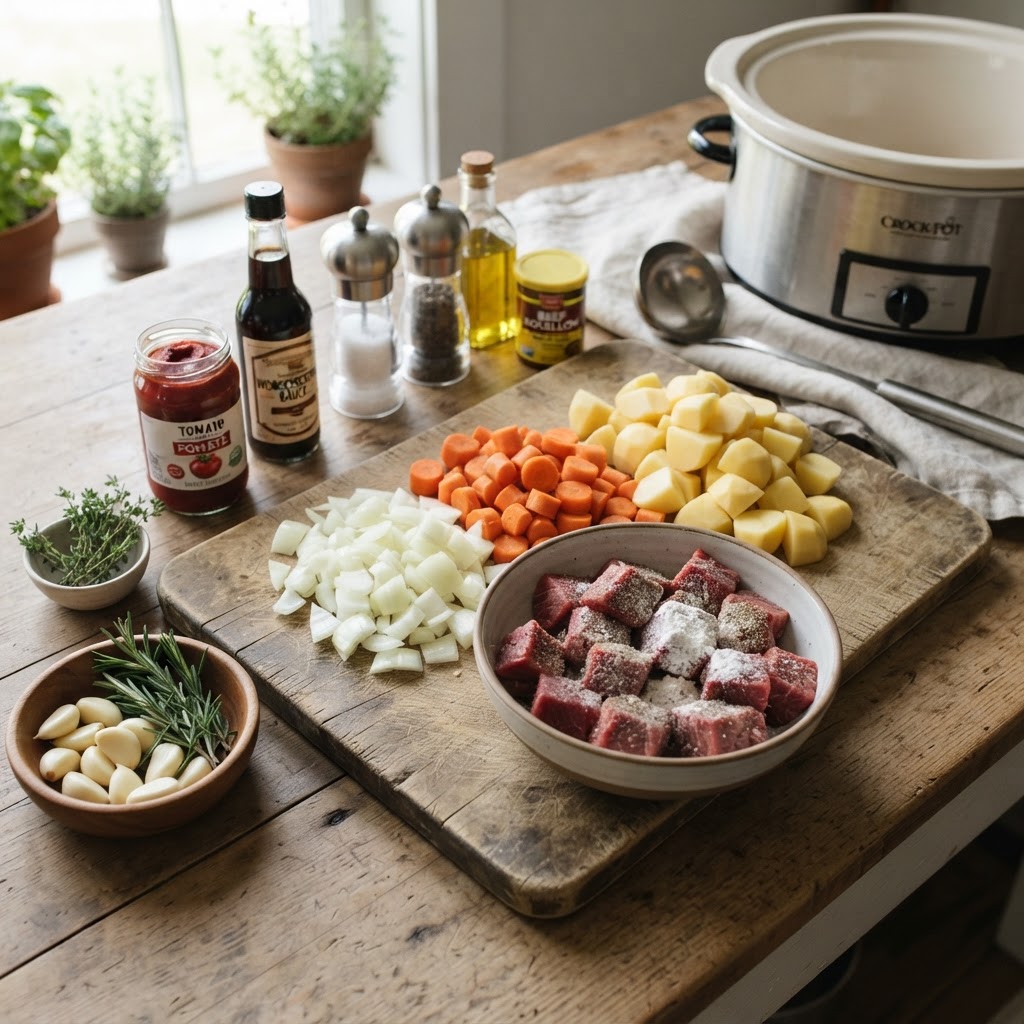
Selecting the right beef stew ingredients is the first step toward crafting the ultimate comfort food. You will need roughly 2 pounds of stewing beef slow cooker appropriate, specifically chuck beef recipes as it has the best fat marbling for long cooking times. Fresh vegetables are non-negotiable, so grab some sweet carrot stalks, celery, and gold potatoes. The chemistry of a great stew relies on the Maillard reaction—the chemical reaction between amino acids and reducing sugars that gives browned food its distinctive flavor. By incorporating tomato paste, you introduce natural glutamates that amplify the savory umami profile of the beef. When choosing your potatoes, opt for waxier varieties like Yukon Gold, which hold their shape during the 8-hour braise, unlike starchy Russets that may disintegrate. The addition of fresh herbs like thyme and rosemary during the final hour of cooking provides a bright aromatic lift that contrasts the deep, earthy richness of the long-cooked beef and broth base.
Step-by-Step Cooking Technique
Learning how to make stew in a slow cooker starts with the proper preparation of your protein. First, toss your 1lb stew meat recipes in seasoned flour to ensure a golden crust and a thicker broth later on. Once seared, place the beef into the base of your device, which is essentially the best way to handle crockpot beef stew recipes slow cooker. Efficient heat management is the key to achieving professional results in a home kitchen. The layering process is critical: place the toughest vegetables, like carrots, at the bottom where heat is most intense, and place delicate items or potatoes near the top to prevent overcooking. Utilizing a red wine deglaze after browning the meat adds an acidic component that helps tenderize the beef and balances the heavy fats. This technique effectively incorporates the ‘fond’—the caramelized brown bits left in the pan—into the broth, providing a depth of flavor that is otherwise lost. Maintaining a consistent seal on the slow cooker is vital; every time the lid is lifted, the internal temperature drops by 10-15 degrees, requiring an additional 20 minutes of recovery time to return to a safe simmer.
Variations for Every Palate
There are endless ways to customize this recipe, ranging from a crockpot beef stew with dumplings to more international inspirations. If you enjoy a bit of variety, try a beef and barley stew, which adds a nutty, chewy texture that pairs beautifully with the beef. For those who prefer a specific cultural flair, a Guinness beef stew recipe slow cooker is a must-try for its dark, complex, and earthy profile. The viscosity of the stew can be altered by increasing the ratio of root vegetables or adding a slurry of 1 tablespoon of cornstarch to 2 tablespoons of cold water during the final 30 minutes. If you are pursuing a healthier profile, swapping traditional potatoes for parsnips provides a lower-glycemic index option with a subtle, spicy sweetness. You can also experiment with aromatic additions; a teaspoon of smoked paprika adds a subtle heat, while a splash of Worcestershire sauce introduces an aged, fermented complexity. For the best flavor infusion, keep your herb bundles (bouquets garnis) tied with kitchen twine for easy removal before service, ensuring a clean mouthfeel without stray stems or woody remnants in the final bowl.
Troubleshooting Common Stew Issues
Even the best slow cooker beef stew can face challenges, such as the broth being too thin or the vegetables becoming mushy. To achieve a crockpot thick beef stew, avoid adding too much liquid at the start, as the vegetables release moisture while cooking. If you find the liquid is still thin, whisk in a cornstarch slurry during the last thirty minutes of cooking. Mushy vegetables are almost always a result of overcrowding or overcooking; ensure vegetables are cut into uniform 1-inch chunks to ensure they cook at the same rate. If the meat remains tough, it usually indicates the connective tissue has not yet broken down into gelatin, which requires more time at the 190°F+ threshold; simply add 60 minutes of cook time. If the flavor seems ‘flat,’ it is often a lack of acid; a teaspoon of red wine vinegar or a squeeze of fresh lemon juice can ‘wake up’ the flavors instantly without adding significant salt.
FAQ
How long should I cook beef stew in a slow cooker?
Cook your beef stew on low heat for 7 to 9 hours for optimal results. This extended timeframe allows the collagen in the beef chuck to fully break down into gelatin, resulting in a tender, melt-in-your-mouth texture that is impossible to achieve in a shorter period.
Can I make this gluten-free?
Yes, you can substitute the all-purpose flour for cornstarch or arrowroot powder to thicken the stew. Always check that your store-bought beef broth is labeled gluten-free, as many commercial brands contain hidden wheat-based stabilizers or flavorings.
Do I need to brown the meat first?
Browning the meat is highly recommended because it triggers the Maillard reaction. This process creates a complex, savory crust on the surface of the beef that provides a depth of flavor that raw meat simply cannot achieve, regardless of how long it simmers.
Can I add frozen vegetables?
Yes, add frozen vegetables during the final 30 to 60 minutes of the cooking cycle. Adding them too early will cause them to overcook and lose their structural integrity, resulting in a mushy consistency that detracts from the quality of the overall dish.
Why is my stew broth too thin?
If your stew is too thin, it is likely due to excess liquid evaporation or a lack of starch. Whisk one tablespoon of cornstarch with two tablespoons of cold water to create a slurry, stir it into the stew, and cook on high for 15 minutes to thicken the gravy.