Slow Cooker Pork Roast: Juicy, Flavorful & Easy
To make a perfect slow cooker pork roast, sear a 4-pound bone-in pork shoulder, then cook it on low for 6–8 hours until it reaches an internal temperature of 195°F–205°F. This method breaks down connective tissue for a tender, pull-apart texture while using a vegetable bed to prevent the meat from scorching.
Preparing a delicious Slow Cooker Pork Roast is the ultimate strategy for a stress-free dinner that delivers restaurant-quality results. By searing the meat first and cooking it low and slow, you lock in moisture and flavor, ensuring a tender, pull-apart texture that pairs perfectly with roasted vegetables or creamy mashed potatoes every time. Follow this clear, step-by-step guide to prepare this dish perfectly every time.
Step-by-Step Recipe Instructions
The Art of Choosing the Right Cut
Success starts at the butcher counter when selecting your pork, specifically choosing bone-in pork shoulder or Boston butt for the best results. These specific cuts contain a high ratio of intramuscular fat and collagen-rich connective tissue that gelatinizes when exposed to consistent low heat over 6 to 8 hours. In contrast, lean cuts like pork loin or tenderloin possess less than 5% fat content, which causes them to become fibrous and dry when slow-cooked for longer than 3 hours. When inspecting your selection, look for deep pink meat with significant white marbling; the presence of “flecks” of fat suggests the roast will remain succulent even after extended cooking. Avoid any meat that appears gray or exhibits “weeping” in the packaging, as this indicates improper temperature control during storage or previous freezing cycles. If you enjoy experimenting with different pork cuts, our honey balsamic pork tenderloin offers a slightly different, equally delicious flavor profile.
Essential Preparation Techniques
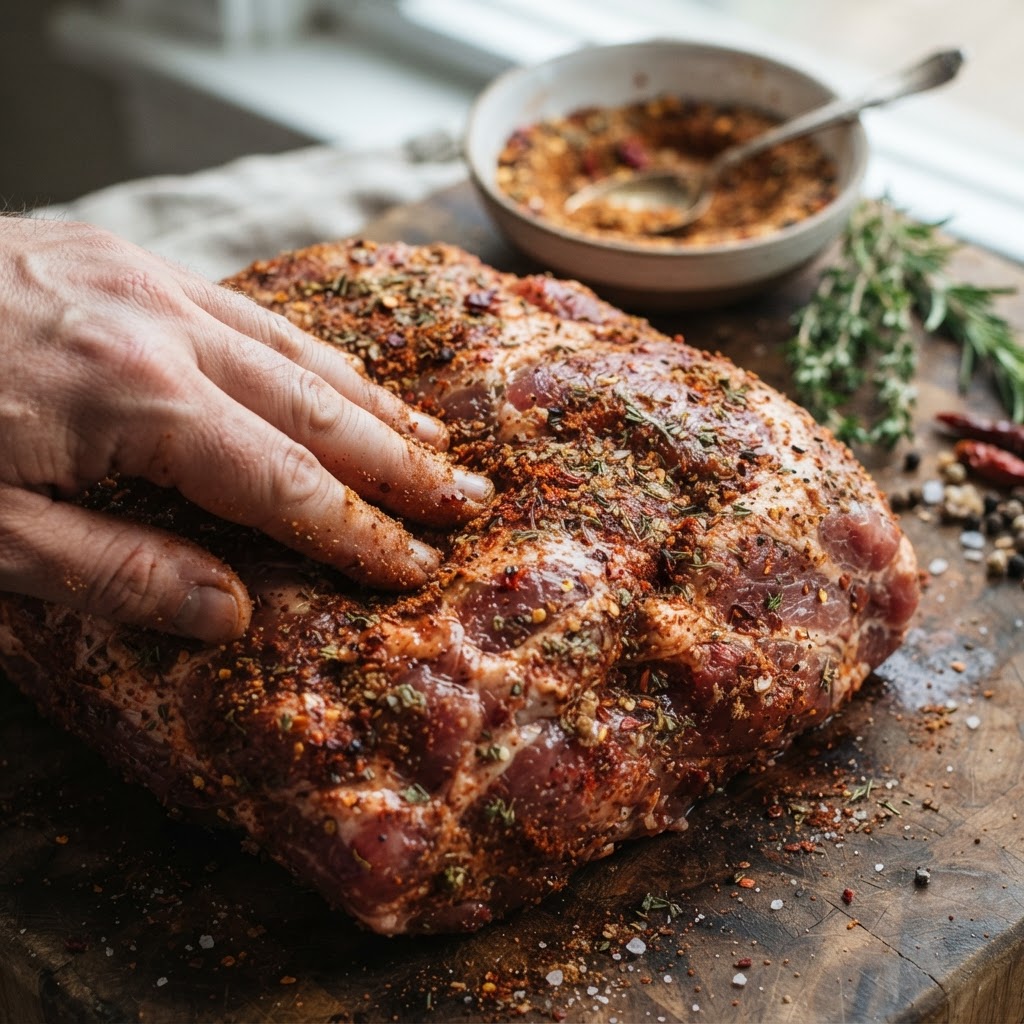
Elevating your pork roast beyond a standard stew begins with meticulous preparation, specifically focusing on surface moisture and temperature management. Before applying any seasoning, you must pat the exterior of the pork completely dry with lint-free paper towels; removing surface water is the only way to achieve the Maillard reaction—a chemical reaction between amino acids and reducing sugars—during the searing phase. Without this dry surface, the meat will steam rather than brown, leading to a duller flavor profile. We recommend seasoning the roast at least 30 minutes before searing to allow salt to penetrate the muscle fibers via osmosis. Furthermore, searing the roast in a cast-iron skillet for exactly 2 minutes per side at medium-high heat builds a caramelized crust that adds structural complexity to the final gravy. Regarding seasoning, a dry rub is fundamentally superior to a liquid marinade for long-duration cooking, as it creates a stable, concentrated crust. A classic, effective rub consists of 2 tablespoons smoked paprika, 1 tablespoon brown sugar, 1 tablespoon kosher salt, 1 teaspoon cracked black pepper, and 1 tablespoon garlic powder.
Masterful Slow Cooking Strategy
The most effective strategy for a perfect roast is maintaining a consistent internal environment, which necessitates keeping the fat cap facing upward throughout the entire cooking cycle. As the fat cap slowly renders, the liquid gold drips down through the meat, basting it internally and compensating for the inevitable moisture loss that occurs during long cooking times. It is critical that you never lift the lid to check on the progress; every time the lid is removed, the slow cooker loses approximately 20 to 30 minutes of thermal energy, which can lead to uneven cooking or a temperature drop that stalls the breakdown of collagen. A standard 4-pound roast requires a minimum of 6 hours on the low setting to reach an internal temperature of 195°F–205°F, which is the “sweet spot” for fork-tenderness. For those wondering how their results compare to other popular kitchen methods, refer to the table below:
Comparing Cooking Methods
Many home cooks debate whether to use a slow cooker, an oven, or an Instant Pot for their pork roasts. The Slow Cooker Pork Roast remains the gold standard for those who prefer deep, uniform tenderness over the slightly firmer texture achieved by pressure cooking. While an Instant Pot is significantly faster, it relies on pressure to force moisture into the meat, which can sometimes result in a “boiled” texture rather than a tender, roasted finish. Conversely, a Dutch Oven provides a superior crispy exterior but requires constant vigilance to monitor liquid levels. If you enjoy other comfort food classics, you should also try our recipe for savory beef tips and gravy, which is perfect for busy weeknight dinners. If you are looking for even simpler options for those extra-busy days, our guide to easy beef and frozen veggie dump dinners offers perfectly balanced, hands-off meals that utilize your freezer staples. Understanding these thermal differences allows you to choose the right tool for your schedule while maintaining the highest quality of meat texture.
Troubleshooting and Resting
The resting period is technically part of the cooking process, essential for ensuring the meat is not dry or stringy when served. Once the pork reaches an internal temperature of 200°F, remove it from the appliance and place it on a carving board; you must tent it loosely with aluminum foil for a minimum of 20 minutes before attempting to pull it apart. This resting phase allows the proteins to relax and the internal juices—which have migrated to the surface due to heat—to redistribute back toward the center of the roast. If you discover the roast is dry upon carving, it likely exceeded the optimal temperature threshold by 10-15 degrees. In this scenario, do not discard the meat; instead, shred it completely and fold in 1/2 cup of high-quality barbecue sauce or the reserved, strained cooking liquid to rehydrate the fibers before serving.
FAQ
Does the pork roast need liquid added?
Yes, you should add at least 1/2 cup of liquid, such as apple cider, chicken broth, or a dark beer, to the slow cooker base. This creates a steam environment that prevents the bottom of the roast from scorching or sticking to the ceramic vessel while it renders.
Can I cook vegetables at the same time?
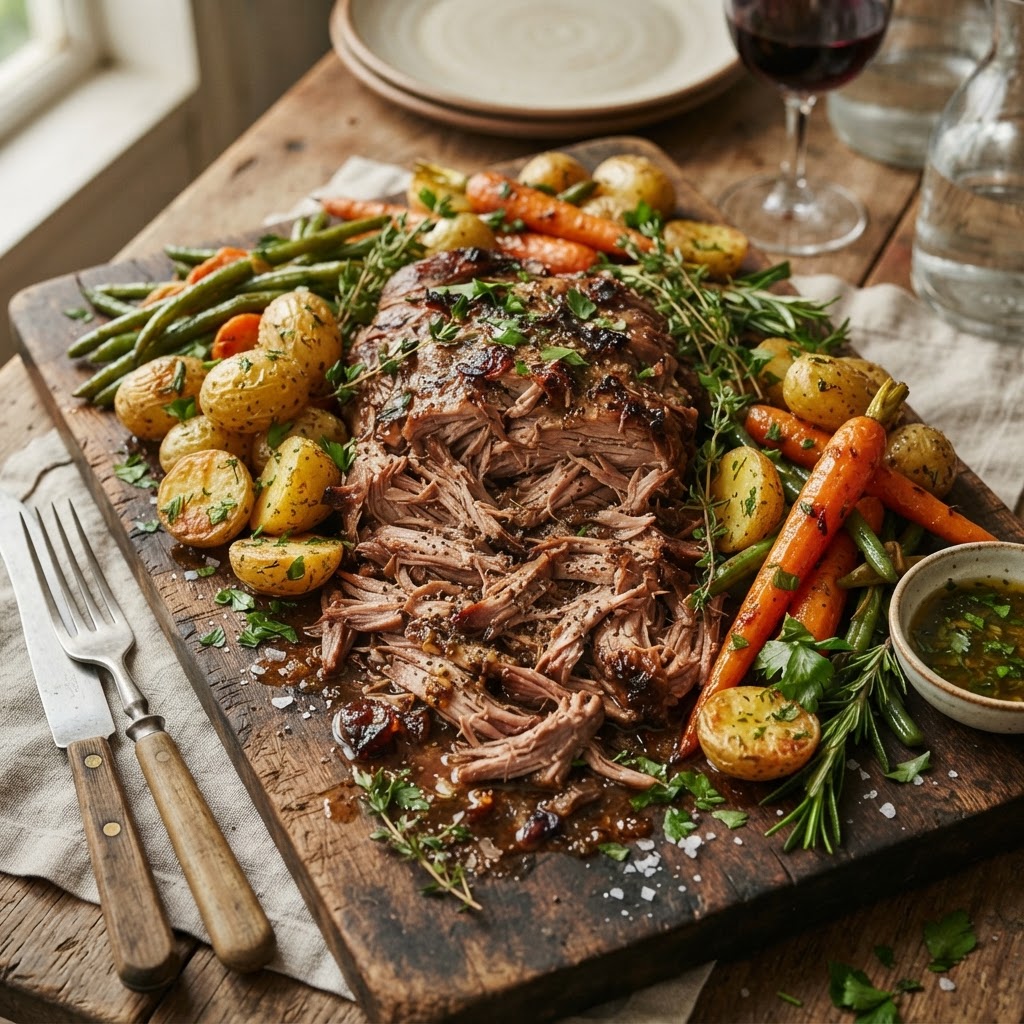
Absolutely, adding root vegetables like carrots, potatoes, and onions serves a functional purpose by elevating the pork off the base of the pot. This allows the meat to cook evenly on all sides while the vegetables absorb the savory, rendered juices throughout the long cooking process.
How do I know when it is finished?
The roast is perfectly cooked when a digital meat thermometer registers an internal temperature between 195°F and 205°F in the thickest part of the meat. At this temperature, the collagen has fully converted to gelatin, making the roast tender enough to be pulled apart effortlessly with two forks.
Can I freeze leftovers?
Leftover pork can be frozen for up to three months if stored properly in airtight, freezer-safe containers or vacuum-sealed bags. To maintain the best texture, store the shredded meat with a small amount of its cooking liquid, which prevents freezer burn and keeps the meat moist during the reheating process.