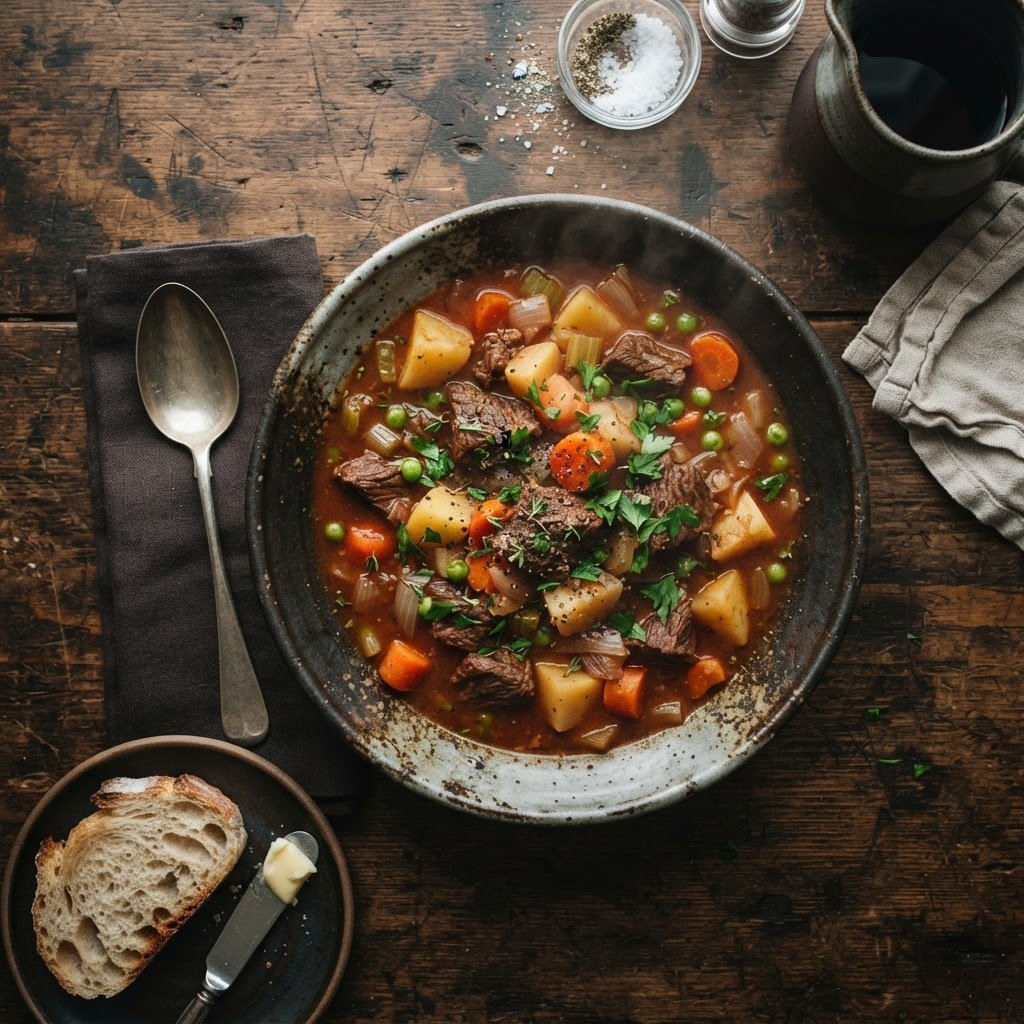
Best Ever Slow Cooker Beef Stew with Red Wine
To make the best ever slow cooker beef stew with red wine, sear two-inch cubes of chuck roast in flour until deeply browned before simmering on low for eight hours with dry red wine, beef broth, mirepoix, and fresh thyme. This method guarantees fork-tender, butter-soft meat and a velvety, umami-rich gravy.
Choosing the Right Ingredients for Depth
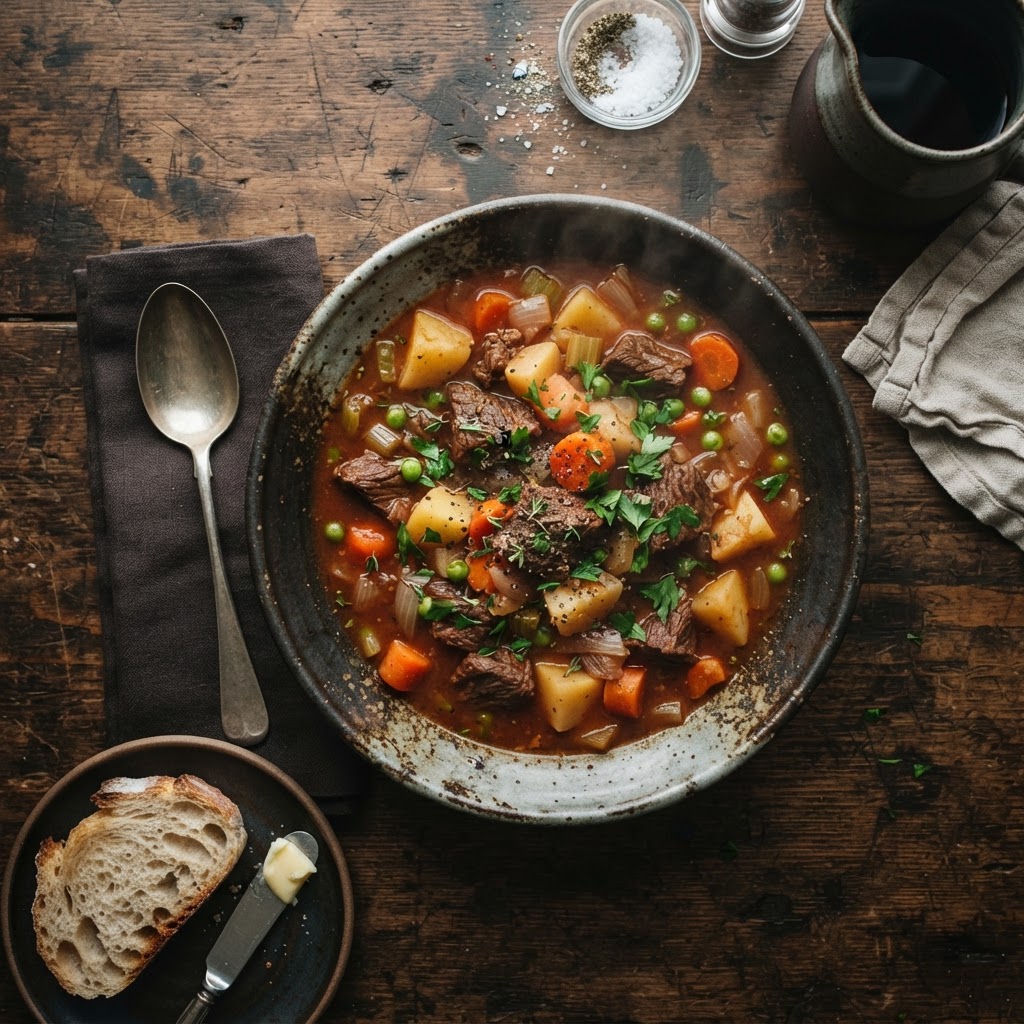
Selecting high-quality ingredients is the foundation of building a superior stew that stands out from standard recipes. You should prioritize chuck roast for the beef because its high collagen content—typically found in the shoulder primal cut—breaks down during the long, low-temperature cooking process, resulting in butter-soft meat. Avoid pre-cut lean stew meat, which often becomes dry and tough, opting instead to trim and cube your own chuck roast into uniform two-inch pieces to ensure consistent cooking. For the wine, choose a dry red like a Cabernet Sauvignon or Merlot that you would actually enjoy drinking, as the flavor concentrates while the stew simmers. If you prefer a more budget-friendly option, a dry Syrah or Malbec provides excellent structure, but avoid “cooking wines” that contain added salt, which can ruin the balance of your dish.
The Importance of Aromatics
Beyond the meat and wine, the base of your stew relies on a precise “mirepoix” of onions, carrots, and celery. Don’t skip the fresh garlic or a few sprigs of thyme; these herbs provide an earthy counterpoint to the richness of the red wine. Adding a dollop of tomato paste—specifically two tablespoons—early in the browning process caramelizes the sugars, giving the final sauce a darker color and a deeper, more savory “umami” punch that defines the best recipes. When selecting onions, use yellow or sweet onions for a savory backbone; avoid red onions as they can turn a muddy color during the eight-hour cook time.
The Secret to Texture: Searing and Thickening
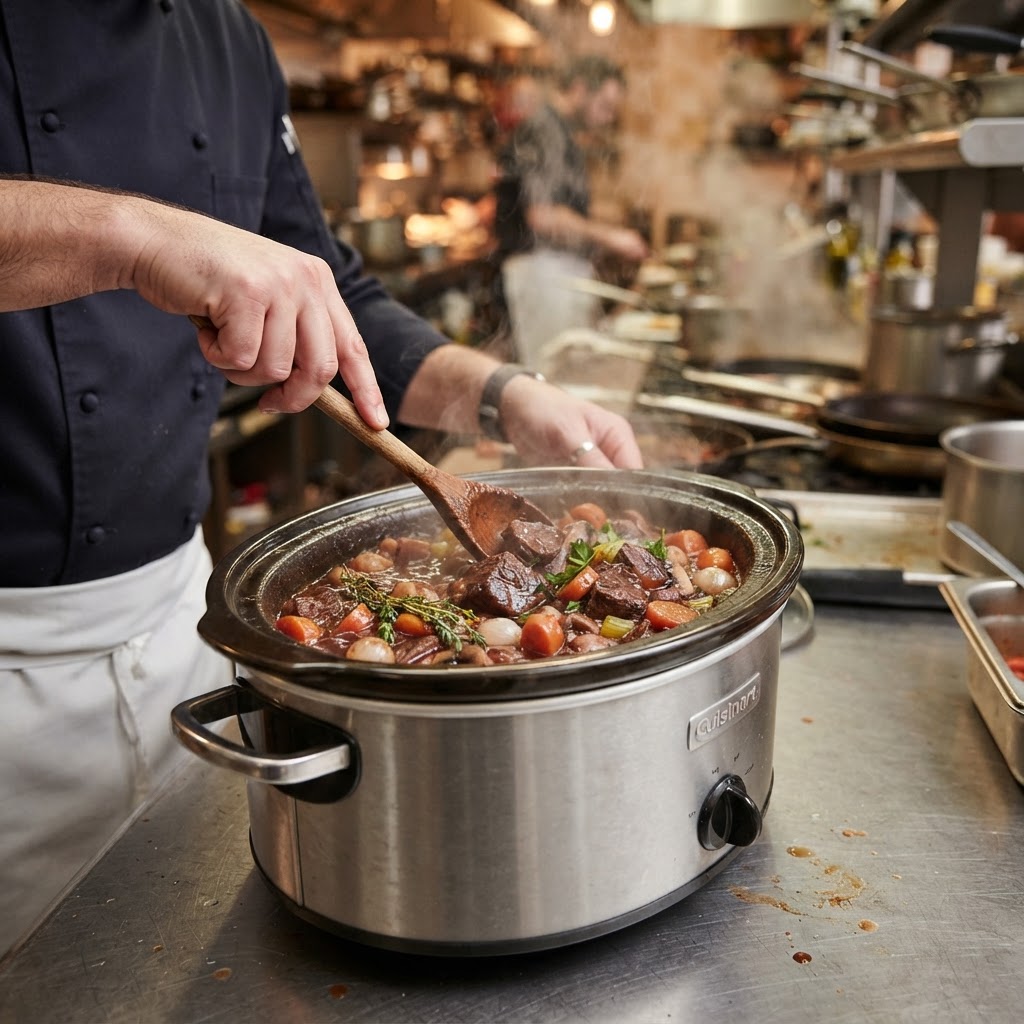
Achieving the perfect texture starts on the stovetop before the ingredients ever reach the slow cooker insert, as the Maillard reaction is non-negotiable for flavor. You must sear the seasoned beef in small batches over high heat until a deep mahogany crust forms on all sides; this process creates a complex flavor profile that simply cannot be replicated by adding raw meat to the crockpot. Once the meat is removed, use a splash of the wine to deglaze the pan, scraping up all the flavorful browned bits—the fond—that would otherwise be left behind. For thickening, many home cooks reach for cornstarch, but we recommend a classic flour dusting. Toss the beef cubes in three tablespoons of seasoned flour before searing, as the flour naturally thickens the liquid into a glossy, coating gravy during the long simmer. If you prefer a lighter sauce, you can omit the flour and stir in a “beurre manie” (equal parts butter and flour) during the final thirty minutes of cooking to adjust the consistency to your exact preference.
Comparison: Slow Cooker vs. Dutch Oven
To help you decide on your cooking method, consider the following performance metrics:
Step-by-Step Recipe Instructions
Ingredients You’ll Need
- 2.5 lbs beef chuck roast, cut into 1.5-inch cubes
- 3 tbsp all-purpose flour
- 1 tbsp vegetable oil
- 2 cups dry red wine
- 2 cups beef broth
- 2 tbsp tomato paste
- 3 large carrots, peeled and sliced
- 1 lb baby potatoes, halved
- 1 large yellow onion, diced
- 3 cloves garlic, minced
- 2 tsp dried thyme
- 1 tsp salt
- 0.5 tsp black pepper
Follow this clear, step-by-step guide to prepare this dish perfectly every time.
Mastering the Slow Cooking Timing
Timing is the most critical element when making the best ever slow cooker beef stew with red wine, as overcooking vegetables can lead to a mushy mess. While the beef needs at least eight hours on low to reach peak tenderness, root vegetables like carrots and potatoes often cook much faster. We suggest a staggered approach: start the beef and aromatics for the first four hours, then add your chopped potatoes and carrots. This ensures that the beef reaches the “fall-apart” stage while the vegetables retain their structure and perfect bite. If you find yourself short on time, you can cook on the high setting for four to five hours, but the low setting remains superior for melting the connective tissues in the chuck roast. Always avoid lifting the lid unnecessarily, as the sudden loss of heat and moisture can increase your total cooking time by up to thirty minutes per check. Keeping the liquid level at 4 cups total ensures adequate braising without overwhelming the slow cooker’s capacity.
Serving and Storage Suggestions
Presenting your stew effectively elevates the dining experience, making it feel like a restaurant-quality meal. Ladle the stew into wide, shallow bowls and top with a generous sprinkle of freshly chopped parsley to add a bright, herbaceous note that cuts through the rich sauce. Pairing the dish with a piece of crusty sourdough bread or a bed of creamy garlic mashed potatoes allows you to soak up every last drop of the red wine reduction. Leftovers are arguably better the next day, as the flavors continue to meld in the refrigerator. To store, let the stew cool completely, then place it in an airtight container for up to four days. You can also freeze the stew for up to three months; just be sure to leave an inch of headspace in the container to allow for expansion. When reheating, add a tablespoon of water or beef broth to help loosen the thickened sauce and prevent the meat from drying out.
FAQ
Q: Can I use white wine instead of red wine?
A: Yes, you can substitute dry white wine for red, though the final flavor will be more acidic and lighter. For a traditional robust beef stew, we strongly recommend sticking to a full-bodied red wine like Cabernet or Merlot.
Q: Why is my stew watery?
A: A watery stew usually results from skipping the flour-coating step or using too much liquid. If your stew is thin, simmer it on the stove for 10 minutes or stir in a beurre manie to thicken the sauce.
Q: Can I add mushrooms to this recipe?
A: You can add mushrooms, but they must be sautéed separately first. Mushrooms release significant moisture during cooking, so browning them ensures they maintain their texture and umami-rich flavor without watering down your stew base.
Q: Is it necessary to sear the beef?
A: Searing is essential for a high-quality stew. By browning the beef in batches, you trigger the Maillard reaction, which creates deep, complex, savory flavors that define a professional-grade stew versus a standard home-cooked version.
Q: How do I prevent vegetables from becoming mushy?
A: To prevent overcooked vegetables, use a staggered cooking technique. Add carrots and potatoes during the final four hours of the eight-hour cook time so they retain a firm, “al dente” texture while the beef stays fork-tender.