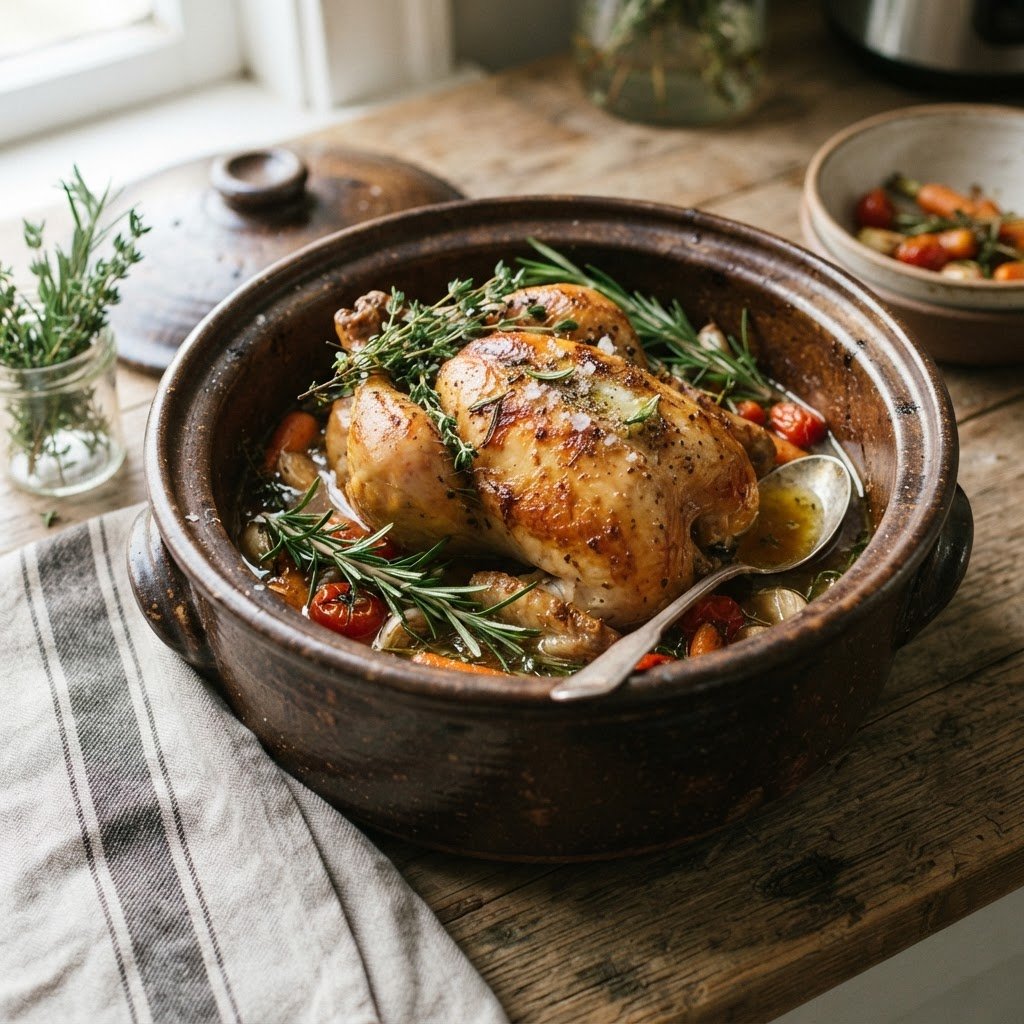
The Ultimate Easy Slow Cooker Chicken Recipe
To cook a perfectly succulent whole chicken in a slow cooker, set your 4–5 lb bird breast-side up on a bed of aromatics and cook on low for 7–8 hours or high for 3–4 hours. This method ensures tender meat and deep flavor infusion with minimal hands-on effort required for busy weeknights.
Understanding the Magic of Slow Cooking
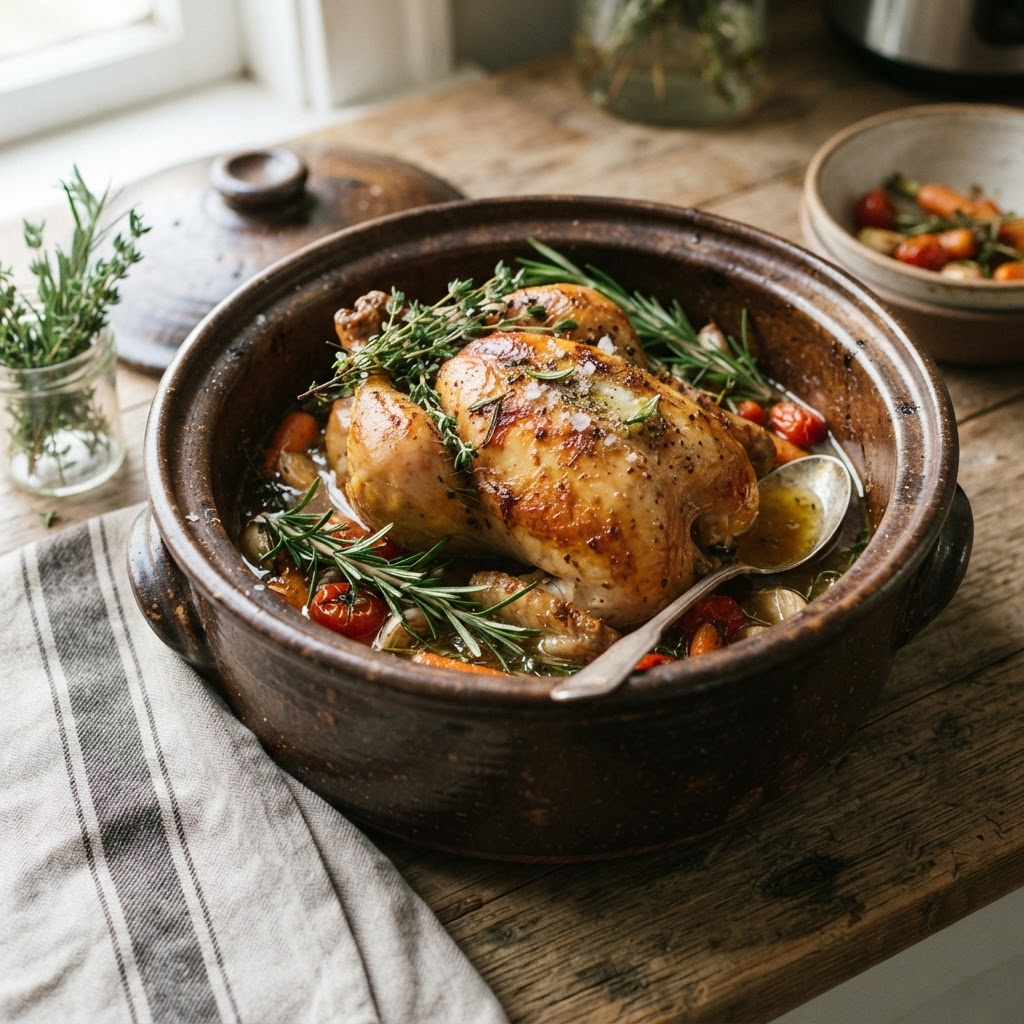
Slow cooking utilizes consistent, low-temperature thermal circulation to break down connective tissues in whole poultry, resulting in a texture far superior to the rapid dehydration often caused by high-heat oven roasting. By maintaining a stable internal environment, the slow cooker acts as a gentle steamer, locking natural juices inside the muscle fibers rather than evaporating them. This process is the gold standard for home cooks who prioritize efficiency; a single 5-minute prep session yields high-protein meals for an entire family. Unlike high-heat methods that require constant basting or monitoring, the slow cooker allows for a “set it and forget it” workflow, making it the most reliable appliance for consistent culinary outcomes regardless of your skill level.
Comparison: Cooking Methods for Whole Chicken
Step-by-Step Recipe Instructions
Ingredients You’ll Need
- 1 whole chicken (approx 4-5 lbs)
- 1 tbsp kosher salt
- 1 tsp black pepper
- 1 tsp dried oregano
- 1 tsp garlic powder
- 1 tsp onion powder
- 1 large yellow onion, sliced into rings
- 4 cloves garlic, smashed
- 2 tbsp unsalted butter, softened
Follow this precise, systematic guide to ensure your chicken reaches a safe internal temperature of 165°F (74°C) while maintaining peak tenderness.
Choosing the Right Bird and Ingredients
Selecting a high-quality chicken between 4 and 5 pounds is the most critical variable for even thermal distribution. If the bird is larger than 5 pounds, the center may not reach the safe 165°F threshold within the recommended 8-hour window, while a bird smaller than 3 pounds risks overcooking and becoming stringy. Always inspect the cavity for giblets and ensure the chicken is completely thawed if frozen; using a frozen bird in a slow cooker is a food safety hazard because it remains in the “danger zone” (40°F–140°F) for too long. For the best flavor, source organic or pasture-raised birds, as their fat content and muscle structure respond better to long-term collagen breakdown. Dry the skin thoroughly with paper towels before seasoning; moisture on the surface creates steam, whereas a dry surface allows the rub to adhere, creating a more robust flavor crust during the slow rendering process.
Master the Slow Cooking Process
Successful slow cooking relies on the structural integrity of the cooking environment and the avoidance of heat loss. Every time you lift the lid to check on the progress, you lose approximately 15-20 minutes of cooking time, as the crockpot takes significant energy to recover its temperature. Instead of opening the lid, invest in an instant-read meat thermometer to check the temperature through the glass lid or by quickly lifting a corner once the timer expires. If you prefer golden skin, transfer the cooked chicken to a baking sheet and broil it on high for 3-5 minutes immediately after removing it from the slow cooker. This hybrid approach gives you the moist interior of a slow-cooked meal with the appetizing aesthetic of a rotisserie bird. Remember that the residual heat from the ceramic insert continues to cook the chicken for 10-15 minutes after the unit is turned off, which is why a 15-minute rest period is non-negotiable for texture retention.
Versatile Meal Planning Ideas
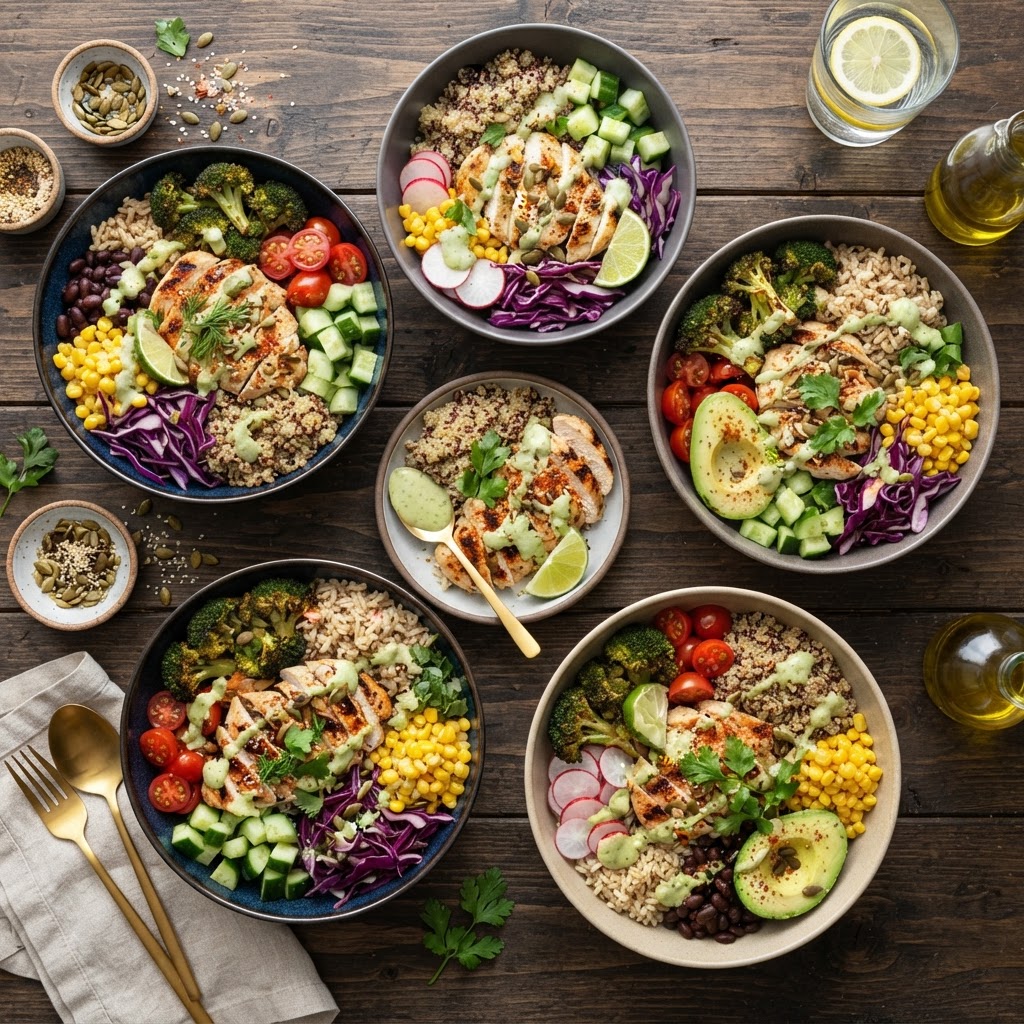
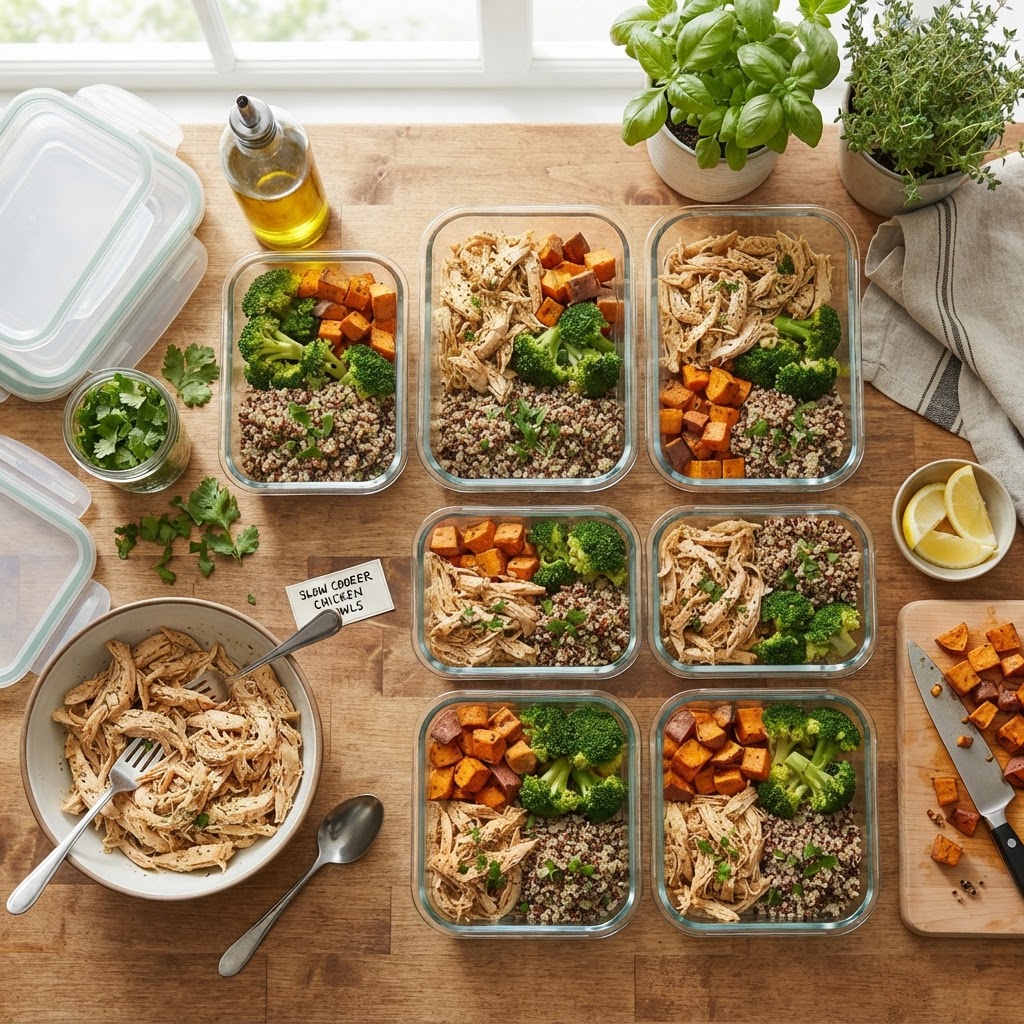
Transforming one slow-cooked chicken into multiple meals is the ultimate strategy for economical household management. Once the bird is carved, use the carcass to create a bone broth by returning it to the slow cooker with water, veggie scraps, and apple cider vinegar for 12 hours on low. The shredded meat can be portioned into 1-cup containers and stored in the freezer for up to 3 months, serving as the foundation for quick-fix dinners like chicken tacos, BBQ sliders, or hearty cobb salads. Because this recipe uses a neutral herb profile, it bridges the gap between cuisines effortlessly—add store-bought teriyaki sauce for an Asian-inspired stir-fry, or combine with heavy cream and spinach for a keto-friendly Alfredo dish. This “cook once, eat twice” methodology reduces food waste by nearly 40% compared to discarding leftover scraps.
Optimizing for Health and Convenience
Nutritional management in a slow cooker is highly effective because it minimizes the need for added fats or oils. Unlike pan-searing or deep-frying, slow-cooked chicken relies on the bird’s own natural fats for basting, meaning you can control sodium levels precisely by omitting extra salt and relying on lemon juice, fresh garlic, and herbaceous aromatics like rosemary and thyme. For those following low-carb, Paleo, or Whole30 diets, this method is superior because it avoids the sugars often found in bottled marinades. By incorporating cruciferous vegetables like carrots, celery, and parsnips into the bottom of the cooker alongside the onion, you create a nutrient-dense side dish that absorbs the rendered chicken fat, adding fiber and essential vitamins to your meal without extra labor.
FAQ
How long does a whole chicken take to cook in the crockpot?
A whole chicken typically takes 4 to 6 hours on high or 7 to 9 hours on low. The exact duration depends on the bird’s weight, with 4-5 lbs being the sweet spot for the 8-hour low-setting window.
Do I need to add water to the slow cooker?
You do not need to add water when cooking a whole chicken. The bird naturally releases significant juices during the slow cooking process, which creates a self-basting environment that keeps the meat moist throughout the cycle.
Can I put raw chicken directly into the slow cooker?
Yes, it is perfectly safe to put raw chicken into a pre-heated or cold slow cooker. The device is specifically engineered to bring poultry to a food-safe temperature of 165°F (74°C) well within the required safety window.
How do I keep the chicken from getting dry?
To prevent dryness, avoid lifting the lid during the cooking process to preserve heat and moisture. Using a meat thermometer is the most reliable way to prevent overcooking; pull the bird out immediately once it hits 165°F to maintain maximum succulence.
Can I freeze the chicken after cooking it?
Yes, cooked chicken can be frozen for up to 3 months. Shred the meat while it is still slightly warm, divide it into airtight bags, and remove as much air as possible to prevent freezer burn and maintain fresh taste.