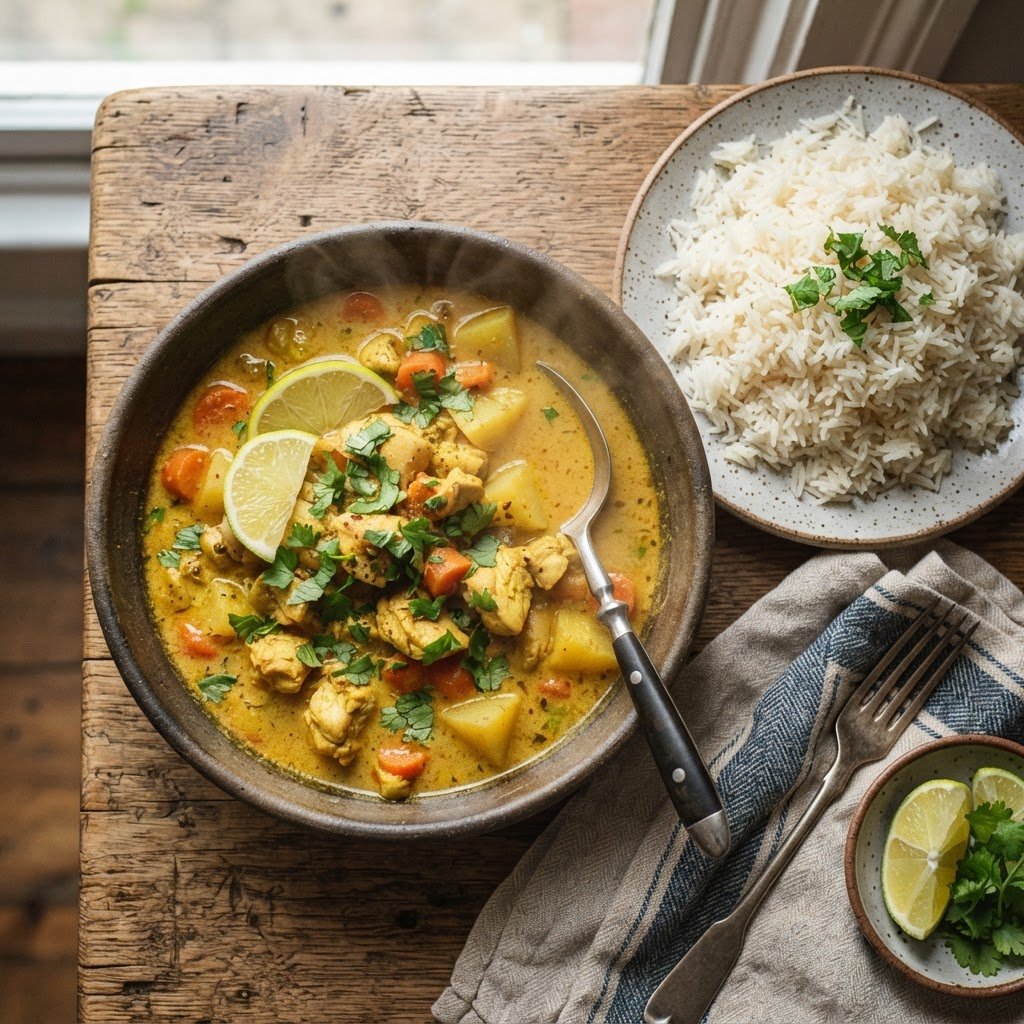
The Easiest Ever Slow Cooker Chicken Curry is a 10-minute prep meal that delivers restaurant-quality flavor by combining 2 lbs of chicken, coconut milk, and aromatic spices in a slow cooker for 4-6 hours. This stress-free, one-pot recipe ensures succulent chicken and a rich, velvety sauce without the need for constant stovetop supervision.
The Philosophy of Effortless Cooking
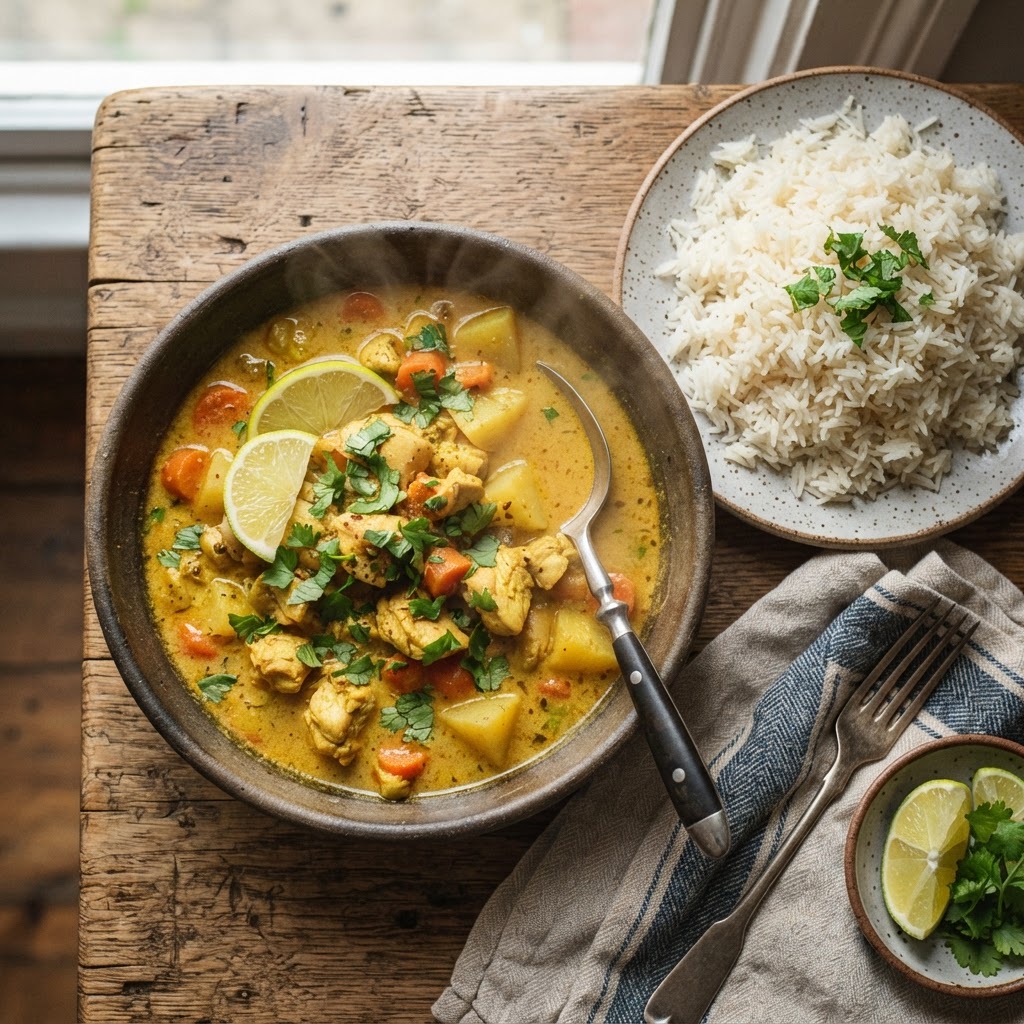
Effortless cooking relies on the strategic use of high-quality ingredients that harmonize when left to simmer for several hours. When you make the Easiest Ever Slow Cooker Chicken Curry, you are utilizing the gentle heat of the crockpot to break down tough fibers, ensuring the meat stays succulent and absorbs every layer of the curry sauce. Instead of frying onions and ginger for thirty minutes, we rely on the slow infusion process to build complex flavor profiles. This method is not just about saving time; it is about improving texture. By avoiding high-heat searing, the proteins remain soft, and the sauce develops a glossy, consistent finish that clings perfectly to the chicken.
Step-by-Step Recipe Instructions
Ingredients You’ll Need
- 2 lbs boneless, skinless chicken breasts, cut into 2-inch chunks
- 1 large yellow onion, finely diced
- 3 cloves garlic, minced
- 2 tablespoons mild curry powder
- 1 tablespoon grated fresh ginger
- 1 can (14 oz) full-fat coconut milk
- 1 can (15 oz) crushed tomatoes
- 1 teaspoon salt
- 1/2 teaspoon black pepper
- 1 cup frozen peas
Follow this clear, step-by-step guide to prepare this dish perfectly every time.
Ingredients for Success
To achieve the perfect balance in your crockpot chicken curry, focus on fresh aromatics and quality fats. You will need two pounds of boneless, skinless chicken breasts or thighs, which offer the best texture for long cooking times. For the sauce base, select full-fat canned coconut milk, which provides the necessary body and silkiness that low-fat alternatives cannot match. Do not skip the fresh ginger and garlic; they provide the essential “zing” that defines a good curry. To elevate this beyond a standard pantry meal, ensure your curry powder is fresh. If it has been sitting in your cupboard for more than six months, consider refreshing your supply to maximize the essential oils that give curry its signature warmth. If you prefer a bit of heat, add a teaspoon of chili flakes or a finely diced Thai bird’s eye chili.
Step-by-Step Preparation Guide
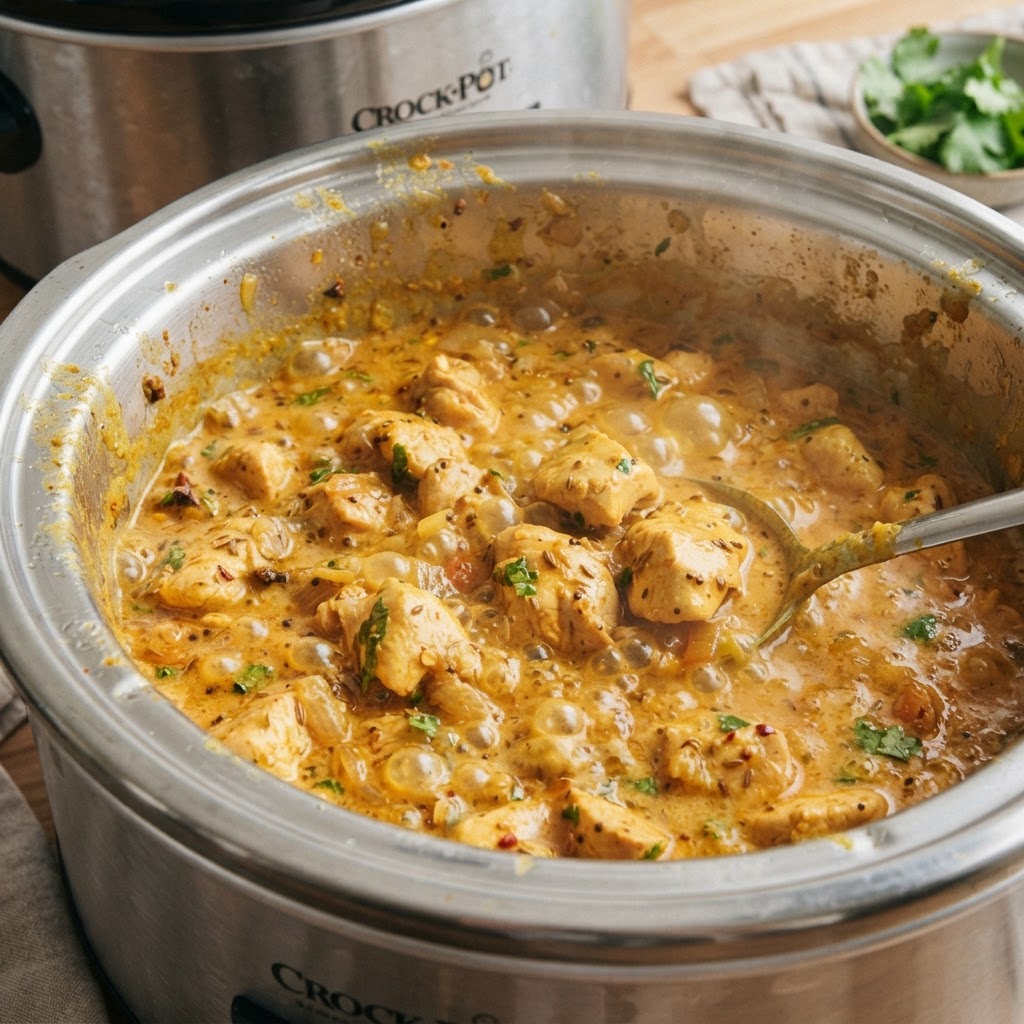
The preparation process for this dump and go slow cooker meal is designed to take less than ten minutes of active work.
- Combine the coconut milk, diced tomatoes, curry powder, ginger, garlic, and turmeric in the base of your slow cooker.
- Whisk these ingredients thoroughly to create a uniform, smooth curry base.
- Add the chicken pieces, ensuring they are completely submerged in the sauce to prevent drying out.
- Cover and cook on “Low” for 4 to 5 hours or on “High” for 2 to 3 hours.
- Finish by stirring in a handful of fresh cilantro and a squeeze of lime juice right before serving to brighten the heavier creamy flavors.
Why Temperature Matters
It is important to remember that slow cookers vary in their heat intensity. Always check the chicken for doneness by ensuring it flakes easily with a fork. Overcooking will result in stringy chicken, so prioritize the lower setting to maintain the integrity of the breast meat.
Nutritional Comparison: Homemade vs Takeout
Many store-bought curries contain hidden sugars and excess sodium that can compromise an otherwise healthy chicken curry recipe. When you make this at home, you have complete control over the nutrient density of your meal. The following table illustrates why your homemade version is the superior choice for your dietary goals.
Mastering the Creamy Coconut Chicken Curry Texture
The secret to a truly luxurious sauce lies in how you handle the coconut milk and thickening agents. If your curry feels too thin at the end of the cooking cycle, resist the urge to add heavy flour-based thickeners, which can mask the delicate spices. Instead, try simmering the sauce on “High” for an additional twenty minutes with the lid slightly ajar to encourage reduction. Another professional tip is to whisk in a tablespoon of almond butter; this adds a subtle nutty undertone and naturally thickens the liquid without altering the flavor profile. If you notice the coconut milk separating, a quick stir with a whisk is usually all it takes to emulsify the oils back into the sauce, restoring that signature velvety appearance that defines top-tier creamy coconut chicken curry recipes.
FAQ
Q: Can I use frozen chicken in this recipe?
It is generally recommended to thaw the chicken completely before adding it to the slow cooker to ensure even cooking and food safety. Using frozen chicken can cause the internal temperature to linger in the danger zone too long, increasing bacterial growth risks.
Q: How long can I store the leftovers?
Store any remaining curry in an airtight container in the refrigerator for up to three days. Alternatively, you can freeze it for up to one month without significant loss in quality or flavor texture.
Q: Is it possible to make this dairy-free?
Yes, this recipe is naturally dairy-free because it relies exclusively on coconut milk for creaminess. Ensure your curry powder blend does not contain hidden milk solids or additives, which is rare but possible in some commercial spice mixes.
Q: What should I serve with this curry?
Basmati rice is the traditional choice, but warm naan bread or roasted cauliflower are excellent alternatives. These sides help absorb the excess sauce and provide a textural contrast to the tender, slow-cooked chicken pieces.
Q: Can I add extra vegetables to this recipe?
Yes, you can easily add bell peppers, chickpeas, or sweet potatoes to the pot. Add heartier vegetables like potatoes at the beginning, while softer ones like bell peppers should be added in the final hour to avoid overcooking.