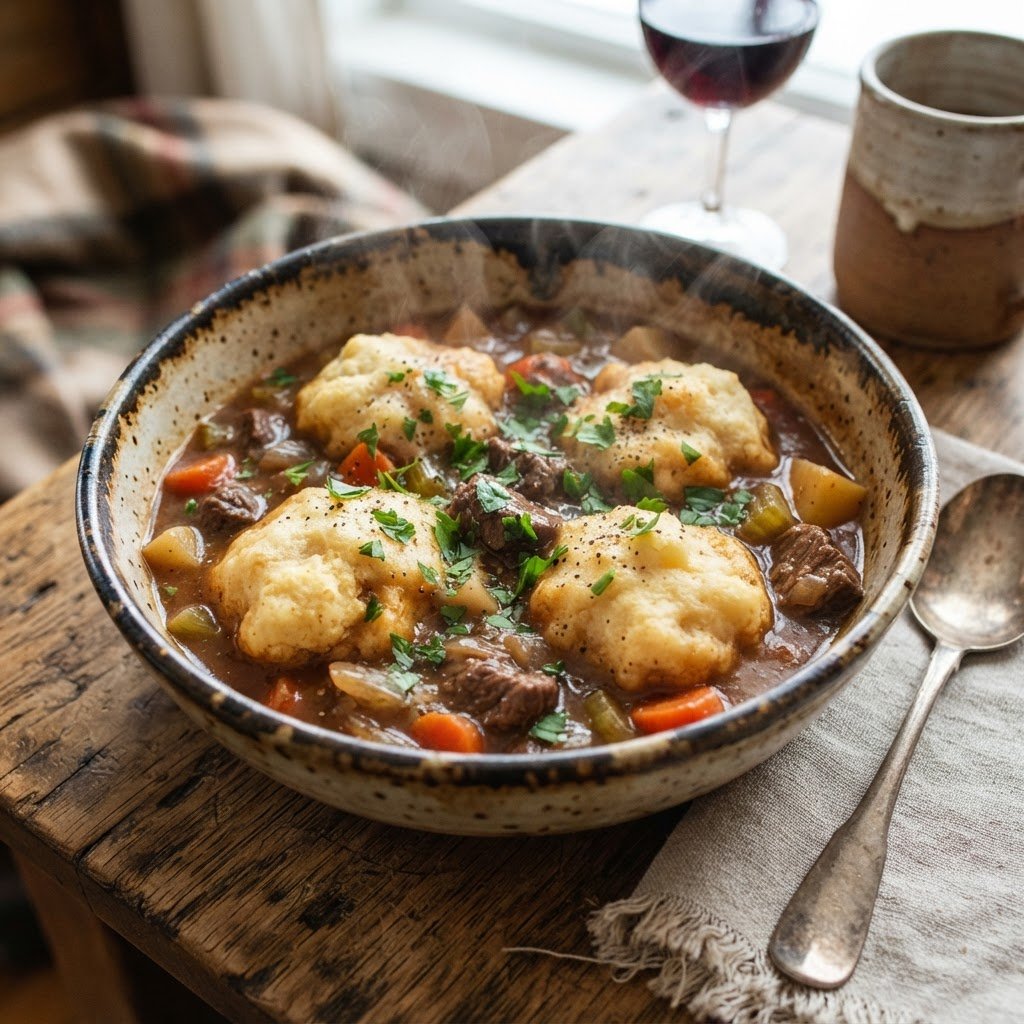
Slow Cooker Beef Stew and Dumplings: Ultimate Comfort Food
A slow cooker beef stew and dumplings is best prepared by simmering 2 lbs of cubed chuck roast on low heat for 7 to 8 hours with carrots, potatoes, and savory beef broth, finishing with fluffy biscuit-style dumplings dropped on top for the final 45 minutes. This low-and-slow method breaks down connective tissue for a tender, restaurant-quality texture.
The Anatomy of the Perfect Stew
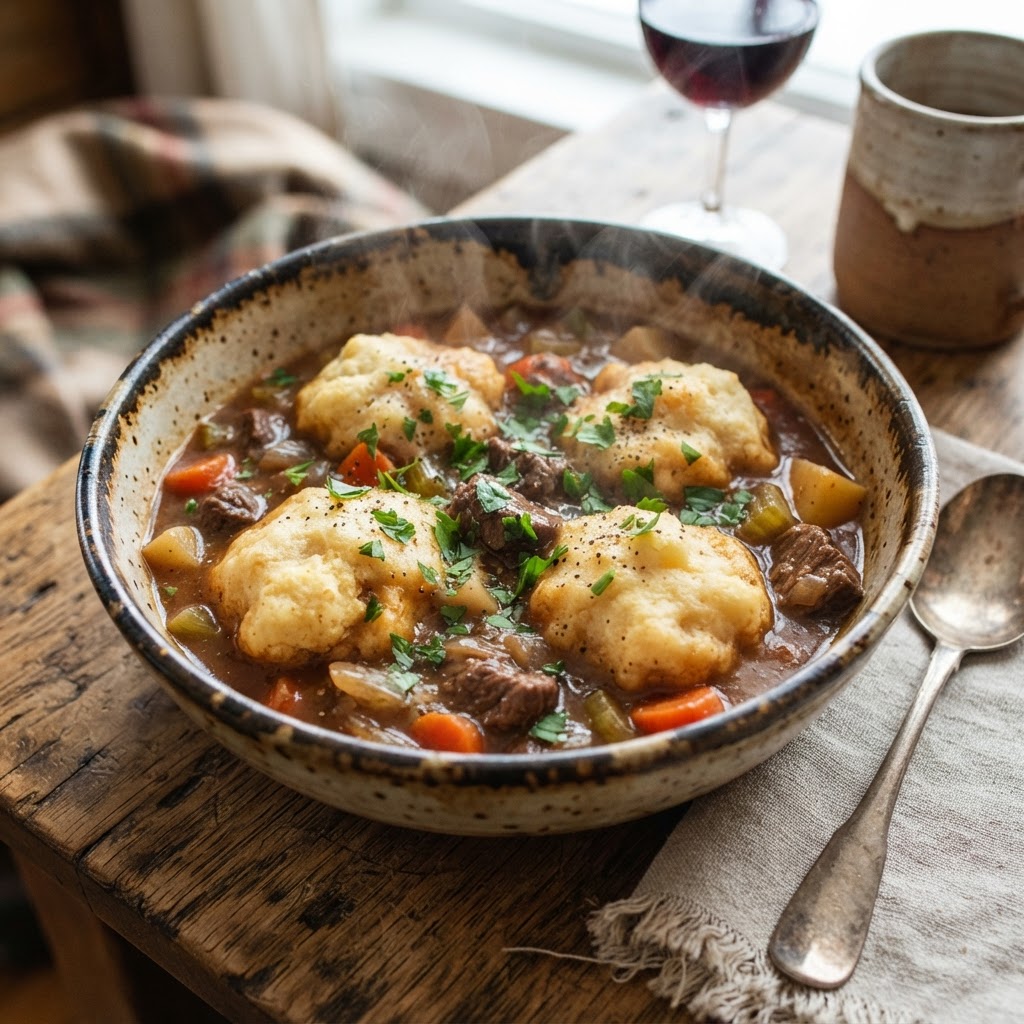
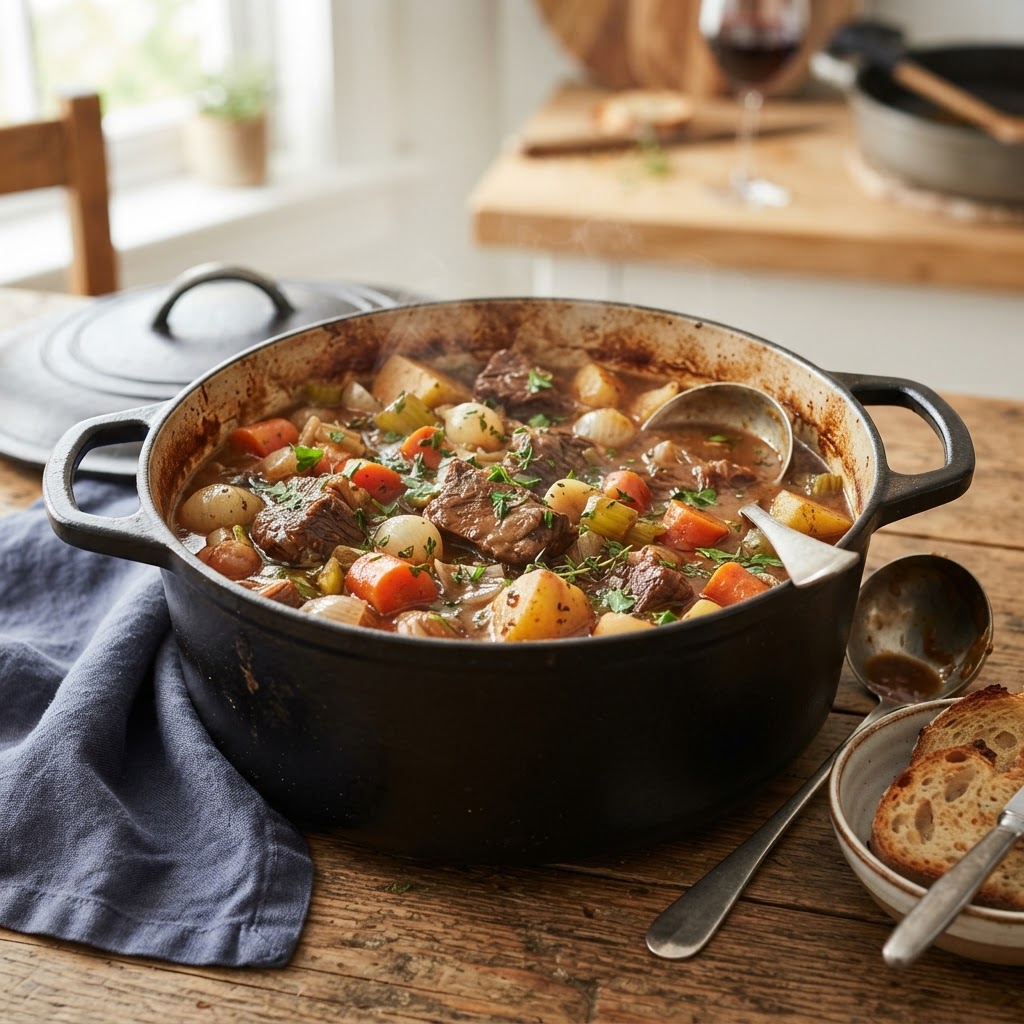
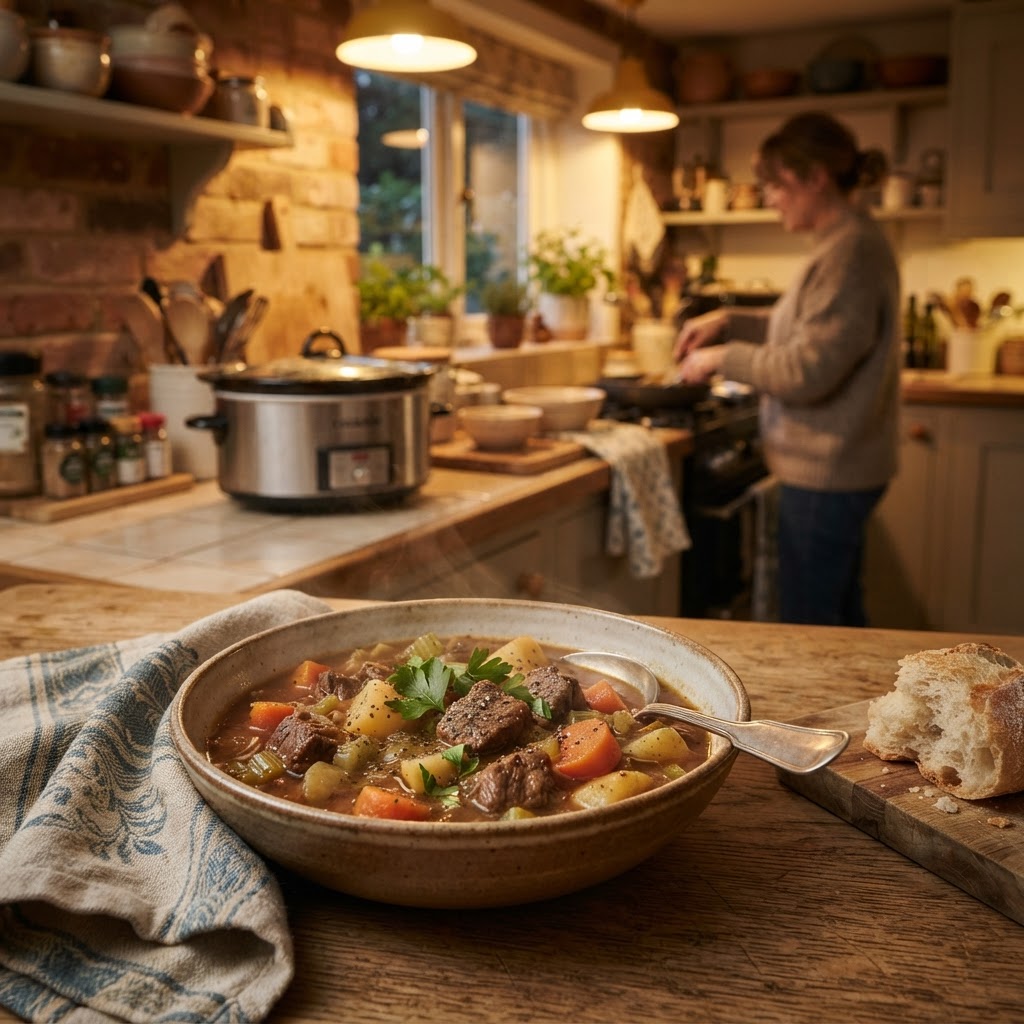
Creating a truly memorable beef stew begins with selecting the right cuts of meat and layering your aromatics effectively to build a complex, deep flavor profile. Choosing high-quality chuck roast with significant marbling is critical; this cut contains collagen that melts during long cooking, transforming into a gelatinous, rich liquid that thickens the stew naturally. Aim for one-inch cubes to ensure each piece cooks at the same rate, preventing some bites from being chewy while others disintegrate. Beyond the protein, your foundation must include aromatics like onions and celery, complemented by root vegetables that can withstand long submersion. By balancing the savory beef base with the inherent sweetness of carrots and Yukon gold potatoes, you create a harmonious flavor profile. Integrating secondary ingredients such as cremini mushrooms adds umami depth, while a measured splash of Worcestershire sauce or tomato paste can brighten the dish. This combination creates a professional-grade stew that maintains structural integrity even after hours in the slow cooker.
Choosing Your Beef and Vegetables
For the best results, use well-marbled stew meat cubes that are approximately one inch in size, as this ensures even cooking throughout the process. When preparing your ingredients for meat stew recipe success, consider the variety of vegetables you include, such as potatoes, celery, and onions, which form the structural foundation of your meal. Incorporating ingredients like mushrooms or butternut squash can add unique layers of flavor, making your version of this dish feel like a gourmet slow cooker beef stew experience.
Step-by-Step Recipe Instructions
Ingredients You’ll Need
- 2 lbs beef chuck roast, cut into 1-inch cubes
- 3 tbsp all-purpose flour
- 1 tbsp olive oil
- 3 cups beef broth
- 2 cups carrots, sliced into rounds
- 2 cups Yukon gold potatoes, cubed
- 1 tsp dried thyme
- 1 cup frozen peas
- 1.5 cups biscuit mix
- 0.5 cup whole milk
Follow this clear, step-by-step guide to prepare this dish perfectly every time.
Mastering the Dumpling Topping
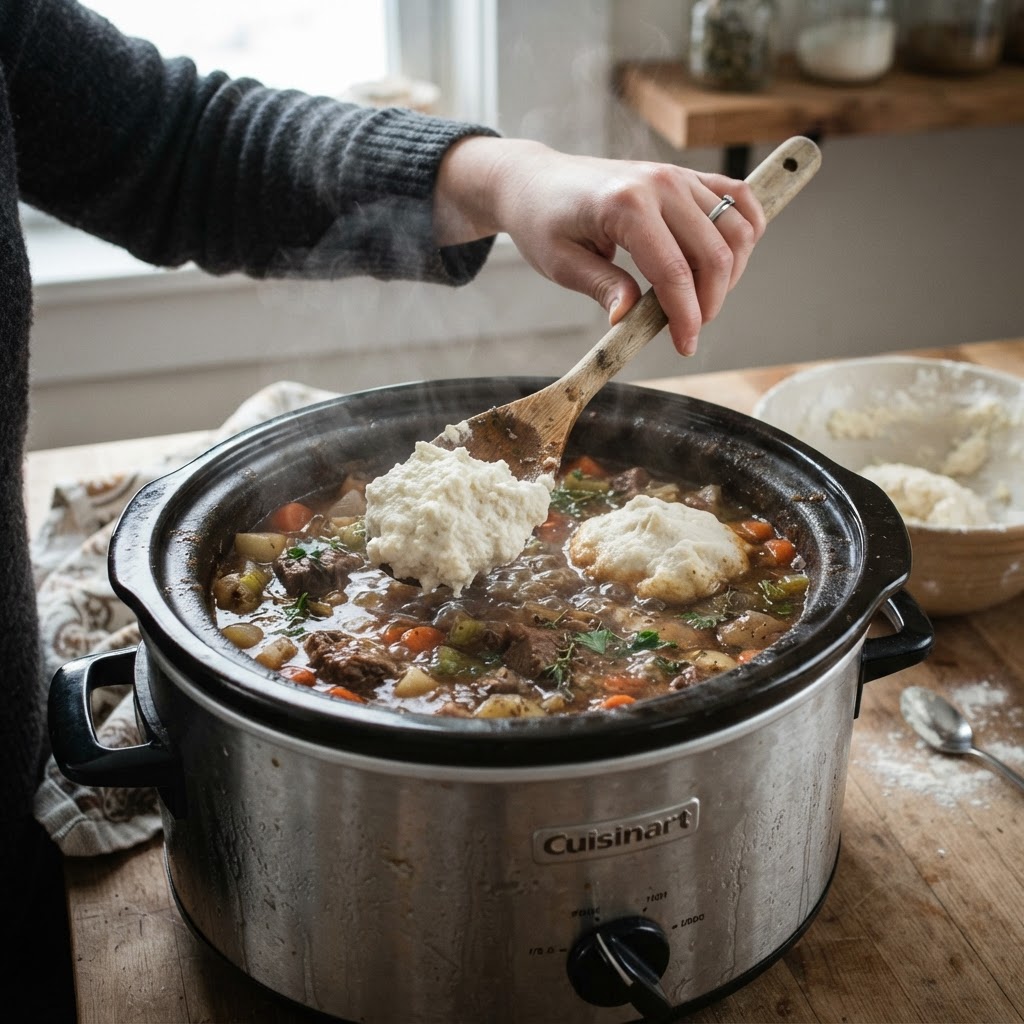
Dumplings are the crowning glory of this slow cooker beef stew, providing a light, fluffy contrast to the rich and hearty liquid base. To ensure your slow cooker dumplings rise perfectly, it is crucial to avoid lifting the lid of your slow cooker during the final 30 minutes of cooking time, as trapped steam is essential for their texture. The science behind a light dumpling relies on the leavening agents in your biscuit mix reacting with the steam generated by the bubbling stew; constant lid-lifting releases this pressure and causes the dough to collapse into a dense, chewy mass. Whether you are using a basic drop-biscuit style or a more complex herb-infused batter, these soft additions transform a simple broth into an unforgettable family-friendly beef stew ideas project. Aim for golf-ball-sized portions to ensure they cook through to the center while maintaining a soft, cloud-like consistency on the outside. By controlling the evaporation, you ensure the broth thickens naturally as the dumpling starch interacts with the reduction, creating a cohesive, comforting dish that serves as a complete meal in one bowl.
Achieving the Ideal Texture
To keep your dumplings light, mix your dry ingredients with liquid just until combined, being careful not to overwork the dough. A common mistake is adding the dumplings too early; wait until your stew is bubbling hot and the meat is tender before adding the dough mounds to the top. If you prefer a gluten-free approach, there are many excellent variations for hearty gluten free meals that utilize almond flour or specialized blends, ensuring everyone at your table can enjoy this comforting dish.
Comparative Analysis of Stew Techniques
Understanding how different cooking methods impact your final result helps you appreciate why a slow cooker remains the gold standard for beef recipes. The table below outlines the primary differences in texture and flavor development across common cooking vessels.
Flavor Profiles and Variations
Customizing your pot allows you to explore diverse culinary traditions, from an Irish food crockpot style with Guinness to a rich Beef Bourguignon approach. For a deep, savory profile, try adding a splash of red wine, or create a simple crockpot beef stew without wine by substituting high-quality beef stock and a dash of Worcestershire sauce. The versatility of these beef stew crock pot recipes means you can easily adapt them to match your pantry staples or dietary preferences, such as a healthy beef stew crockpot version using extra vegetables. By swapping the base liquids or introducing specific spice profiles, you can navigate between regional variations with ease. For instance, replacing the standard herb profile with smoked paprika and caraway seeds introduces a Hungarian goulash influence, while incorporating tomato paste and red wine pushes the profile toward a French bistro style. These shifts are easily manageable because the slow cooker acts as a stable environment for long-duration flavor extraction, ensuring that spices like bay leaves, rosemary, and thyme permeate every fiber of the meat throughout the 7-hour cook time.
Exploring International Influences
If you want to experiment, try adding paprika and caraway seeds for a classic Hungarian-style beef goulash, which brings a warm, earthy spice profile to your dinner. Alternatively, if you are looking for something unique, you might branch out into other comfort foods, though perhaps saving the ube bread recipe for beginners for a separate dessert course after your hearty meal. Focusing on specific seasoning profiles—such as rosemary, thyme, and bay leaves—will elevate your homemade beef stew with peas into something restaurant-quality.
Tips for Success and Efficiency
Batch cooking your stew allows you to save time throughout the week, as the flavors often deepen even more when reheated the next day. To ensure your slow cooker beef stew remains thick and rich, you can toss your meat in flour before browning, or mix a small amount of cornstarch into cold water and stir it into the stew during the final hour of cooking. Remember that crockpot dishes thrive on patience, so resist the urge to peek, as heat loss significantly extends your total stewing beef slow cooker time. For maximum efficiency, prepare your vegetable prep the night before and store it in airtight containers, which cuts down on active morning prep time to under ten minutes. Furthermore, utilizing a 6-quart programmable slow cooker with an automatic ‘keep warm’ setting ensures that your dinner remains at a safe temperature until you are ready to serve, preventing the vegetables from over-softening during the transition from the end of the cooking cycle to mealtime. Consistency in ingredient size is your most important tool; uneven chunks will result in an inconsistent final texture, as the slow cooker does not reach the high temperatures necessary to break down large vegetable fibrous material as aggressively as a pressure cooker.
Essential Tools and Timing
Using the right equipment, such as a reliable 6-quart programmable slow cooker, ensures consistent heat distribution and prevents the edges of your stew from burning. Always trim excess fat from your beef cubes, as this helps prevent the final sauce from becoming overly greasy. For those dealing with time constraints, quick crockpot recipes beef shortcuts exist, such as pre-chopped vegetable medleys, but traditional prep work often yields a superior, rustic texture that feels like home.
FAQ
How long should I cook beef stew in a slow cooker?
Beef stew requires 7 to 8 hours on low heat to achieve optimal tenderness. This duration allows the collagen in the chuck roast to fully gelatinize, resulting in melt-in-your-mouth meat while keeping vegetables intact.
Can I put raw dumplings in a slow cooker?
Yes, you can drop raw biscuit dough directly onto the bubbling surface of the stew. It is critical to keep the lid sealed tightly for at least 30 minutes to allow the steam to properly cook the dumplings through.
How do I thicken beef stew in a slow cooker?
Stir in a cornstarch slurry made of one tablespoon of cornstarch mixed with two tablespoons of cold water during the final 30 minutes of cooking. Alternatively, crushing a few cooked potatoes directly into the broth creates a natural, hearty thickening agent.
What can I serve with slow cooker beef stew?
Pair your stew with crusty sourdough bread or a crisp green salad tossed in a sharp vinaigrette. The bread is perfect for absorbing the savory gravy, while the acidity of the salad provides a necessary palate cleanser to the rich, slow-cooked flavors.