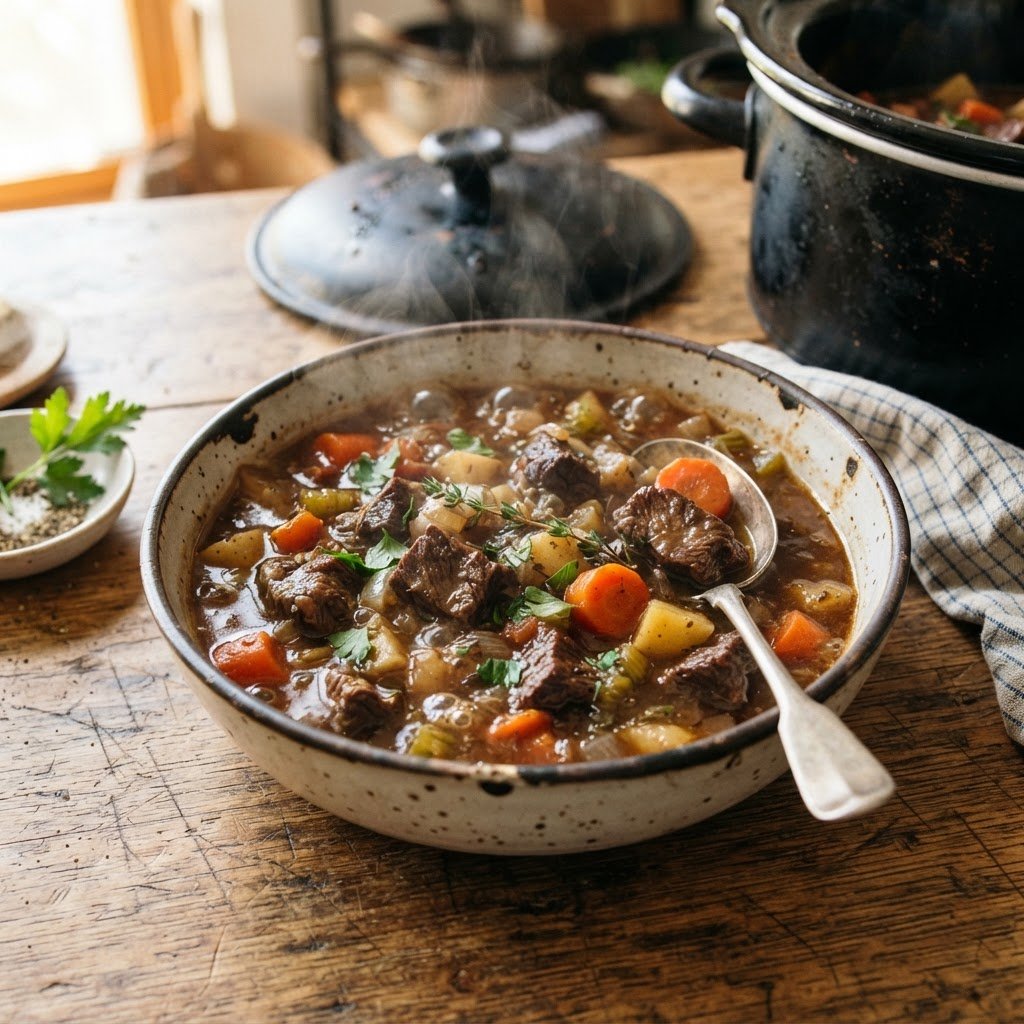
To make the best slow cooker beef stew, sear 2 lbs of flour-dredged chuck roast until browned, then simmer on low for 7-8 hours with beef broth, aromatics, and root vegetables. This process breaks down connective tissues into gelatin, resulting in a rich, thick gravy and fork-tender meat that holds its flavor.
The Anatomy of Perfect Beef Stew
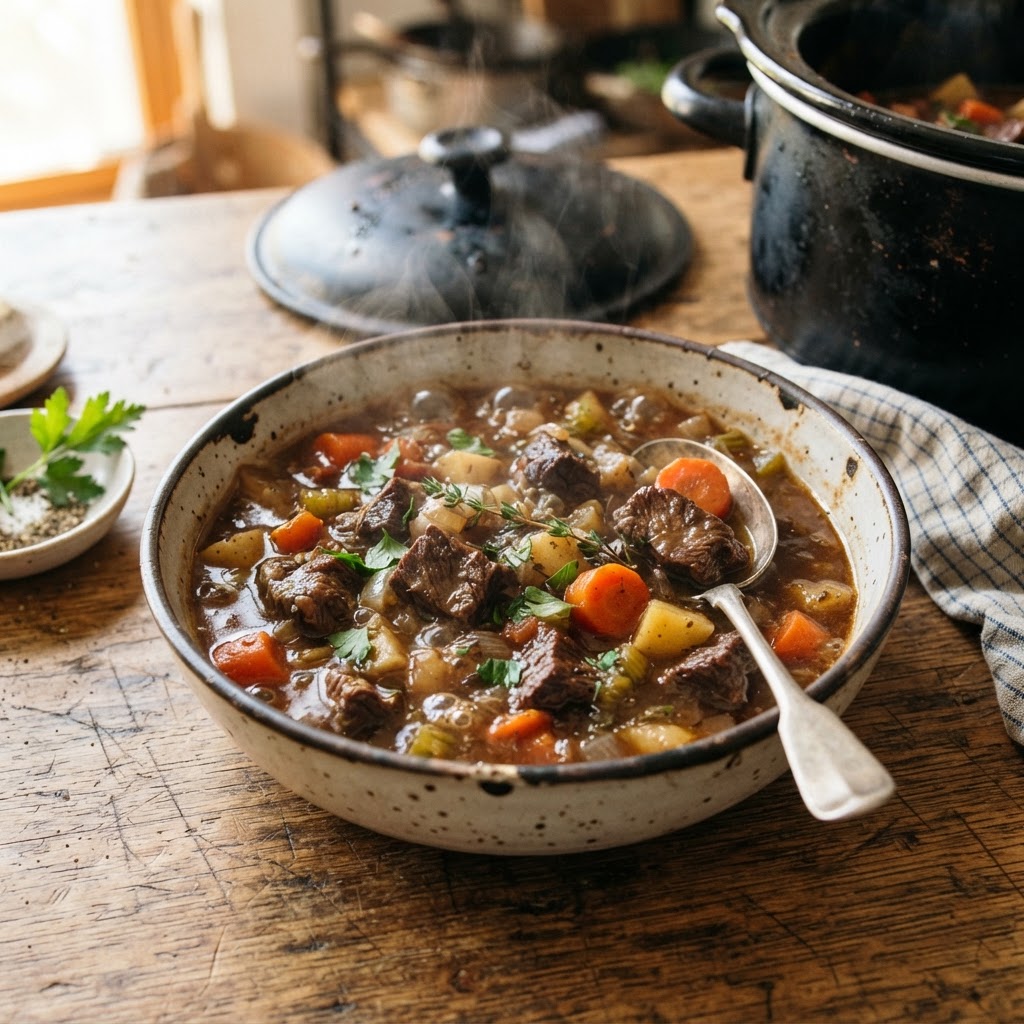
Creating a truly memorable slow cooker beef stew begins with selecting the right cuts of meat and layering your aromatics for maximum depth. To achieve that classic, comforting profile, you must focus on both the quality of your protein and the patience required for slow heat application. Beef chuck roast is the gold standard because it contains high levels of intramuscular fat and collagen, which dissolve during the long, low-temperature cooking process to create a silky, mouth-coating texture that leaner cuts simply cannot provide.
Choosing Your Beef
When you prepare any beef stew meat recipes, the cut matters significantly. Opt for chuck roast or pre-cut stewing beef slow cooker portions that contain enough connective tissue; this tissue breaks down into gelatin, providing a silky texture. Using 1lb stew meat recipes might work for two, but for a family-sized portion, you should scale up accordingly. Whether you prefer a classic beef stew or something like a hearty Hungarian stew, the secret lies in the long, low braise.
Why Searing Matters
While many recipes suggest skipping steps, searing your beef before it goes into the pot is vital for flavor. This step creates a caramelized crust, often referred to as the Maillard reaction, which adds a savory punch that is missing from quick crockpot recipes beef styles where raw meat is simply dumped in. This simple step elevates basic stew recipes into an ambitious kitchen slow cooker beef stew caliber dish.
Step-by-Step Recipe Instructions
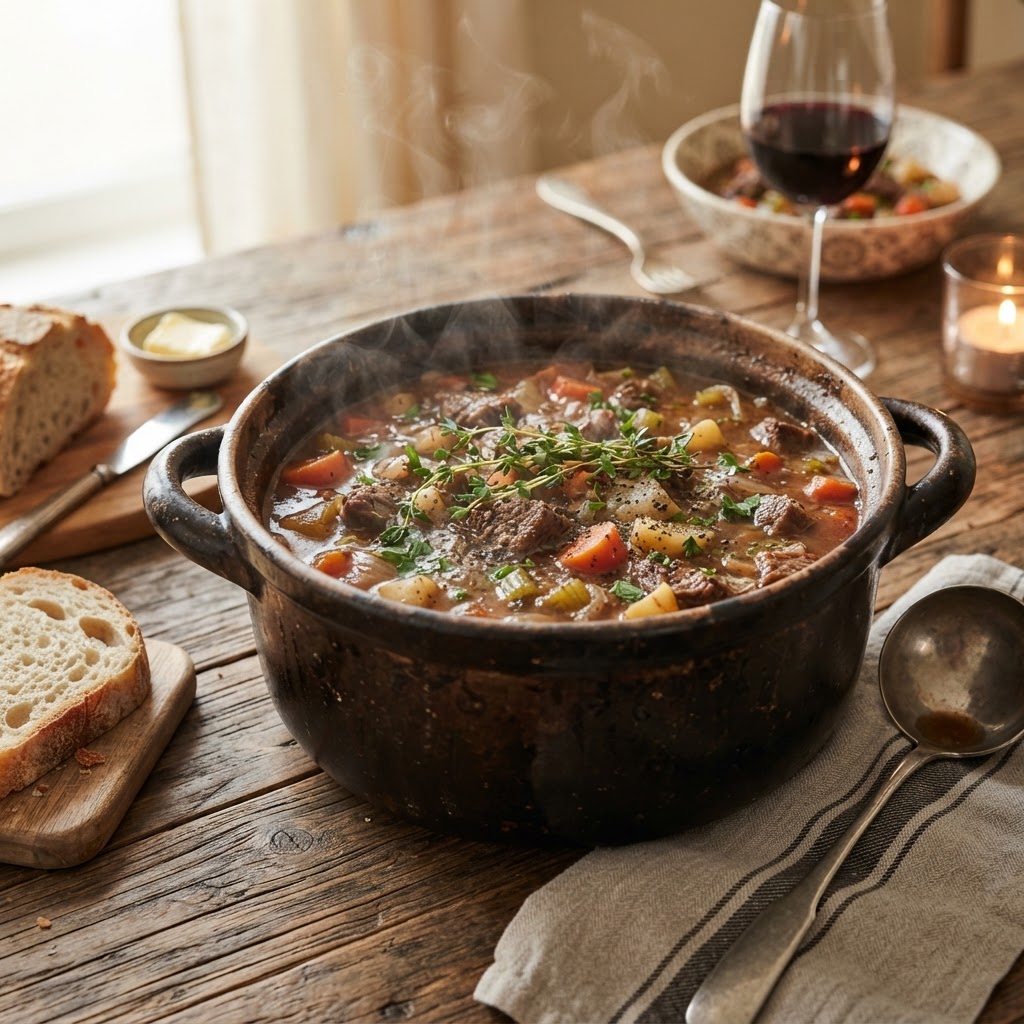
Ingredients You’ll Need
- 2 lbs beef chuck roast, cut into 1-inch cubes
- 3 tbsp all-purpose flour
- 1 tbsp olive oil
- 2 cups beef broth
- 1 tbsp Worcestershire sauce
- 1 lb Yukon gold potatoes, cut into 1-inch chunks
- 3 large carrots, peeled and sliced
- 1 medium yellow onion, diced
- 3 cloves garlic, minced
- 2 tsp dried thyme
- 1 tsp salt
- 0.5 tsp black pepper
Follow this clear, step-by-step guide to prepare this dish perfectly every time.
Mastering the Aromatics and Seasoning
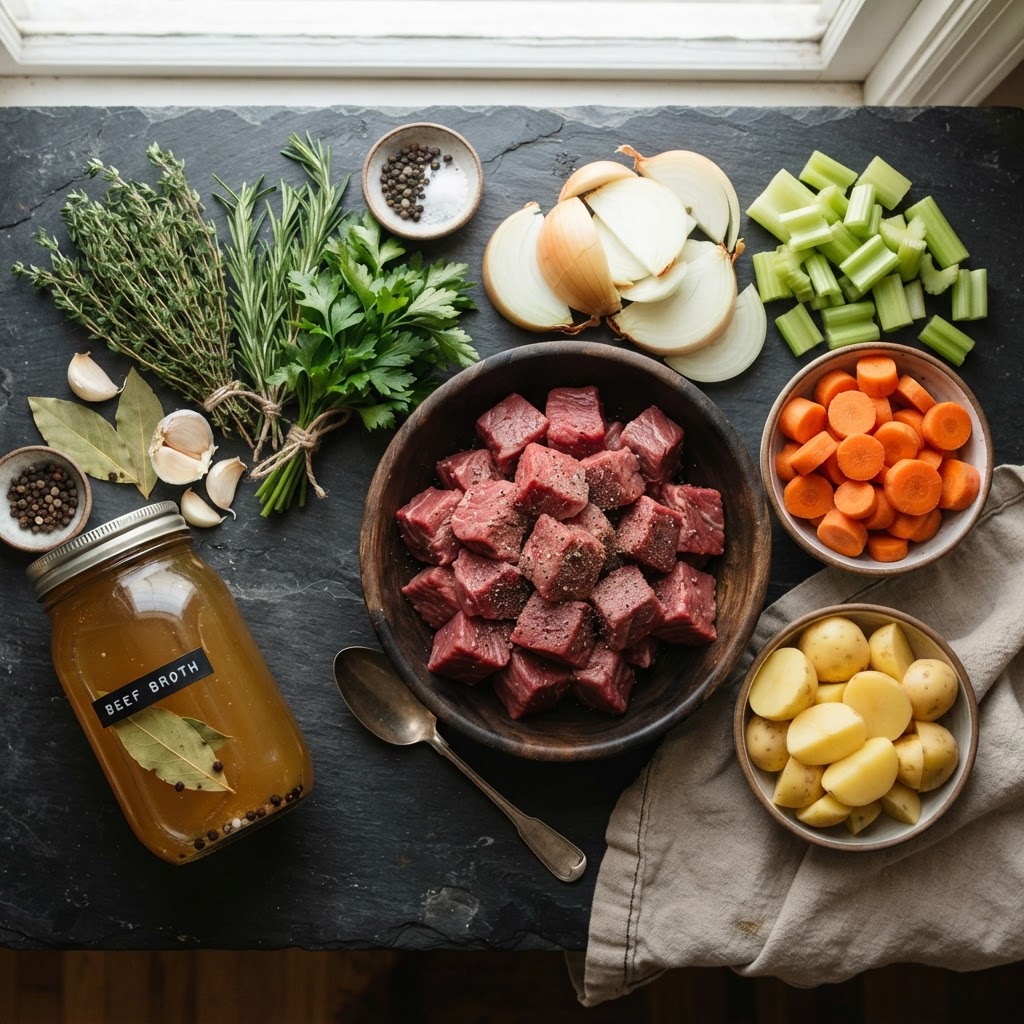
Building flavor in your pot starts with the foundation of herbs and vegetables that define this slow cooked beef stew. A classic slow cooker beef stew thrives on fresh herbs like thyme and rosemary, which infuse the liquid as it simmers over several hours. Aromatics such as onions and garlic provide the base notes, while the addition of Worcestershire sauce contributes a subtle umami complexity that deepens the overall profile. Balancing these flavors requires an understanding of acidity, which is why many chefs incorporate red wine or tomato paste to cut through the heavy fat of the beef.
Essential Ingredients
Your beef stew ingredients should include a variety of root vegetables to provide texture and natural sweetness. Including carrots, celery, and potatoes creates a balanced flavor profile, while a little tomato paste or broth reduction adds the necessary acidity to cut through the richness of the meat. If you are looking for specific variations, consider how a beef barley stew in crockpot differs from a standard beef and potato stew by adding that chewy, nutty grain element.
Time and Temperature Management
Understanding the importance of slow cooker stew time is the final hurdle to achieving that thick slow cooker beef stew texture you crave. Most recipes call for 6 to 8 hours on low, but if you need a quicker result, some easy beef stew recipe crockpot methods allow for 4 hours on high, though the low setting is almost always superior for collagen breakdown. By keeping the temperature consistently between 190°F and 200°F, you ensure that the muscle fibers relax without becoming dry or chalky, which often happens when the cooker exceeds its recommended heat threshold.
Tips for Thick Gravy
Many home cooks struggle with watery broth, but you can easily control the consistency of your beef stew sauce recipe. One common trick is to coat your beef cubes in flour before searing, or simply whisk in a cornstarch slurry during the last thirty minutes of cooking. This transforms a thin liquid into a rich, brown beef stew recipe base that coats the back of a spoon perfectly.
Exploring Variations and Regional Styles
While many people stick to the classic beef stew recipe, there is a whole world of regional twists to explore. From an Irish food crockpot preparation using dark stout to a Beef Bourguignon recipe in cookbook style, the potential for customization is endless. If you enjoy a thicker bite, try a crockpot beef stew with dumplings, which adds a fluffy, carb-heavy finish that is perfect for cold winter nights. These variations often rely on localized ingredients, such as root vegetables available in specific climates or different thickening agents like pearl barley or crusty sourdough bread crumbs to add body.
Healthy and Dietary Options
For those focusing on clean eating, a healthy beef stew crockpot approach can be achieved by focusing on extra vegetables and high-quality protein. You can easily adapt your favorite beef stew meat recipes into a gluten-free beef soup by omitting flour and using gluten-free thickeners. Whether you need a low calorie beef stew slow cooker option or a beef stew crock pot recipes keto friendly version, you can simply adjust the starch content to fit your goals.
The Secret to Consistent Results
To ensure your stew is the best slow cooker beef stew every single time, avoid the urge to lift the lid too often. Every time you remove the lid, you lose significant heat, which extends the necessary beef stew crock pot recipes cooking time. Trust the process and let the slow cooker work its magic uninterrupted for the duration of the cycle. By avoiding frequent peeking, you maintain a pressurized, stable heat environment that allows the aromatics and liquids to fully integrate with the beef proteins.
Batch Cooking for Convenience
Since this dish reheats beautifully, it is an excellent candidate for batch cooking. Simply prepare a large batch of homemade beef stew slow cooker style, portion it into containers, and keep it in the freezer for easy dinners throughout the month. When you’re ready to eat, just warm it up and enjoy the deep, developed flavors of a truly classic slow cooker beef stew.
FAQ
Should I brown the meat before putting it in the slow cooker?
Yes, searing your beef is essential for creating a deeper, more complex flavor profile via the Maillard reaction. This step caramelizes the surface of the meat, adding a savory richness that boiling alone cannot achieve, which is necessary for the best slow cooker beef stew.
Why is my slow cooker stew watery?
Watery stew usually occurs because vegetables release excess moisture while cooking, diluting the gravy. You can easily fix this by whisking in a cornstarch slurry during the last 30 minutes of cooking or by removing the lid for the final hour to reduce the liquid.
Can I use frozen beef for this recipe?
No, you should always thaw meat completely before placing it in a slow cooker to ensure safety. Using frozen meat keeps the internal temperature of the beef in the ‘danger zone’ for too long, which significantly increases the risk of bacterial growth and results in uneven cooking.
What are the best vegetables for beef stew?
Traditional choices like potatoes, carrots, onions, and celery are best because they withstand the 7-8 hour cooking time without losing their structure. If you want to experiment, try adding heartier options like parsnips or mushrooms, which hold up well during long, slow simmers.
How long can I store leftover beef stew?
Leftover beef stew can be refrigerated in an airtight container for up to 3 to 4 days, or frozen for up to 3 months. When reheating, add a splash of beef broth to regain the ideal consistency, as the potatoes and flour often absorb liquid during storage.