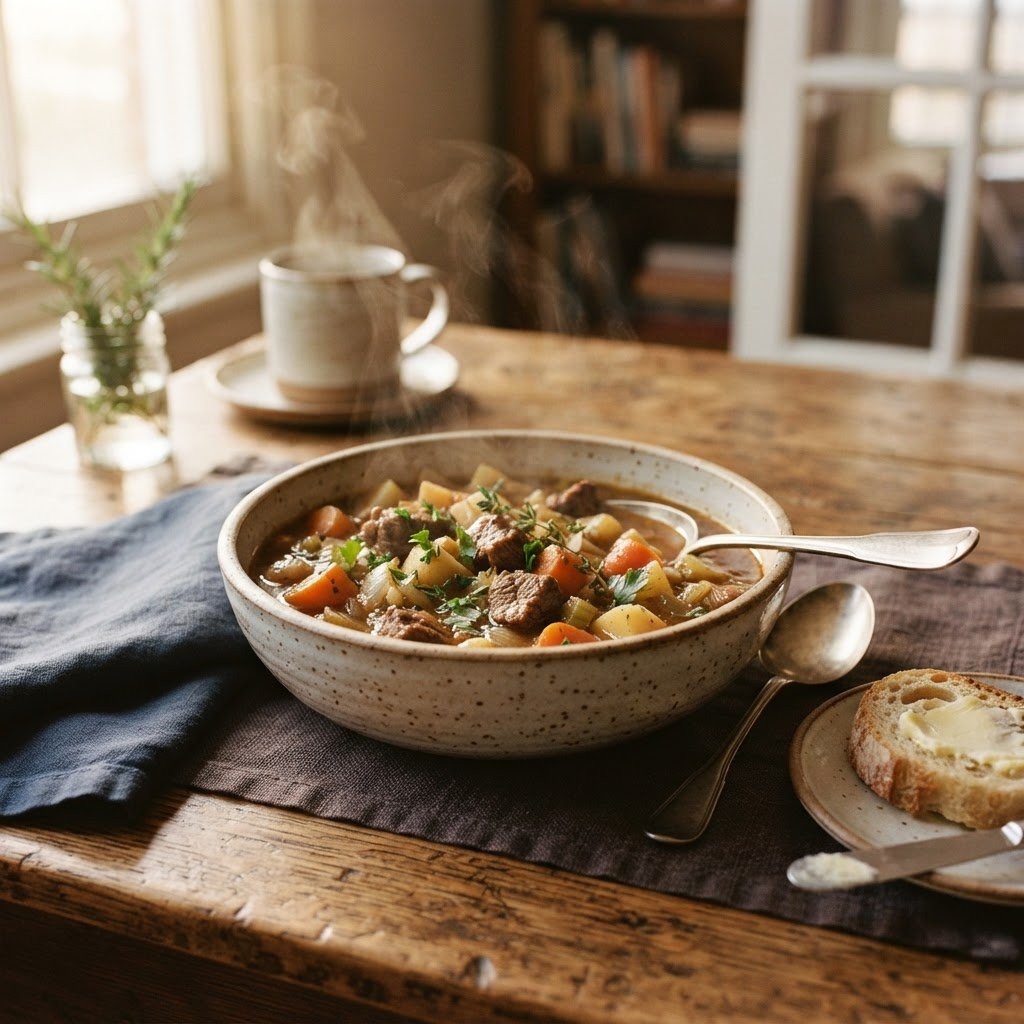
To make the perfect slow cooker beef stew, sear two pounds of cubed chuck roast until browned, then combine it with potatoes, carrots, onions, broth, and herbs in a slow cooker for eight hours on low heat. This method transforms tough cuts into fork-tender meat while developing a rich, thickened gravy without constant monitoring.
The Secret to Tender Beef Stew Every Time
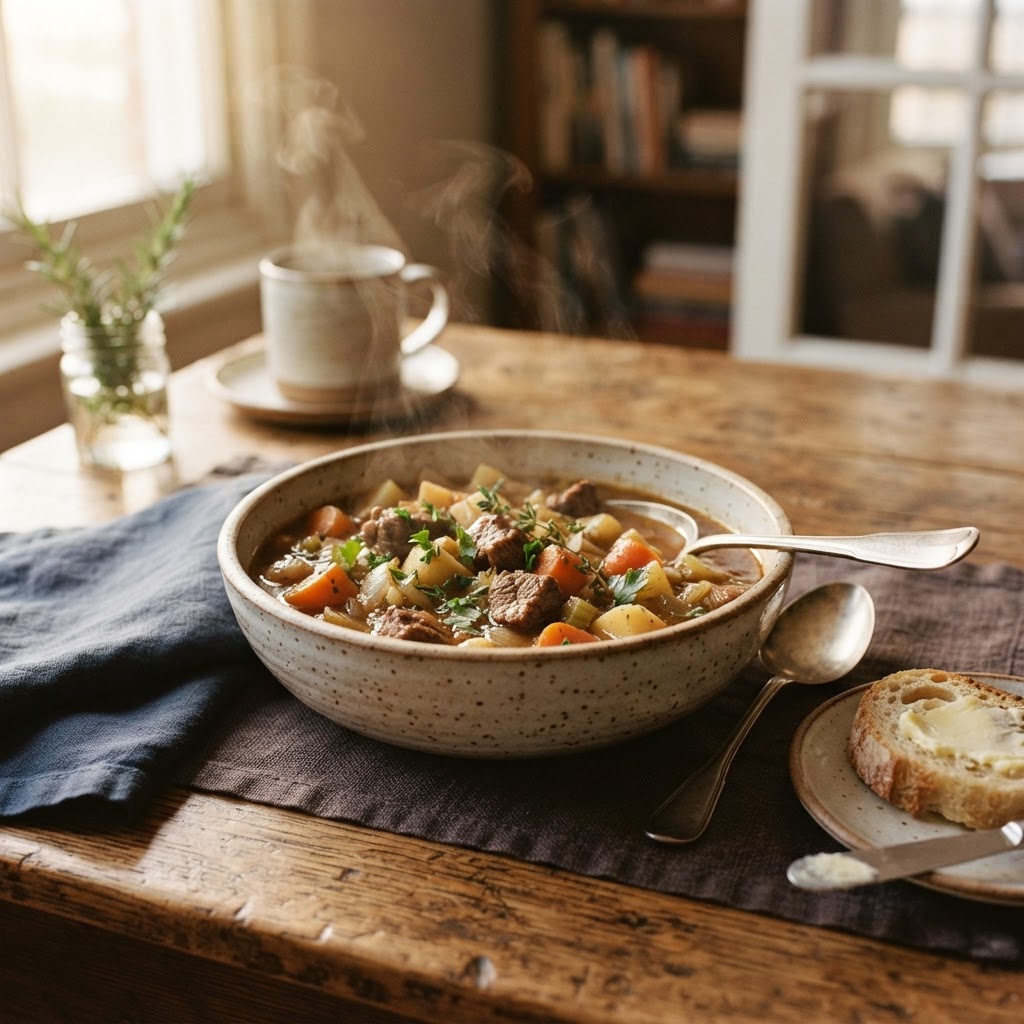
Achieving melt-in-your-mouth beef stew depends on the science of collagen breakdown and precise temperature management. Tougher cuts of meat, specifically chuck roast, contain high amounts of connective tissue that require a minimum of six to eight hours at a low, consistent temperature—ideally between 190°F and 200°F—to convert into gelatin. This process ensures the meat remains moist and rich rather than drying out. Unlike boiling, which toughens muscle fibers, the slow cooker maintains a steady, gentle heat that allows the stew’s liquid base to meld with the fats and proteins, resulting in a superior depth of flavor that is unattainable in high-heat cooking methods.
Choosing Your Ingredients Wisely
Selecting high-quality ingredients is the foundation of a successful beef stew, with the cut of meat and the type of starch being the most critical variables. For optimal results, utilize 2 lbs of marbled beef chuck; the intermuscular fat ensures the beef remains tender throughout the long cooking cycle. When selecting vegetables, waxy potatoes like baby reds or Yukon Golds are preferred because they maintain their structural integrity during the long, eight-hour cook time, whereas starchy Russet potatoes may disintegrate. Integrating fresh aromatics like garlic and thyme, along with a high-quality low-sodium beef broth, allows you to control the final seasoning profile, ensuring the savory complexity of the dish is not overpowered by salt.
Step-by-Step Recipe Instructions
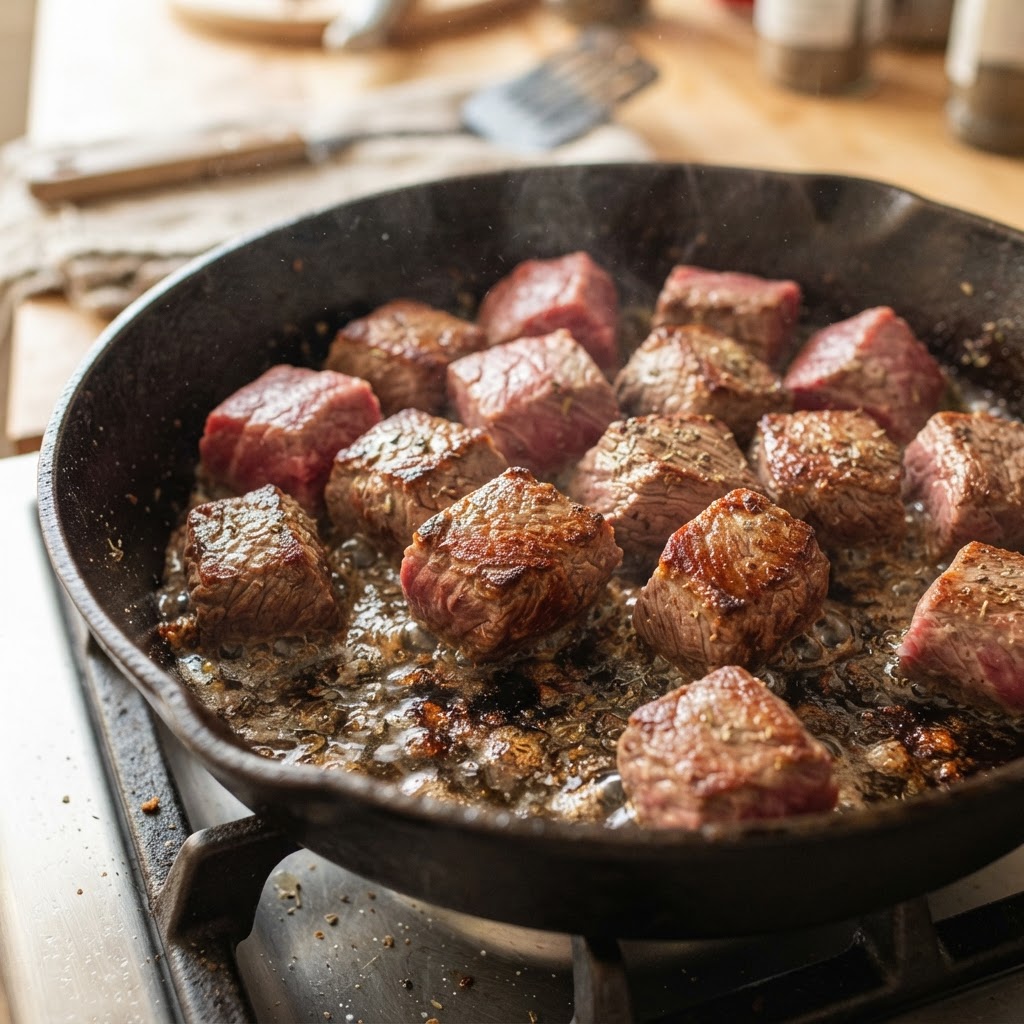
Ingredients You’ll Need
- 2 lbs beef chuck roast, cut into 1-inch cubes
- 3 tablespoons all-purpose flour
- 1 teaspoon salt
- 1/2 teaspoon black pepper
- 2 tablespoons olive oil
- 1 lb baby potatoes, halved
- 3 large carrots, peeled and sliced into rounds
- 1 medium yellow onion, chopped
- 2 cups beef broth
- 1 tablespoon Worcestershire sauce
- 2 teaspoons dried thyme
- 2 cloves garlic, minced
Step-by-Step Guide to Preparation
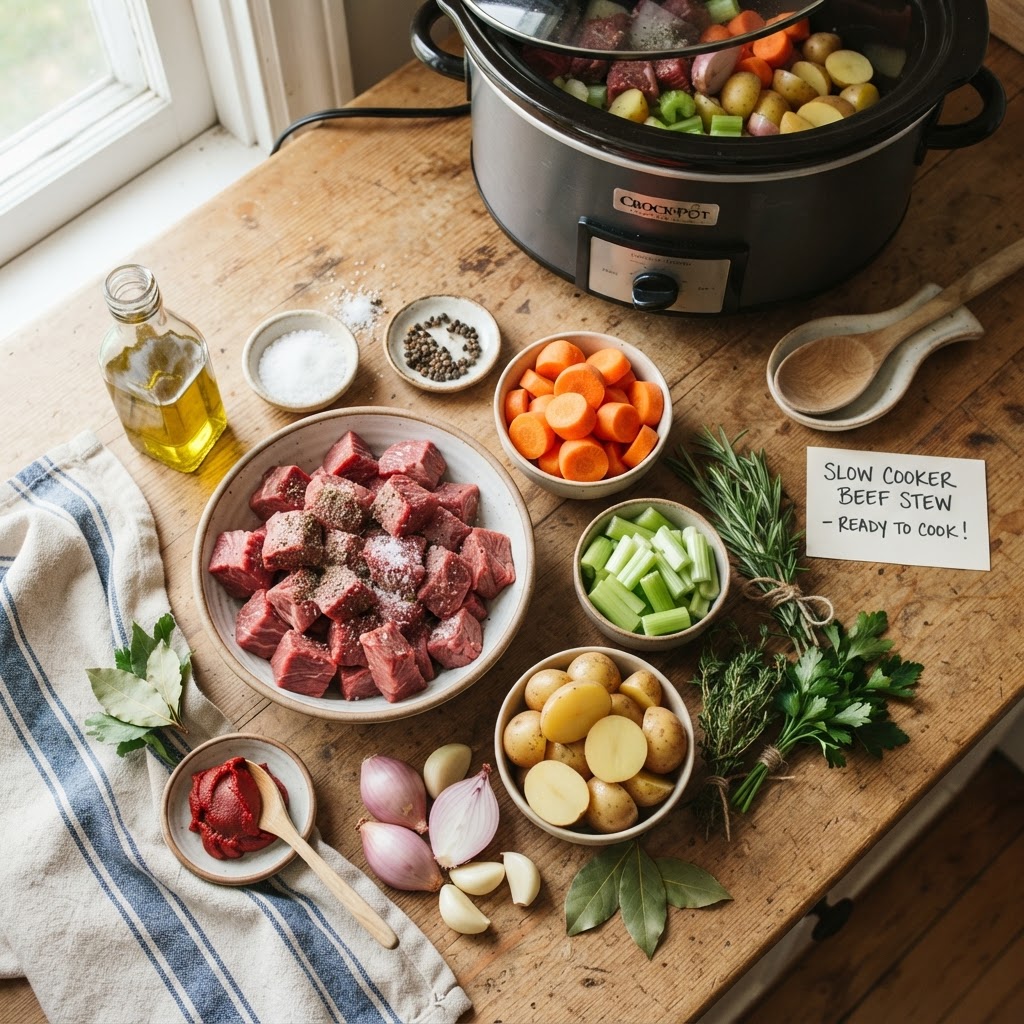
Mastering the preparation process requires a structured approach to layering and searing that maximizes both texture and viscosity. Dusting the beef in flour before searing serves a dual purpose: it promotes the Maillard reaction, which creates deep, savory flavor compounds, and it acts as a thickening agent for the gravy. By assembling the ingredients according to density—placing slower-cooking root vegetables at the base where they receive the most heat—you ensure uniform tenderness across all components. This method is highly efficient for home cooks, providing a consistent, low-effort alternative to the intensive monitoring required for stovetop or oven-braising techniques.
Customizing Your Stew to Perfection
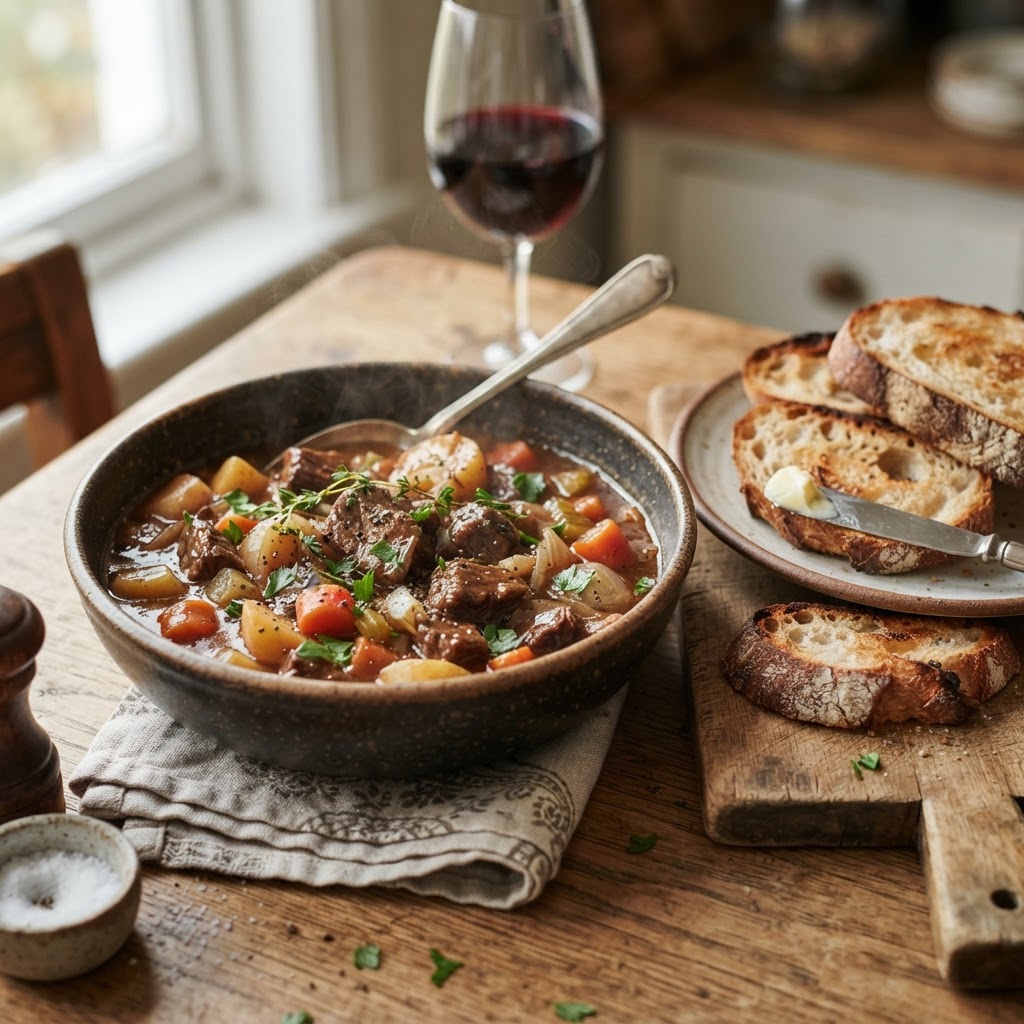
Customizing your beef stew allows for complete adaptation to specific dietary requirements or flavor preferences without sacrificing the integrity of the dish. For those pursuing a lower-carb or keto-friendly lifestyle, replacing starchy potatoes with cauliflower florets, radishes, or turnips provides a similar mouthfeel while keeping the net carbohydrate count significantly lower. Conversely, adding dumplings—a mixture of flour, baking powder, milk, and butter—in the final 45 minutes of the cycle introduces a hearty, comforting element that absorbs the savory gravy. These modifications highlight the inherent flexibility of the slow cooker, which acts as a versatile vessel for experimenting with varied aromatics, different root vegetable combinations, or even protein substitutions like venison or lamb.
Common Variations and International Twists
Global variations offer unique culinary profiles that evolve the standard beef stew recipe into regional specialties. The inclusion of stout beer, common in Guinness beef stew, adds a deep, malty complexity due to the presence of caramel malts and hop bitters which tenderize the meat through enzymatic activity. Alternatively, incorporating Hungarian paprika transforms the flavor profile into a classic goulash, focusing on sweet and smoked pepper notes rather than the earthy herbs typically found in French bourguignon-style stews. These regional variations demonstrate that while the core technique remains consistent, the liquid base and spice blends are where home cooks can differentiate their dishes. Whether utilizing ale, wine, or tomato-based stocks, the slow-cooking process ensures that these complex liquid components permeate the meat, creating a cohesive, flavorful experience in every bite.
Essential Tips for Batch Cooking and Storage
Batch cooking is a highly effective strategy for meal planning, as beef stew significantly improves in flavor after sitting in the refrigerator for 24 hours. The cooling process allows for the maturation of spices and the redistribution of fats, which helps the broth develop a more robust, velvety texture upon reheating. To safely store your stew, divide it into shallow, airtight containers to facilitate rapid cooling and prevent bacteria growth; it can be safely stored in the refrigerator for up to four days or frozen for up to three months. When reheating, it is best to do so gently on the stovetop, as adding a small splash of beef broth can restore the desired consistency of the gravy, which often thickens significantly after chilling.
FAQ
Can I make a slow cooker beef stew without wine?
Yes, you can easily omit wine by substituting it with an equal volume of beef broth mixed with a tablespoon of balsamic vinegar or tomato paste. This provides the necessary acidity and depth to balance the richness of the beef without introducing alcohol.
How long should I cook stew meat in a crockpot?
For the most tender results, cook your beef chuck on low heat for seven to nine hours. This long duration is essential for breaking down the tough collagen fibers into gelatin, ensuring the meat is tender enough to fall apart with a fork.
Should I sear the meat before putting it in the slow cooker?
Searing the meat is highly recommended because it triggers the Maillard reaction, creating a caramelized crust that adds significant savory depth to the sauce. While optional, skipping this step results in a paler, less flavorful gravy and lacks the complex aromatic notes of a seared dish.
Can I add dumplings to my slow cooker stew?
Yes, you can create a hearty beef and dumpling stew by dropping spoonfuls of batter onto the surface of the stew during the final 45 minutes of cooking. Keeping the lid closed during this time is critical, as the trapped steam is necessary to properly puff and cook the dumplings.
What are the best cuts of beef for slow cooker stew?
Beef chuck roast is the gold standard for slow cooking because its high ratio of intramuscular fat and connective tissue prevents the meat from drying out. Avoid lean cuts like round steak or sirloin, which will become dry and stringy when subjected to long cooking times.