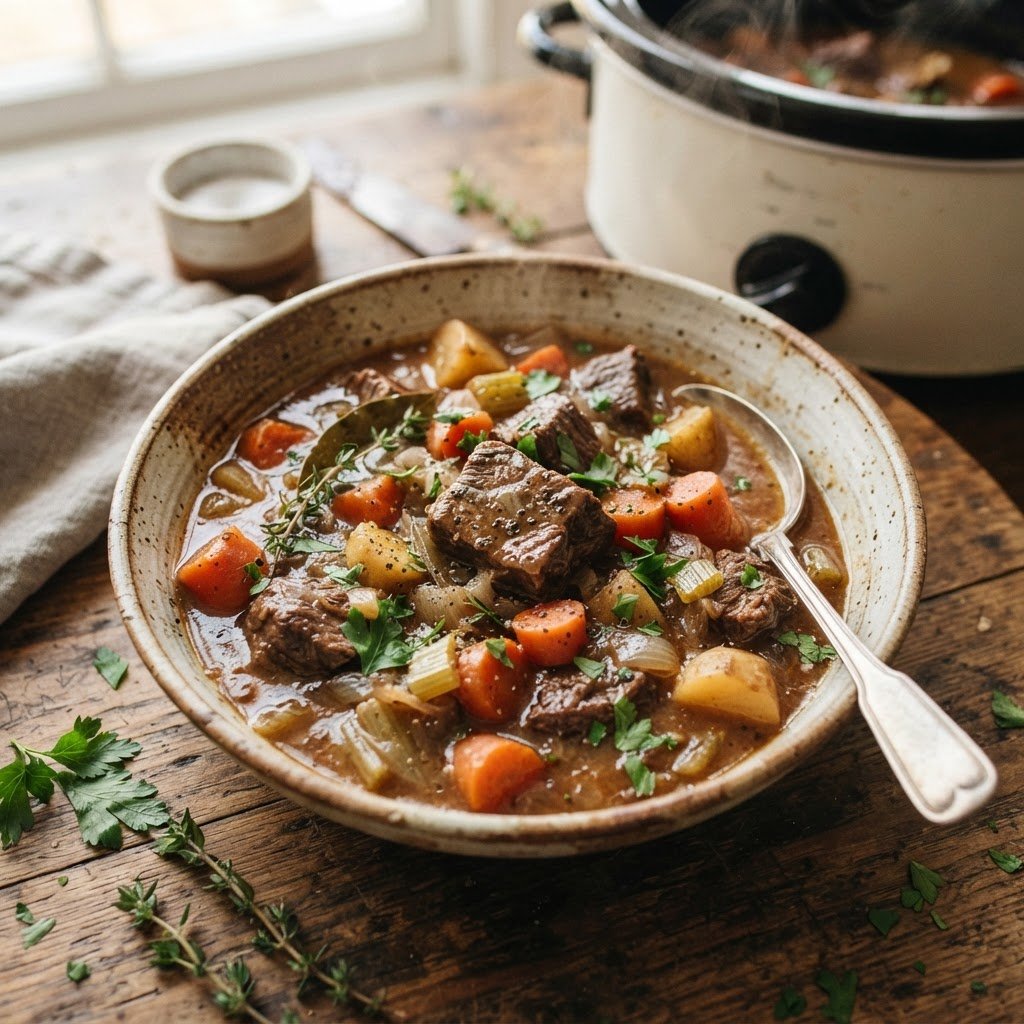
Tender Slow Cooker Beef Stew: The Ultimate Comfort Recipe
To make the perfect slow cooker beef stew, combine 2 lbs of seared beef chuck with hearty root vegetables in a base of beef broth, cooking on low for 7-8 hours until the meat is fork-tender. This method utilizes low heat to break down collagen, ensuring succulent results that are easy to prepare.
The Foundations of a Perfect Stew
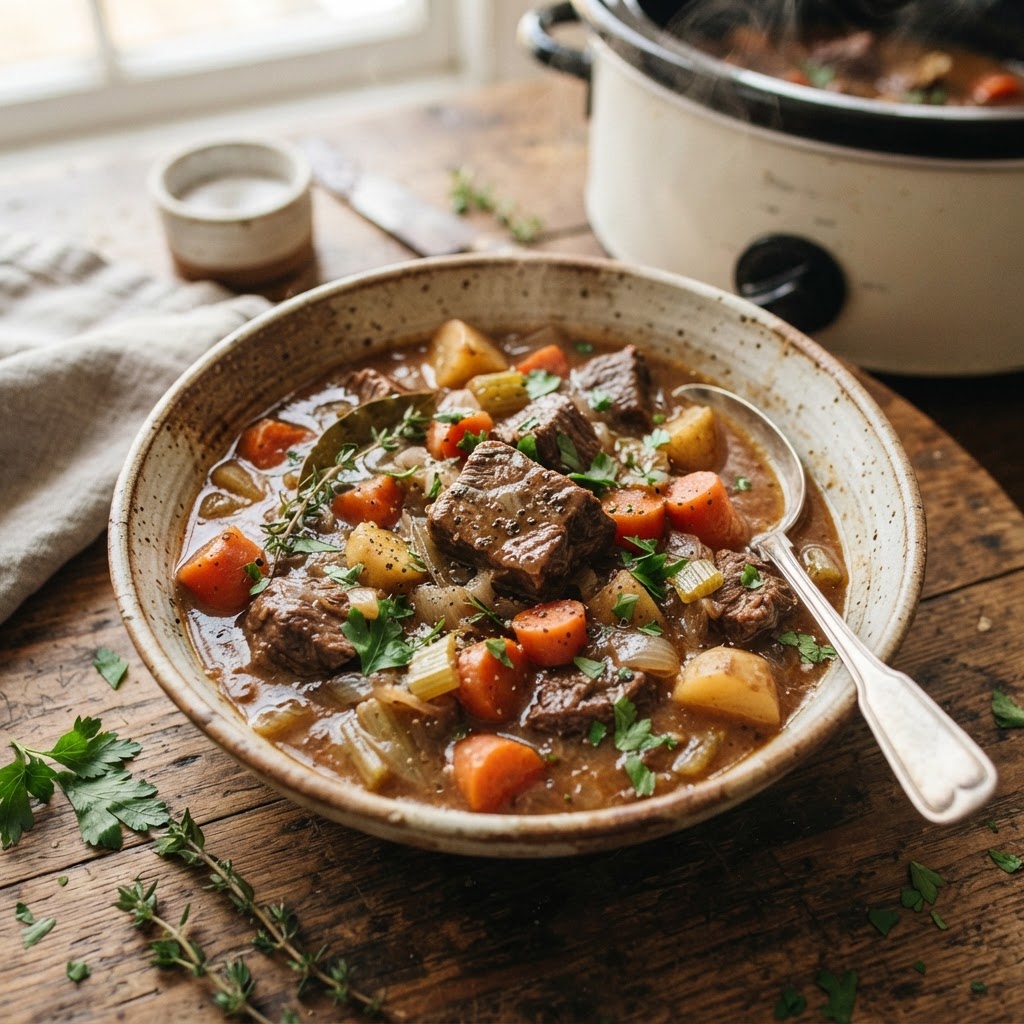
Creating a classic beef stew requires understanding the synergy between specific cuts of meat and consistent low-temperature cooking. The ideal cut for this dish is beef chuck roast, which contains a high percentage of intramuscular fat and connective tissue that transforms into gelatin, providing a rich mouthfeel that lean cuts cannot replicate. Unlike stovetop cooking, which can quickly dry out lean proteins, the slow cooker creates a self-basting environment by trapping moisture within the vessel. To ensure a depth of flavor that competes with restaurant-quality dishes, you must prioritize the Maillard reaction. By searing your beef cubes in a hot skillet with 2 tablespoons of oil for 8 minutes before they ever touch the slow cooker, you create complex flavor compounds that infuse the entire broth.
Quality ingredients serve as the backbone of your stew, so focus on fresh carrots, earthy potatoes, and yellow onions cut to a uniform 1-inch size. Uniformity is critical; if pieces vary too wildly in size, some will turn to mush before others are fully cooked. Whether you are using a standard Crockpot or a high-end multi-cooker, the principle remains: treat the beef with patience. By adhering to the recommended 8-hour low-heat window, you allow the tough fibers in the chuck roast to relax completely. If you feel your stew is missing something, a tablespoon of Worcestershire sauce or a splash of balsamic vinegar provides that necessary acidic brightness to cut through the heavy, savory notes of the beef broth.
Preparing Your Meat
Properly preparing your meat before it enters the slow cooker is the difference between a mediocre dinner and a professional-grade meal. Start by patting your 2 lbs of chuck roast cubes completely dry with paper towels; moisture on the surface creates steam, which prevents the beef from developing the deep brown crust essential for a rich gravy. Once dried, toss the beef in a mixture of flour, salt, and pepper to build a base for thickening. When searing, work in small batches so the pan temperature remains high, preventing the meat from steaming in its own juices. This brief 5-8 minute searing process isn’t about cooking the meat through—it’s strictly about color and flavor development. Once browned, remove the beef and deglaze the skillet with a splash of broth to lift the flavorful browned bits, or fond, off the bottom of the pan. Pouring this concentrated liquid into your slow cooker ensures that every ounce of flavor from your searing process is captured in the final dish.
Step-by-Step Recipe Instructions
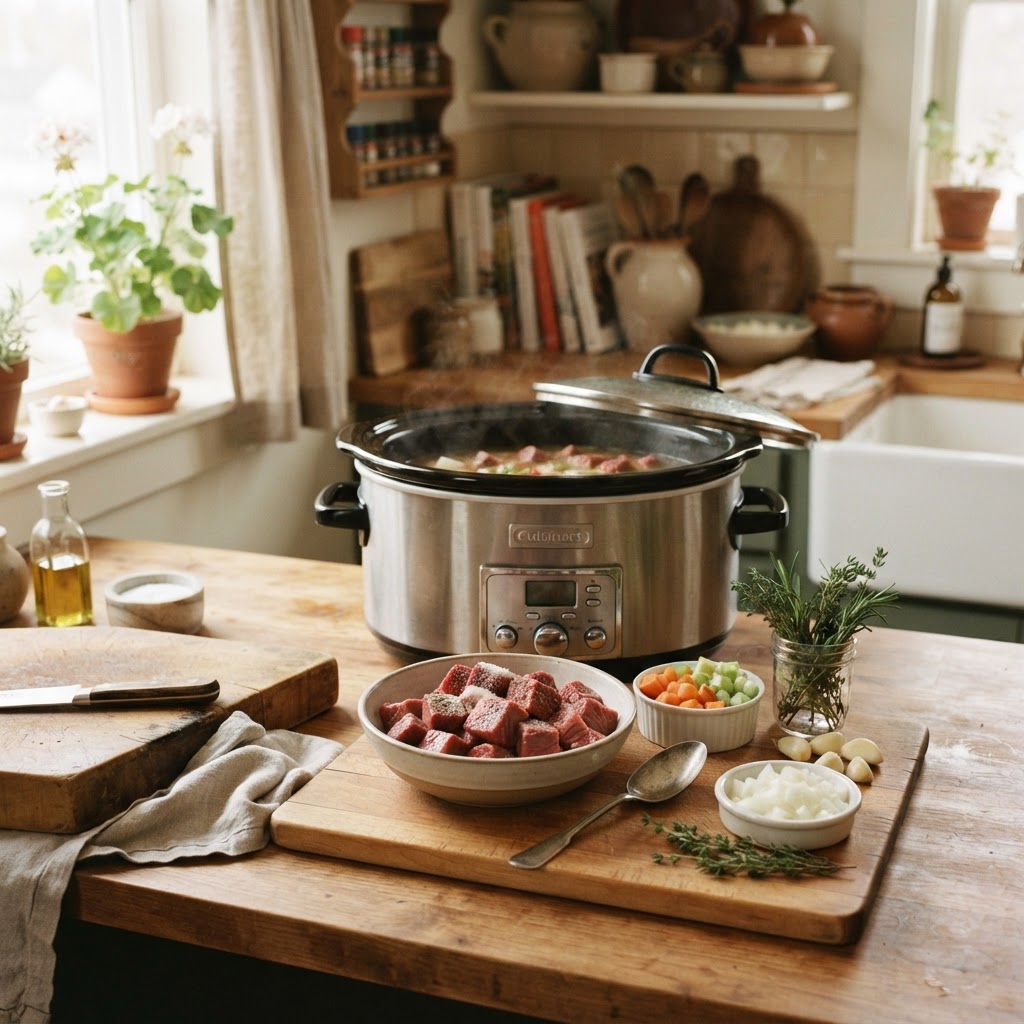
Ingredients You’ll Need
- 2 lbs beef chuck roast, cut into 1-inch cubes
- 2 tbsp all-purpose flour
- 1 tsp salt
- 1/2 tsp black pepper
- 2 tbsp olive oil
- 3 cloves minced garlic
- 2 cups beef broth
- 1 tbsp Worcestershire sauce
- 3 large carrots, peeled and sliced
- 2 cups baby potatoes, halved
- 1 yellow onion, chopped
Follow this clear, step-by-step guide to prepare this dish perfectly every time.
Essential Ingredients and Variations
Selecting the right add-ins for your beef stew allows you to elevate a standard recipe into a gourmet culinary experience. While the core of a beef stew rests on the trinity of beef, carrots, and potatoes, adding umami-rich ingredients like cremini mushrooms or pearl onions can provide a sophisticated depth of flavor. If you prefer a brighter, more complex profile, consider replacing half of your beef broth with a dry red wine like Cabernet Sauvignon or Pinot Noir; the acidity in the wine helps break down the connective tissue in the chuck roast even more efficiently. For those aiming for a thicker, more traditional ‘pub-style’ stew, adding a tablespoon of tomato paste during the sautéing phase of your onions will lend a subtle sweetness and an earthy red hue to the final sauce.
Dietary adaptations are also straightforward in a slow cooker environment. For a gluten-free version, replace the all-purpose flour with a 1:1 gluten-free flour blend or use arrowroot powder at the very end of the cooking process to avoid any potential gumminess. If you are aiming for a healthier profile, swapping standard white potatoes for rutabaga or parsnips increases the fiber content and provides a slightly lower glycemic index impact. When choosing your herbs, fresh thyme and rosemary are superior to dried varieties; add them at the beginning to allow the essential oils to permeate the meat as it slow-cooks. Remember that the goal of these variations is to balance the richness of the fat with acid, sweetness, and herbal aromatics, ensuring the final bowl is perfectly balanced.
Comparing Cooking Methods
Understanding how different equipment impacts your final dish helps you become a more versatile cook in your own kitchen. While a slow cooker is convenient, other methods offer different benefits regarding texture and speed.
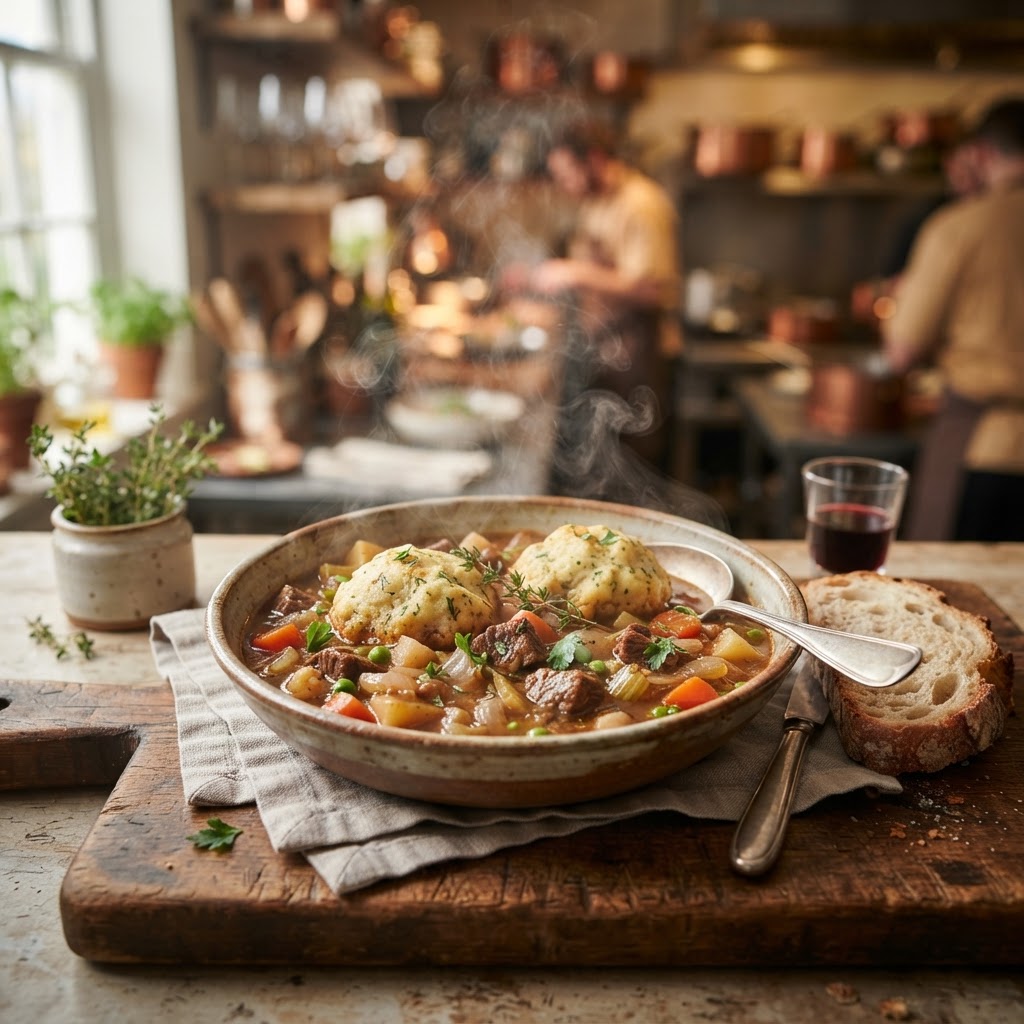
Regardless of your chosen method, from Crockpot dishes to traditional beef stew in a clay pot, the principles of layering flavors remain consistent. If you are stuck in a rut, try some Beef barley slow cooker variations to add texture, or experiment with Crockpot beef stew with dumplings for a truly indulgent experience.
Mastering the Gravy and Texture
A perfect beef stew requires a gravy that is thick enough to cling to the back of a spoon but thin enough to remain silky rather than pasty. The most common error in slow cooker stews is using too much liquid; because the pot is sealed, the steam cannot escape, leading to a watery, diluted broth. To maintain the ideal consistency, ensure your liquid level only just covers the meat and vegetables, as the moisture released by the onions and carrots will supplement the broth during the cooking cycle. If your stew lacks body once the timer goes off, the best strategy is to create a ‘slurry’ using 1 tablespoon of cornstarch mixed with 2 tablespoons of cold water.
Whisking this cold mixture directly into the hot, bubbling stew during the final 30 minutes of cooking is the gold standard for achieving a glossy, rich finish without the risk of lumps. Never add raw flour directly to the slow cooker at the end, as it will remain chalky and won’t thicken correctly without high-heat intervention. Furthermore, consider the starch content of your potatoes; using starchy varieties like Russets will naturally thicken the stew as they partially break down during the 8-hour cook. By contrast, if you prefer your chunks of potato to remain firm and intact, stick with waxy varieties like Yukon Gold or red baby potatoes. Managing the balance between natural starch release and a controlled slurry is the final step in transitioning from a simple home-cooked meal to a restaurant-caliber stew.
Flavor Profiles and Cultural Twists
Expanding your repertoire with regional variations transforms beef stew from a routine meal into a global culinary exploration. A Guinness beef stew, for example, relies on the toasted malt and hop notes of the dark stout to provide a deep, bitter contrast to the richness of the beef chuck. Conversely, a Hungarian-inspired approach incorporates generous amounts of high-quality smoked paprika and caraway seeds, creating a vibrant, earthy profile that is distinctively Eastern European. If you seek a brighter, more vibrant dish, consider a ‘Provencal’ style, where you incorporate olives, lemon zest, and a handful of fresh parsley during the final moments of service.
These regional adaptations illustrate that stew is essentially a blank canvas for aromatics. You can shift the entire profile of your dish simply by changing the herb bouquet; swapping rosemary and thyme for bay leaves and star anise can pivot your stew toward a more Asian-influenced braise. The secret to these cultural twists is building the aromatics foundation properly. Always sweat your onions, garlic, and leeks in a separate pan before adding them to the slow cooker; this process caramelizes the natural sugars and creates a base flavor that allows regional spices to stand out without competing with the raw bite of un-cooked aromatics. By experimenting with these profiles, you can rotate through dozens of variations while keeping the reliable, easy-to-manage structure of your slow cooker method constant.
The Role of Aromatics
Aromatics serve as the fundamental flavor layer that prevents your slow cooker beef stew from tasting one-dimensional. Onions, garlic, celery, and carrots do more than just provide texture; they release essential oils that soften the aggressive flavor of beef fat and bridge the gap between the savory stock and the iron-rich meat. To maximize this, it is essential to chop your aromatics into uniform sizes; onions should be diced small enough that they essentially melt into the sauce, while carrots should remain larger to retain their structure. If you are using dried herbs, crush them between your palms before adding them to the pot to release dormant oils, or ideally, use a bouquet garni—a bundle of tied herbs—which allows you to infuse the broth without leaving woody stems behind in the final dish.
FAQ
Can I use frozen beef for stew?
It is generally not recommended to use frozen beef directly in a slow cooker because the meat stays in the ‘danger zone’ (40°F to 140°F) for too long, which increases the risk of bacterial growth. Always thaw your beef in the refrigerator overnight for safety and consistent tenderness.
How do I prevent potatoes from getting mushy?
Add your potatoes during the last two to three hours of cooking rather than at the very beginning to keep them firm. This strategy ensures the potatoes absorb the rich flavor of the broth while maintaining their structural integrity and avoiding a grainy, overcooked texture.
Is it necessary to brown the meat first?
Browning is optional but highly recommended because it triggers the Maillard reaction, a chemical process that creates hundreds of different flavor compounds. If you skip this, your stew will still cook, but it will lack the deep, savory complexity and rich mahogany color that defines a professional stew.
Can I add dumplings to my beef stew?
Yes, adding dumplings is a simple way to turn your stew into a hearty, all-in-one meal. Simply drop spoonfuls of your favorite dumpling batter onto the surface of the stew during the final 30 minutes of cooking and keep the lid tightly sealed to steam them properly.
What can I use if I do not have red wine?
If you want the depth and acidity of wine without the alcohol, substitute with high-quality beef stock mixed with one tablespoon of balsamic vinegar or Worcestershire sauce. These ingredients provide the essential umami and acidic punch required to cut through the richness of the beef fat effectively.