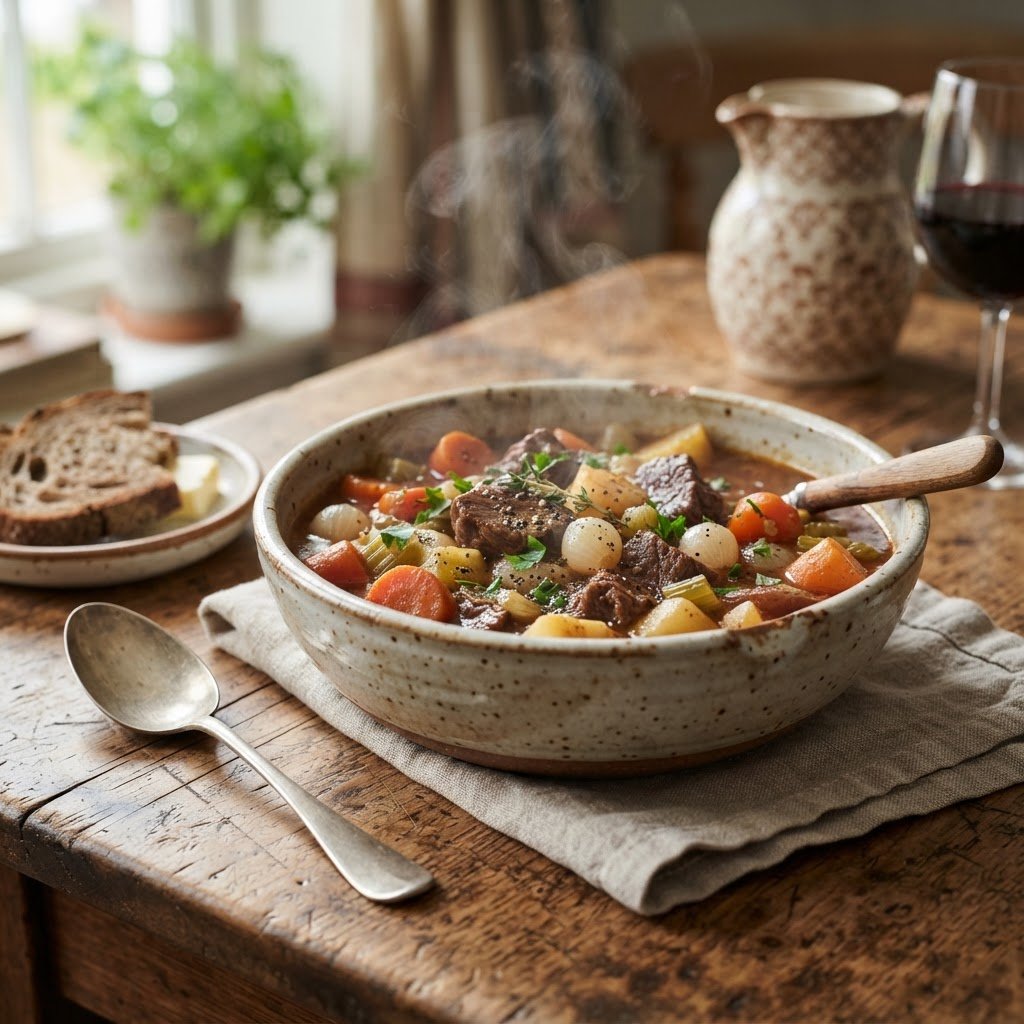
Simple Slow Cooker Beef Stew Using Stew Meat
To make a simple slow cooker beef stew, coat 2 lbs of cubed beef in flour and seasonings, sear it in a hot pan, and simmer in a crockpot with beef broth, aromatics, and root vegetables on the low setting for 8 hours until the meat reaches fork-tender perfection.
The Secret to Perfectly Tender Stew Meat
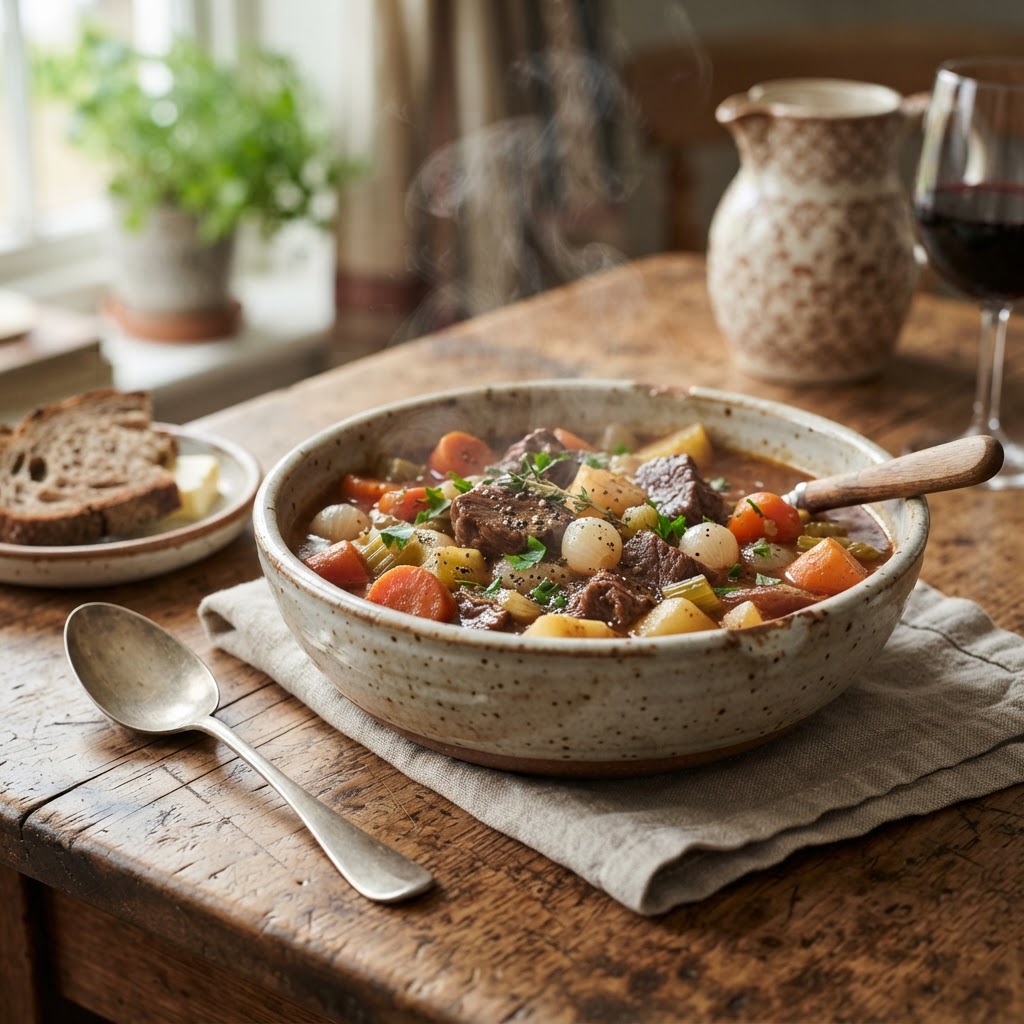
The key to achieving a professional-grade stew lies in the deliberate, slow breakdown of collagen in tougher cuts of beef, which transforms potentially chewy meat into succulent, melt-in-your-mouth bites. While many home cooks mistakenly toss raw beef directly into the slow cooker, performing a quick sear in a skillet for 5 to 7 minutes creates a Maillard reaction. This chemical process develops complex, savory crusts on the surface of the meat that cannot be replicated by low-temperature poaching alone. Furthermore, selecting high-quality “stew meat”—which is typically derived from the chuck primal—ensures you have the necessary fat marbling to keep the meat moist throughout an 8-hour cooking cycle. When the meat is properly browned and nestled among aromatics like garlic and onions, the connective tissues gradually dissolve into a rich, velvety gravy. This preparation method is scientifically proven to enhance the flavor density of the final dish compared to un-seared alternatives, making it the most vital step in your culinary workflow.
Step-by-Step Recipe Instructions
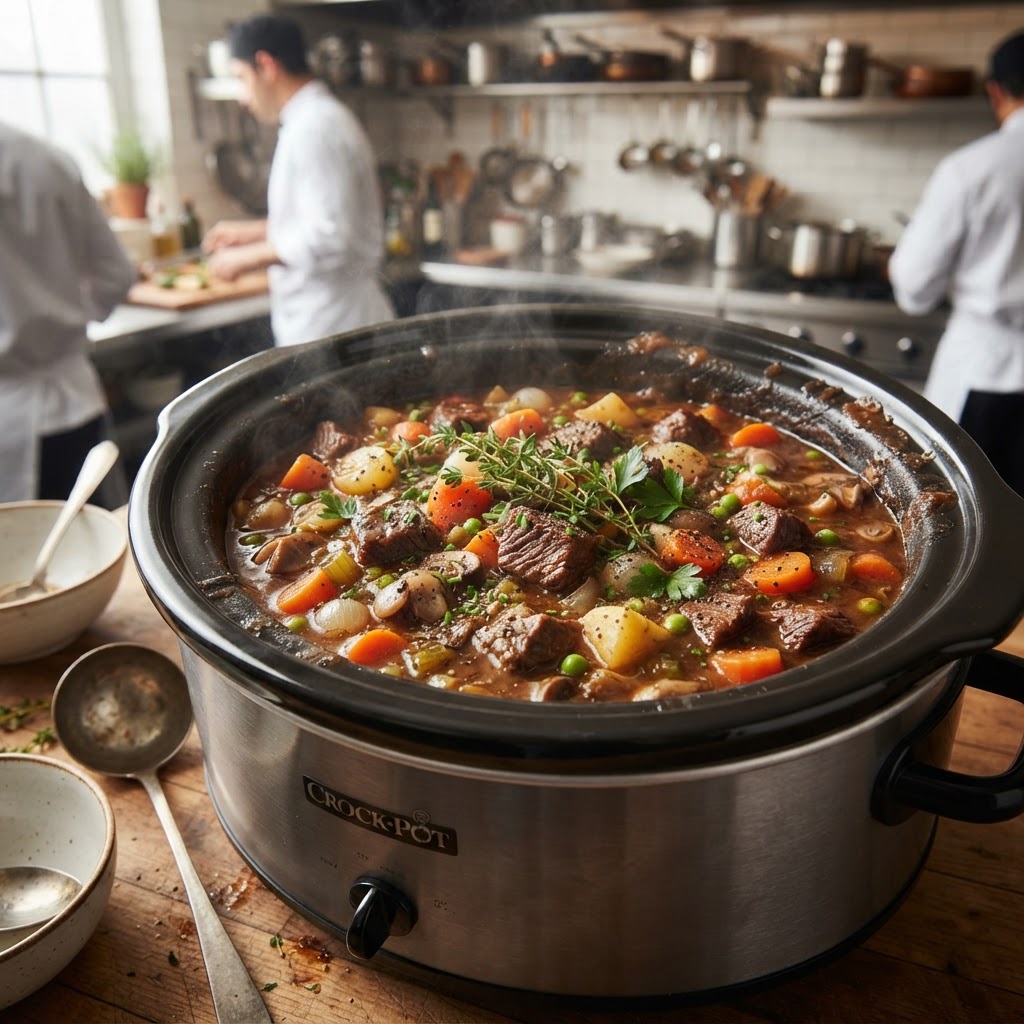
Ingredients You’ll Need
- 2 lbs beef stew meat, cut into 1-inch cubes
- 2 tbsp all-purpose flour
- 1 tsp kosher salt
- 0.5 tsp black pepper
- 2 tbsp olive oil
- 1 onion, chopped
- 3 cloves garlic, minced
- 2 cups beef broth
- 1 cup dry red wine
- 3 large carrots, peeled and sliced into rounds
- 4 medium Yukon gold potatoes, cut into chunks
- 1 tsp dried thyme
Follow this clear, step-by-step guide to prepare this dish perfectly every time.
Essential Ingredients for Maximum Flavor
Building a robust flavor profile requires a calculated balance of aromatic vegetables, high-grade broth, and precise seasoning intervals. High-quality carrots, Yukon gold potatoes, and yellow onions are essential because they provide the foundational sweetness that counteracts the savory umami depth of the seared beef. For an elevated flavor experience, incorporate 1 tablespoon of tomato paste or a teaspoon of Worcestershire sauce, which contain natural glutamates that amplify the richness of the beef broth. When choosing your liquid base, always opt for low-sodium beef stock; this allows you to manage the salinity throughout the 8-hour braise without risking a dish that is overly salty due to liquid reduction. Furthermore, utilizing a dry red wine—such as a Cabernet Sauvignon or Merlot—adds acidity that cuts through the fat of the beef. By building these layers of flavor methodically, you ensure that every bite offers a harmonious balance of sweet, salty, and acidic components, resulting in a restaurant-quality meal that far exceeds standard home-cooked expectations.
Step-by-Step Cooking Technique
Achieving peak tenderness in a slow cooker depends on maintaining a consistent, low-temperature environment that prevents the exterior of the meat from toughening before the interior fibers relax. Begin by coating your beef cubes in seasoned flour, which serves as a natural thickening agent that will emulsify with the broth and wine to create a glossy, consistent gravy. Once the meat is browned, deglaze your skillet with a splash of broth to lift the “fond” (browned bits)—these particles contain the concentrated essence of the meat and are critical for deep flavor. When assembling the slow cooker, place the meat and harder vegetables (carrots) at the bottom where the heat is most direct, while placing the potatoes on top to prevent them from disintegrating. Most importantly, resist the urge to lift the lid during the 8-hour process; each time the lid is opened, the internal temperature drops by 10-15 degrees Fahrenheit, which forces the slow cooker to compensate by extending the total cooking time significantly. Adhering to these technical constraints ensures the collagen fully gelatinizes, resulting in meat that shreds at the lightest touch of a fork.
Why Temperature Control Matters
Cooking on ‘Low’ is almost always superior to ‘High’ for beef stews because it allows the tough muscle fibers to relax gradually. When you use the high setting, the exterior of the beef can toughen and dry out before the interior reaches the necessary level of tenderness. This patience yields a far superior texture that defines an authentic, slow-cooked meal.
Comparing Beef Cuts for Stewing
Understanding the composition of your meat helps you achieve the best results. Most grocery store stew meat is a mixture of various chuck cuts, but you can also choose specific pieces for better results.
Elevating Your Simple Slow Cooker Beef Stew Using Stew Meat
You can easily transition your meal from basic to gourmet by incorporating small, strategic additions in the final hour of cooking. Stirring in a handful of frozen peas or fresh herbs like thyme and parsley adds a vibrant pop of color and freshness, which balances the heaviness of the long-cooked broth. Furthermore, serving the stew over buttery mashed potatoes or with a side of crusty, toasted sourdough bread provides a textural contrast that enhances the overall eating experience. If you find the sauce needs more body just before serving, whisk one tablespoon of cornstarch with two tablespoons of water to create a slurry and stir it in for an extra-velvety consistency. These small finishing touches distinguish a standard meal from a memorable dinner. By focusing on these final assembly details, you transform the humble slow cooker from a convenience appliance into a professional tool for creating sophisticated, multi-layered dishes that impress guests and provide comfort for busy families alike.
FAQ
How do I prevent the potatoes from turning into mush?
Add the potatoes halfway through the 8-hour cooking cycle instead of at the beginning to keep them firm. Alternatively, cut your Yukon gold potatoes into larger 2-inch chunks, which are more resilient to the long-term heat compared to smaller, thinner slices.
Can I freeze the leftovers?
Yes, this stew freezes perfectly in airtight, freezer-safe containers for up to three months. To maintain the best texture, cool the stew completely in the refrigerator before moving it to the freezer to prevent ice crystals from forming in the broth.
Should I add water or broth?
Always use high-quality, full-sodium or low-sodium beef broth instead of water. Water will dilute the natural flavor of the meat and vegetables, whereas broth adds necessary depth, color, and a savory body that coats the back of a spoon when reduced.
Why is my stew watery?
If the sauce is too thin, create a slurry by mixing one tablespoon of cornstarch with two tablespoons of cold water. Stir this mixture into the slow cooker during the final thirty minutes of cooking to thicken the juices into a glossy, restaurant-quality gravy.
Can I substitute stew meat with another cut?
Yes, you can substitute generic stew meat with a chuck roast cut into 1-inch cubes for better quality. Avoid leaner cuts like sirloin or eye of round, as they lack the internal fat marbling required to stay tender during an 8-hour slow-cooking session.