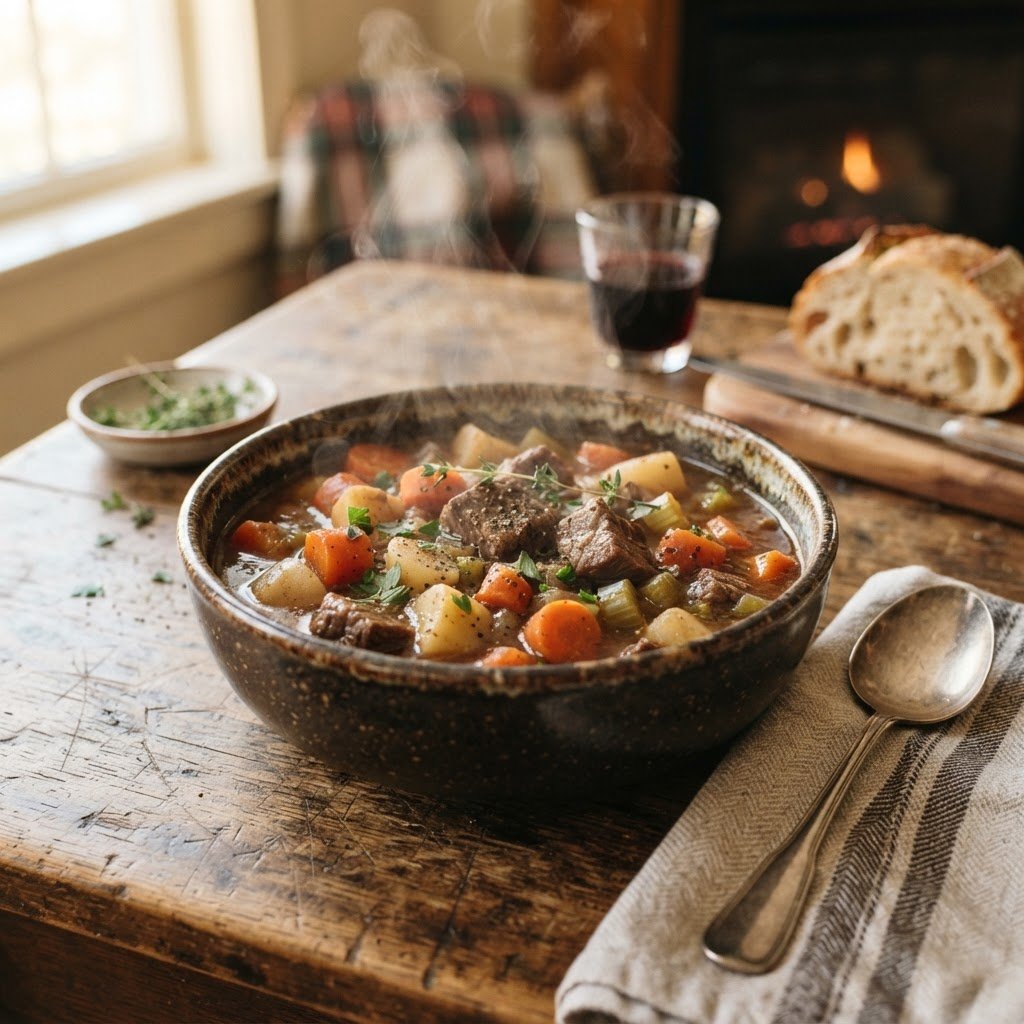
To make the perfect slow cooker beef stew, sear 2 lbs of cubed chuck roast until browned, then combine with beef broth, aromatics, and root vegetables in a slow cooker on low for 7 to 9 hours. This method ensures fork-tender meat and a naturally thickened, flavor-rich gravy without constant monitoring.
Essential Ingredients for Success
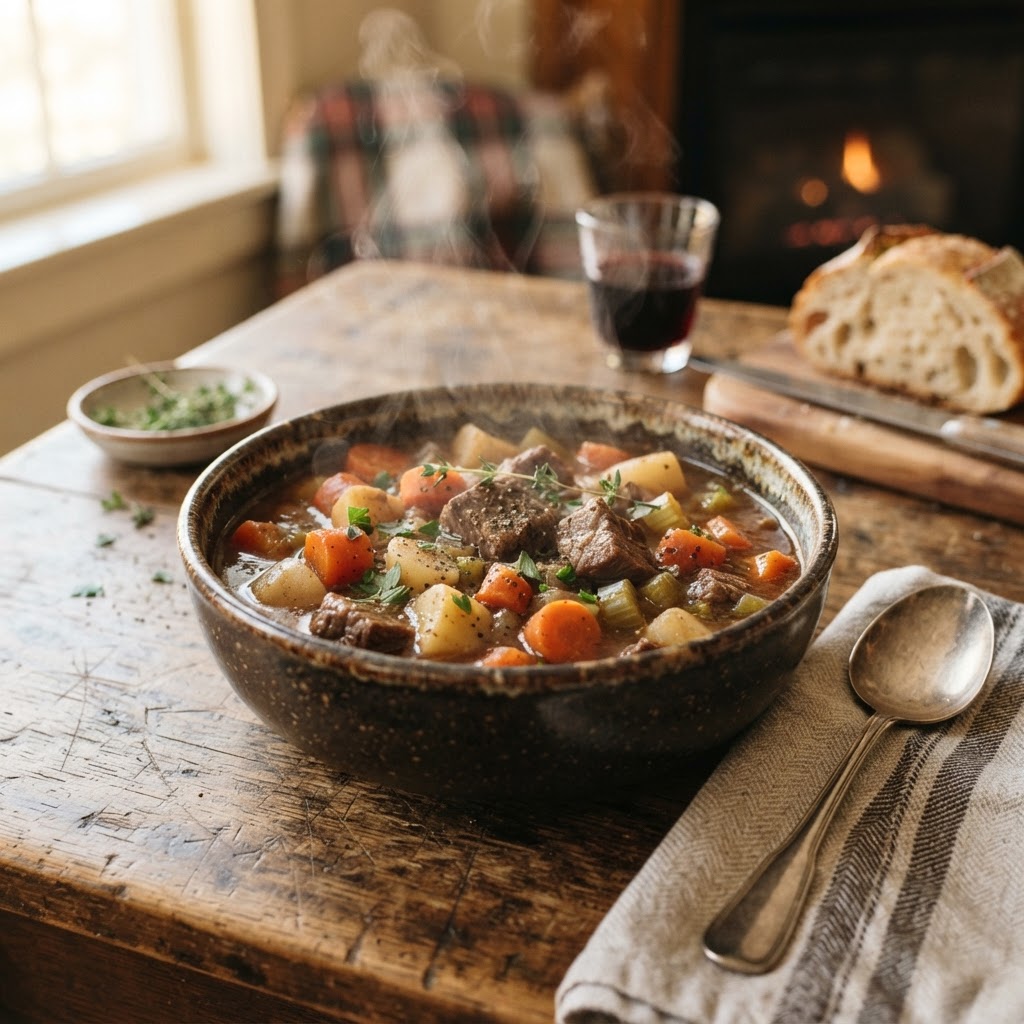
Selecting the right components is the first step toward crafting a professional-grade bowl of beef stew with carrots and potatoes. Start by sourcing high-quality beef stew meat, specifically well-marbled chuck roast, as the high collagen content breaks down into gelatin over time, creating a superior mouthfeel. A robust liquid base is equally critical; using 3 cups of high-quality beef stock combined with 1/2 cup of dry red wine, such as Cabernet Sauvignon, provides the necessary acidity to balance the richness of the fat. Aromatics like onions (approx. 150g), minced garlic cloves, and fresh woody herbs like thyme and rosemary are essential to building deep, complex flavor profiles. For those looking for beef stew Crock Pot recipes with mushrooms, adding 200g of cremini mushrooms introduces an earthy umami boost. Many home chefs prefer the convenience of store-bought seasoning, while others create a balanced rub using 1 tsp smoked paprika, 1 tsp salt, and 1/2 tsp black pepper to customize their beef stew seasoning for slow cooker results. Below is a breakdown of essential ingredients for standard sizing.
Step-by-Step Recipe Instructions
Ingredients You’ll Need
- 2 lbs beef chuck roast, cut into 1-inch cubes
- 2 tbsp vegetable oil
- 3 cups beef broth
- 1 tbsp Worcestershire sauce
- 3 large carrots, peeled and sliced into rounds
- 2 large potatoes, peeled and cut into 1-inch chunks
- 1 yellow onion, diced
- 2 cloves garlic, minced
- 1 tsp dried thyme
- 1 tsp smoked paprika
- 2 tbsp cornstarch
Follow this clear, step-by-step guide to prepare this dish perfectly every time.
Preparation Techniques for Tender Meat
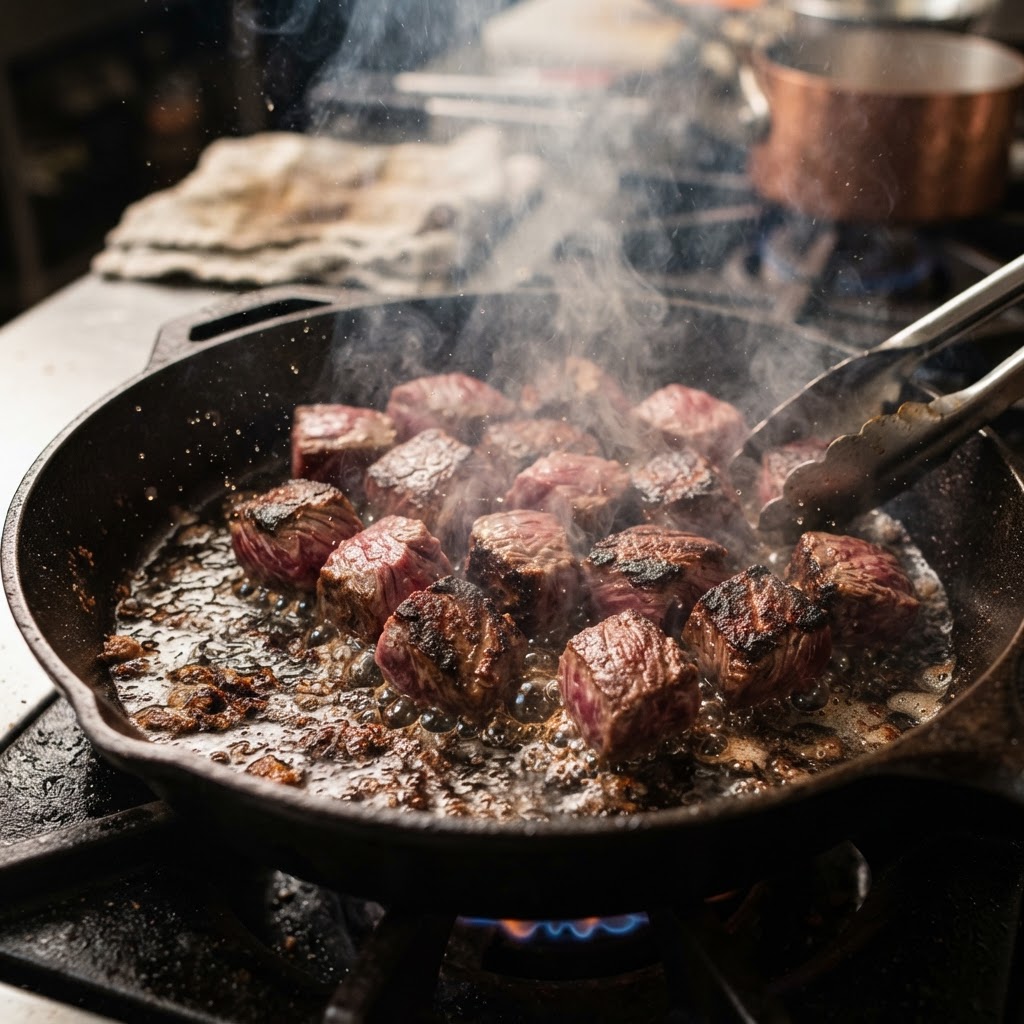
Properly preparing your ingredients before they hit the slow cooker is the defining factor in achieving a restaurant-quality, melt-in-your-mouth texture. Searing the beef cubes at high heat triggers the Maillard reaction, a chemical process that produces hundreds of different flavor compounds, significantly elevating the dish beyond the “dump and go” style. Is it better to brown meat for slow cooker stew? Absolutely; searing locks in the surface flavors and provides the rich, mahogany base necessary for a professional-grade sauce. For optimal results, ensure the beef is patted completely dry with paper towels before hitting the hot oil, as moisture is the enemy of a hard sear. Dusting the cubes with a tablespoon of flour before browning not only aids in crust development but also contributes to the natural thickening of the gravy. While some recipes suggest 4-hour cooking times, the science of collagen hydrolysis requires a consistent 7 to 9-hour window on the ‘low’ setting to fully transform tough connective tissues into succulent gelatin. Avoid the temptation to increase the heat to ‘high’ to speed up the process, as this can result in tightened muscle fibers and uneven cooking. The following comparison highlights why slow-cooking beats traditional stove-top methods for this specific dish.
The Science of Slow Cooking
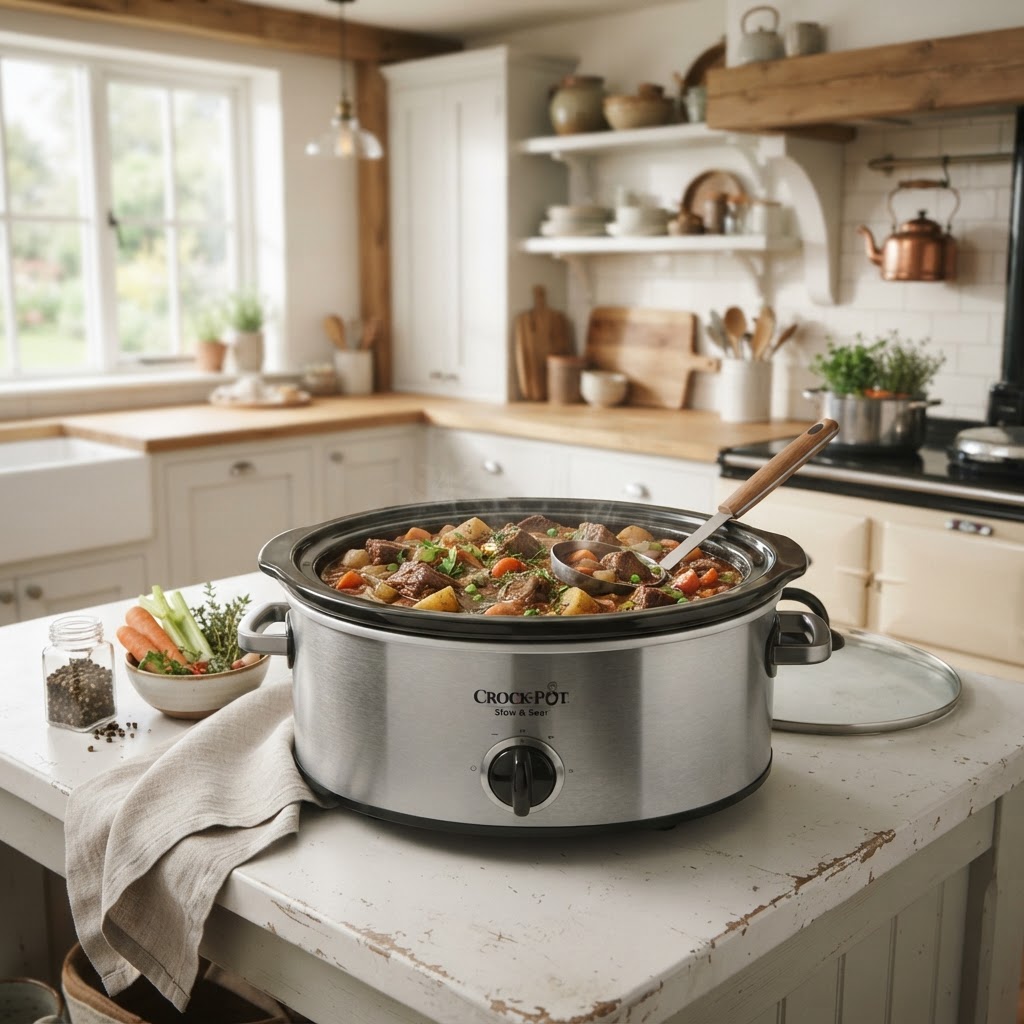
The slow cooking process functions by maintaining a steady temperature between 190°F and 205°F, which is ideal for breaking down tough proteins without evaporating the liquid base. Because the slow cooker is a closed system, moisture loss is minimized, allowing the flavors of the vegetables and broth to concentrate within the meat fibers rather than escaping through steam. Each time you lift the lid, the temperature drops by approximately 15°F, requiring the machine to work for an additional 20 to 30 minutes to regain the necessary heat for safe and consistent cooking. A classic slow cooker beef stew requires exactly 7 to 9 hours on ‘low’ to hit the sweet spot where the chuck roast becomes tender but not shredded. This “set-it-and-forget-it” approach is highly efficient for batch cooking, as the stew effectively tastes better the next day after the flavors have had time to stabilize and meld completely. By following this method, you utilize affordable cuts of meat that actually perform better with the extended exposure to heat, providing a high-value meal that is both cost-effective and nutritionally dense.
Variations and Dietary Adaptations
Customizing your slow cooker beef stew is highly effective when you follow a basic substitution formula for dietary needs. For those seeking keto-friendly versions, simply swap the starch-heavy potatoes for radishes or turnips, which hold their structure remarkably well under the extended cooking time and mimic the texture of cooked potatoes. If you require a gluten-free meal, cornstarch or arrowroot powder are the most effective thickeners, as they do not require a flour-based roux. Those wanting to add dumplings can do so by dropping spoonfuls of biscuit dough into the pot during the final 45 minutes of the cycle; ensure you do not open the lid before this point to keep the interior environment steamy. Adding butternut squash provides a sweet, autumnal contrast to the savory beef, while incorporating barley adds a chewy, fiber-rich dimension perfect for colder climates. Always remember to adjust your seasoning accordingly when substituting ingredients, as root vegetables have different moisture contents and natural sugar profiles that impact the final thickness and taste of the gravy.
The Role of Sides and Serving
Serving your beef stew in pre-warmed ceramic bowls is a simple but effective technique to maintain the ideal serving temperature of 160°F for as long as possible. A side of crusty, sourdough bread is the classic companion, providing a textured vessel to soak up the enriched gravy. If you are looking for a unique flavor profile, pairing the rich stew with a side of steamed greens or an acidic, bright garden salad helps cut through the heavy fat content of the beef broth. Presentation is vital for elevating a “home-style” meal; finish the dish with a sprinkle of freshly chopped parsley or chives right before serving to add a vibrant green color and a fresh, herbal note that balances the earthy tones of the long-cooked meat and vegetables. Whether serving for a casual weeknight or an elevated dinner party, the key to a professional presentation is ensuring a uniform distribution of vegetables and meat in each bowl, highlighting the vibrant colors of the carrots and the deep, glossy hue of the gravy.
FAQ
Can I put raw beef directly into the slow cooker for beef stew?
Yes, you can put raw beef directly into the slow cooker, but for a much deeper flavor and superior texture, you should brown the meat in a skillet first. Searing the beef cubes creates a savory crust that enhances the overall taste and color of your slow cooker beef stew.
How long should I cook beef stew on low in a crockpot?
For the most tender results, you should cook your beef stew on the low setting for 7 to 9 hours. Cooking on low allows the connective tissues in the stew meat to break down slowly, ensuring the meat is incredibly soft and succulent.
Why is my slow cooker beef stew thin?
If your stew is too thin, it is likely due to the amount of liquid added or a lack of natural thickeners in the recipe. You can easily thicken it by whisking a tablespoon of cornstarch with cold water and stirring it into the stew during the last 30 minutes of cooking.
Can I make this recipe without potatoes?
Absolutely, you can make a crockpot beef stew without potatoes by substituting them with other low-carb or heartier root vegetables. Great alternatives include parsnips, turnips, rutabaga, or even cauliflower florets added in the final hour of cooking.
How do I make the best beef stew recipe slow cooker version?
To make the best beef stew, always use high-quality chuck roast, sear your meat before slow cooking, and incorporate a variety of fresh herbs. Balancing the savory beef broth with a small amount of acidity, such as wine or balsamic vinegar, will ensure a complex, restaurant-quality flavor.