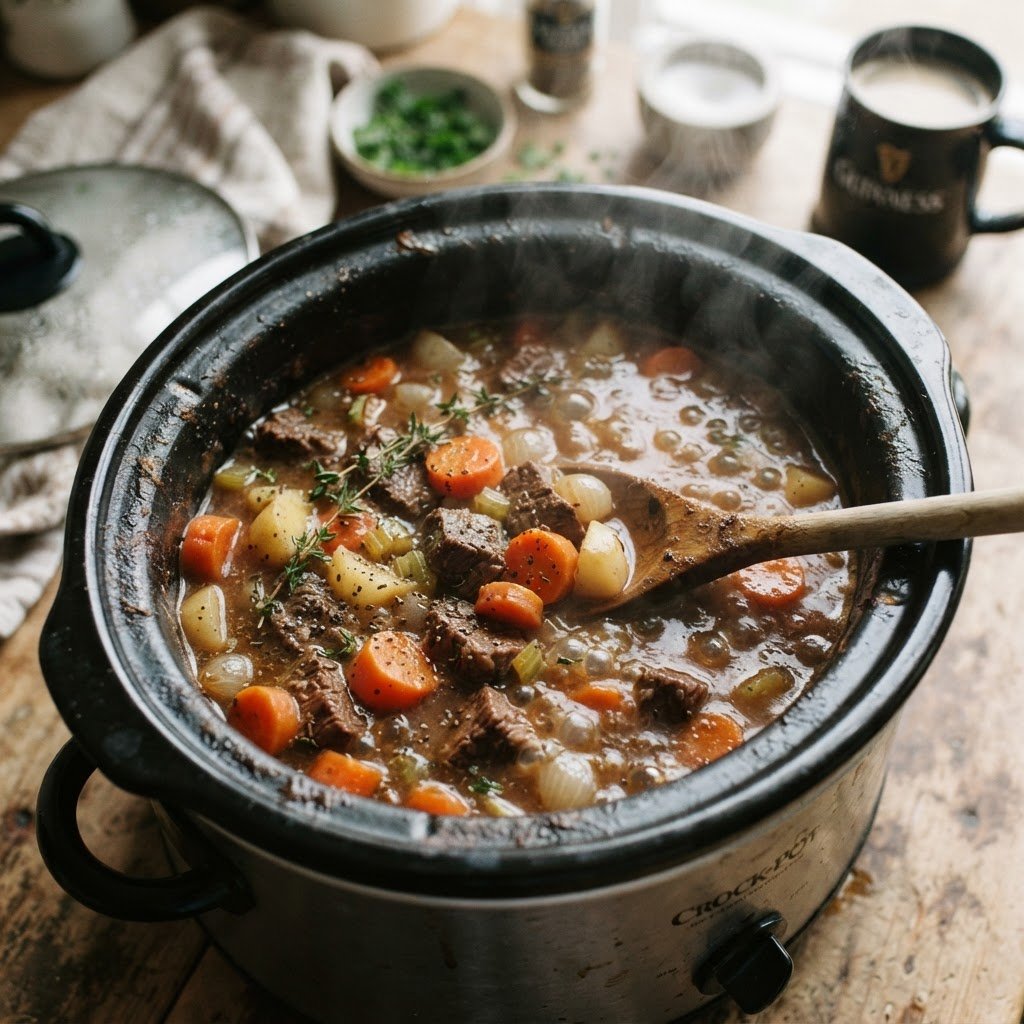
To make the perfect slow cooker beef stew with Guinness, sear 2 lbs of flour-dredged chuck roast until browned, then simmer on low for 8 hours with beef broth, aromatics, and a 14.9 oz can of stout. This method produces fork-tender meat and a velvety, deeply complex gravy that defines traditional comfort food. ## The Secret to Deep Flavor
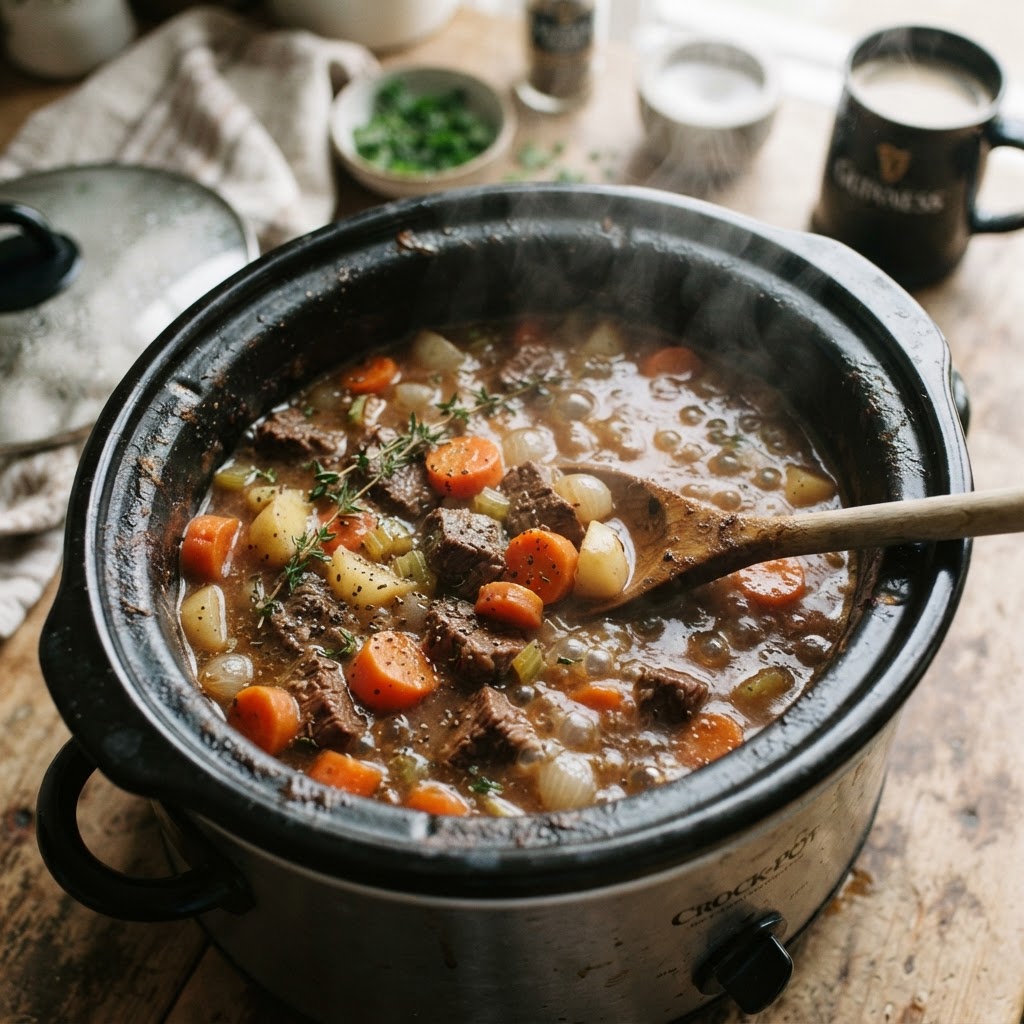
Building a rich foundation through the Maillard reaction is the single most effective way to elevate your slow cooker beef stew from mundane to restaurant-quality. By searing your cubed chuck roast in a hot skillet with 2 tbsp of oil, you trigger a chemical transformation where amino acids and sugars react under heat, creating a savory, caramelized crust. This crust provides the base for your gravy’s depth.
Why Guinness Matters
Using a dark beer like Guinness transforms your beef stew- Crockpot base from standard to gourmet. The maltiness of the stout cuts through the richness of the fat, while the roasted barley notes add a complexity that mimics a long-simmered French beef bourguignon recipe link or a traditional Irish food crockpot masterpiece. This beer stew crockpot method is one of the best beef stew recipe slow cooker secrets. The acidity in the beer also helps tenderize the tougher connective tissues in the chuck roast during the long 8-hour braise.
Step-by-Step Recipe Instructions
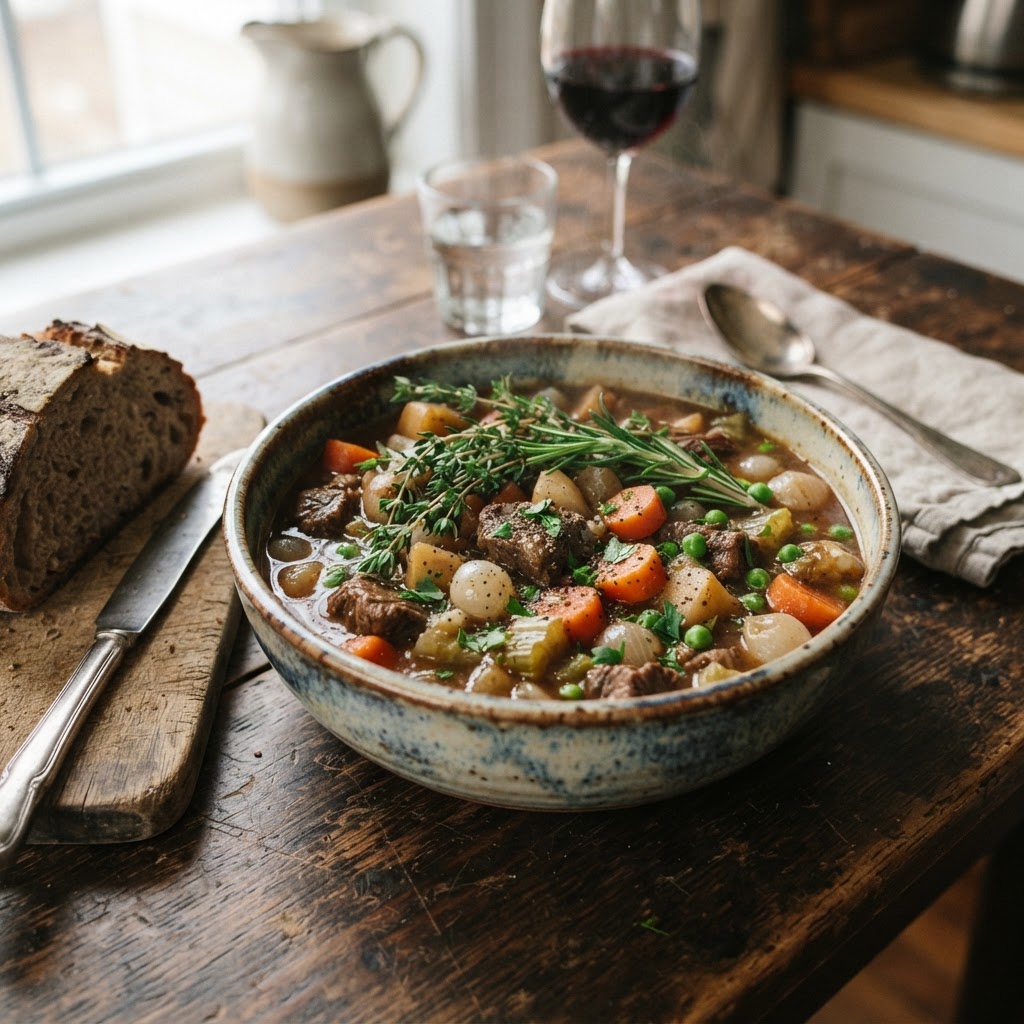
Ingredients You’ll Need
- 2 lbs beef chuck roast, cut into 1-inch cubes
- 3 tbsp all-purpose flour
- 2 tbsp vegetable oil
- 1 large onion, chopped
- 3 cloves garlic, minced
- 14.9 oz can Guinness stout
- 2 cups beef broth
- 1 tbsp tomato paste
- 1 lb carrots, peeled and sliced into rounds
- 1 lb potatoes, peeled and cut into 1-inch chunks
- 1 tsp dried thyme
- 1 tsp salt
- 0.5 tsp black pepper
Follow this clear, step-by-step guide to prepare this dish perfectly every time.
Essential Ingredients for Success
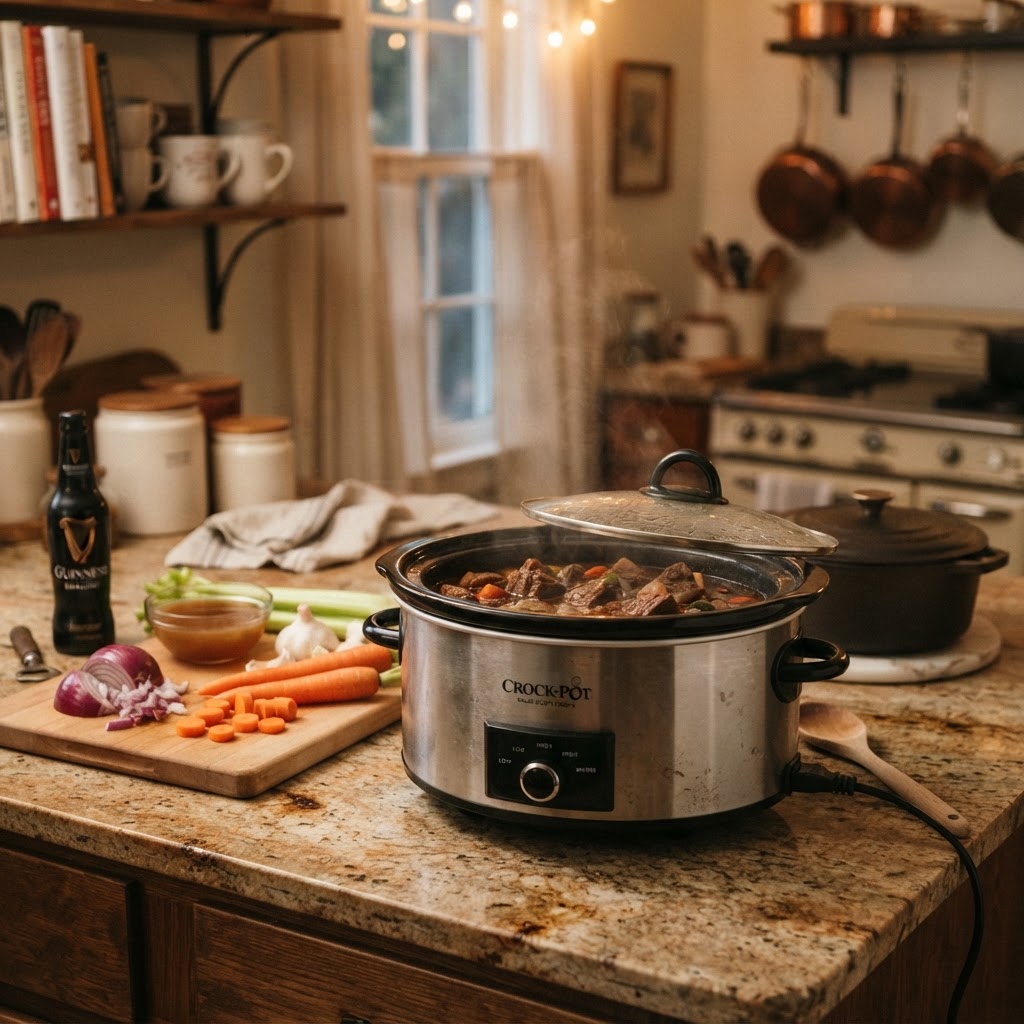
Selecting high-quality ingredients is the foundation for a thick, hearty slow cooker beef stew that stands out from standard versions. Chuck roast remains the preferred cut because it contains significant intramuscular fat that renders slowly over 8 hours, resulting in succulent, tender bites that define a professional crockpot meal.
You should gather these essential ingredients:
- 2 lbs beef chuck, cut into 1-inch pieces
- 2 cups Guinness or similar dark stout
- 3 cups beef bone broth or stock
- 4 large carrots, sliced into coins
- 3 medium potatoes, cubed (or substitute with butternut squash for a beef stew with butternut squash variation)
- 2 tablespoons tomato paste (or use a variation for a crockpot beef stew without tomato paste)
- 1 tablespoon Worcestershire sauce
- Fresh thyme and rosemary sprigs
When sourcing these items, prioritize grass-fed beef chuck and organic root vegetables for a richer flavor profile. The bone broth provides a significantly higher collagen content than standard stock, which acts as a natural thickening agent for your stew, ensuring the final consistency is luxurious rather than watery.
Preparing Your Slow Cooker Beef Stew
Proper technique during the preparation phase ensures that your beef stew reaches the ideal balance of tender meat and thickened sauce. Begin by patting your meat completely dry; moisture is the enemy of a good sear, and surface water will cause the beef to steam rather than brown. Dredging in flour serves a dual purpose: it aids in browning and introduces starch to the pot, which thickens the liquid naturally as the stew cooks over the 8-hour cycle.
Once the beef is browned, deglazing the skillet with a splash of Guinness is essential to recover the fond. This fond contains the concentrated essence of the seared beef. Pouring this into your slow cooker base integrates that flavor into the entire dish. Set your device to the ‘low’ setting; high heat can toughen the proteins before they have the chance to breakdown, while low heat ensures the fibers gently separate, creating that signature melt-in-your-mouth texture.
Enhancing the Experience: Dumplings and Variations
Serving your beef stew with homemade dumplings or specific side pairings can dramatically transform the meal into a hearty, multi-textured feast. Dropping raw dough balls onto the surface during the final 30 minutes of cooking allows the dumplings to steam in the rich, stout-infused liquid, resulting in a light, fluffy addition that absorbs the stew’s savory notes.
For those looking for healthy beef stew crockpot options, you can easily omit the potatoes to make a crockpot beef stew no potatoes version or incorporate low-glycemic vegetables like parsnips or celery root. If you have guests, this dish serves as one of the best crock pot dinner recipes for family gatherings, especially when paired with a fresh side salad or ube bread recipe for beginners as a unique contrast.
FAQ
Can I make this ahead of time?
Yes, you should make this stew ahead of time because the flavors marry and intensify after sitting in the refrigerator for 24 hours. Simply reheat the stew on the stovetop over low heat or in your slow cooker until it reaches an internal temperature of 165°F.
Should I brown the meat first?
Browning the meat is absolutely essential because it creates the Maillard reaction, which is the primary source of the stew’s complex, savory flavor profile. Adding raw meat directly to the slow cooker will result in a bland, gray gravy that lacks the professional depth of a traditional stew.
How do I thicken my beef stew?
If your stew remains too thin, you can create a slurry by whisking 1 tablespoon of cornstarch with 2 tablespoons of cold water. Stir this mixture into the hot stew during the final 30 minutes of cooking to achieve a perfect, glossy, and thick consistency.
Can I use different meat cuts?
While chuck roast is the gold standard for stewing due to its collagen content, you can use round roast or brisket if you increase the cooking time to 10 hours. Avoid lean cuts like sirloin, as they will dry out and become tough during the long, slow-cooking process.
Is it safe to leave the slow cooker on for 8 hours?
Yes, modern slow cookers are designed to be left unattended for 8 to 10 hours on the low setting. Ensure your unit is placed on a heat-resistant surface away from curtains or flammable materials to adhere to all standard kitchen safety protocols.